Turlock woman’s stalking death in 2003 turned her sister into a national advocate
AI-generated summary reviewed by our newsroom.
- Debbie Riddle turned her sister’s 2003 murder into national stalking advocacy.
- Riddle trains prosecutors, detectives and probation officers using Klinke’s case.
- SPARC and federal grants fund outreach, training and victim resources nationwide.
Debbie Riddle became an anti-stalking advocate soon after her sister, Peggy Klinke, was killed in Turlock in 2003.
Police said the alleged shooter, ex-boyfriend Patrick Lee Kennedy, had tormented the victim and her family in three states over about a year. He killed Klinke, 32, and then himself at her Colorado Avenue apartment complex on Jan. 18, police said.
A few days later, Riddle talked about the case in a phone interview with The Modesto Bee from her Cleveland home.
“He had one mission and one mission only — that if he couldn’t have my sister, no one would have her,” Riddle said.
The case did not generate much local follow-up coverage, since the accused was dead and no trial was needed. But it did inspire Riddle to join the Stalking Prevention, Awareness and Resource Center, based in Washington, D.C.
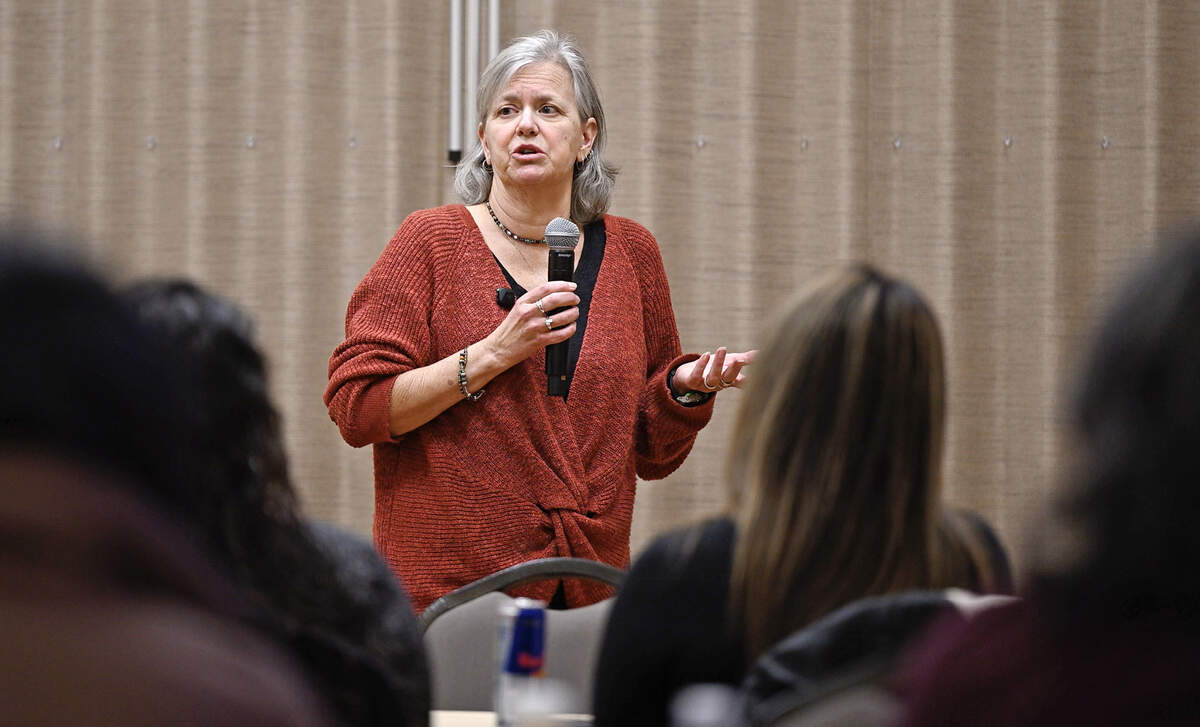
She now lives near Raleigh and speaks around the nation, on top of her job as a graphic designer for the North Carolina Department of Public Safety. On Wednesday, she was at the Ceres Community Center to help train law enforcers in Stanislaus County.
The audience included prosecutors, detectives and probation officers, who used Klinke as a case study in how to deal with a stalker. They were joined by the victim support staff at the Family Justice Center of Stanislaus.
Riddle started working with the national group in the months after Klinke’s death. She has advised police officers and health care workers who might encounter victims. She has spoken to college students and other groups about the risk. Riddle said some of the listeners later told her how they got free from their own stalkers.
“This is Peggy’s legacy,” she said. “... Some of the greatest things that have ever been told to me, time and time again, is ‘I am alive because of your sister.’ ’’
Just what is stalking under the law?
A grant from the federal Office on Violence Against Women pays for presentations such as Wednesday’s. General information on stalking was outlined by SPARC Director Jennifer Landhuis. She was aided by Sgt. Denise Jones, a consultant and sheriff’s investigator in Clark County, Ohio.
Their key points:
- Stalking is defined as multiple acts that threaten the victim’s physical or emotional health. The harm also can be to family and other involved people.
- Close to one-third of all women and one-sixth of men have endured some form of stalking.
- About half of the victims are harassed by current or former spouses or other “intimate partners.” Stalkers also can be other family members, acquaintances, strangers or people in authority.
- Offenders can use high-tech means, such as texting or social media. Or it can be low-tech, such as sending an unwanted gift to the victim.
- Stalkers might try to control interactions with family, friends, coworkers and other people.
- Victims can keep a detailed log on the stalker’s actions, which can be downloaded from the SPARC website. But they should be careful about using a computer shared by the offender.
Stalking is an element in many of the domestic violence cases in the county, Deputy District Attorney Vita Palazuelos said. She specializes in crimes that affect families.
“This is about power and control,” Palazuelos said, “and there’s no greater way to control a victim of domestic violence than wanting to know where she’s at, what she’s doing, who she’s with.”

What were the warning signs for Peggy Klinke?
The victim in the 2003 case was born Margaret Mary Klinke in 1970 and grew up in Poland, Ohio. She worked in pharmaceutical sales with the hope of attending medical school.
Riddle said her sister began dating Kennedy in 1998, after moving to Albuquerque for her job. He was six years older and worked as a landscaper while studying electrical engineering at the University of New Mexico.
Riddle said she did not like Kennedy from the start: He enjoyed watching violent videos. He made sexual remarks with children present. He brought a gun on a vacation with the Klinke family.
At other times, Riddle said, Kennedy could be overly helpful, such as when Klinke’s mother was cooking a holiday roast. She called it “Eddie Haskell syndrome,” after a memorable character on “Leave It to Beaver.”
Riddle said the couple broke up in early 2002, which kicked off the stalking: In June, Kennedy spray-painted an obscene message about Klinke on her mother’s garage in Ohio. A few days later, he set fire to her new boyfriend’s home near Albuquerque. He showed up unannounced at Klinke’s work, gym and other places.
Riddle said Klinke obtained a restraining order from Albuquerque police and moved to Turlock, without Kennedy’s knowledge. She rented a unit at the Elmwood Apartments, on Colorado just south of Hawkeye Avenue.

How did alleged stalker track victim to Turlock?
Turlock police described how Kennedy reacted to Klinke’s move: He hired a private detective who used computer records, legally, to learn her new city. He flew to San Jose and drove a rented car to Turlock. Kennedy then posed as an investigator himself while asking neighbors on Colorado for directions. A delivery truck driver pointed him to the apartment complex.
Police said Klinke called 911 from a neighbor’s apartment to report that Kennedy was attacking her. She said he had bound her wrists with duct tape and struck her on the head with a gun.
Police said five officers responded within five minutes of the 9:10 a.m. call. Klinke died while being treated for a gunshot and other wounds in the front yard. Kennedy was found dead inside the complex.
The department also said Albuquerque police had not submitted Kennedy’s restraining order to a national database.
On Wednesday in Ceres, Riddle played an audio recording of her sister’s frantic 911 call, as she has at many talks around the nation. “... that truly is what it sounds like and what it feels like to be a victim of stalking,” she said.
What did suspect’s father have to say?
Kennedy’s death meant he would have no chance to explain his alleged actions at a trial or sentencing. His father, Royce Kennedy, told The Bee by phone in 2003 that he was sorry for Klinke’s family.
“It’s shocking and it’s horrible and we have to live with it,” he said. “I’m not trying to condone his actions, but something went tragically wrong. Someone snapped.”
January is National Stalking Awareness Month, proclaimed by Congress in 2004 at the urging of Riddle and others at the center. The Jan. 18 anniversary of her sister’s death is a “day of action.”
The center urges supporters not to be somber that day, but to don glittery clothing to celebrate Klinke’s outgoing personality. Riddle said it faded as Kennedy mistreated her.
“The girl that we always said would walk in and light up a room — you just knew she was there, just that great positive energy, just that sparkle, that passion for life.”
This story was originally published January 9, 2026 at 11:57 AM.