Colleague of former Modesto SWAT officer charged with manslaughter testifies for defense
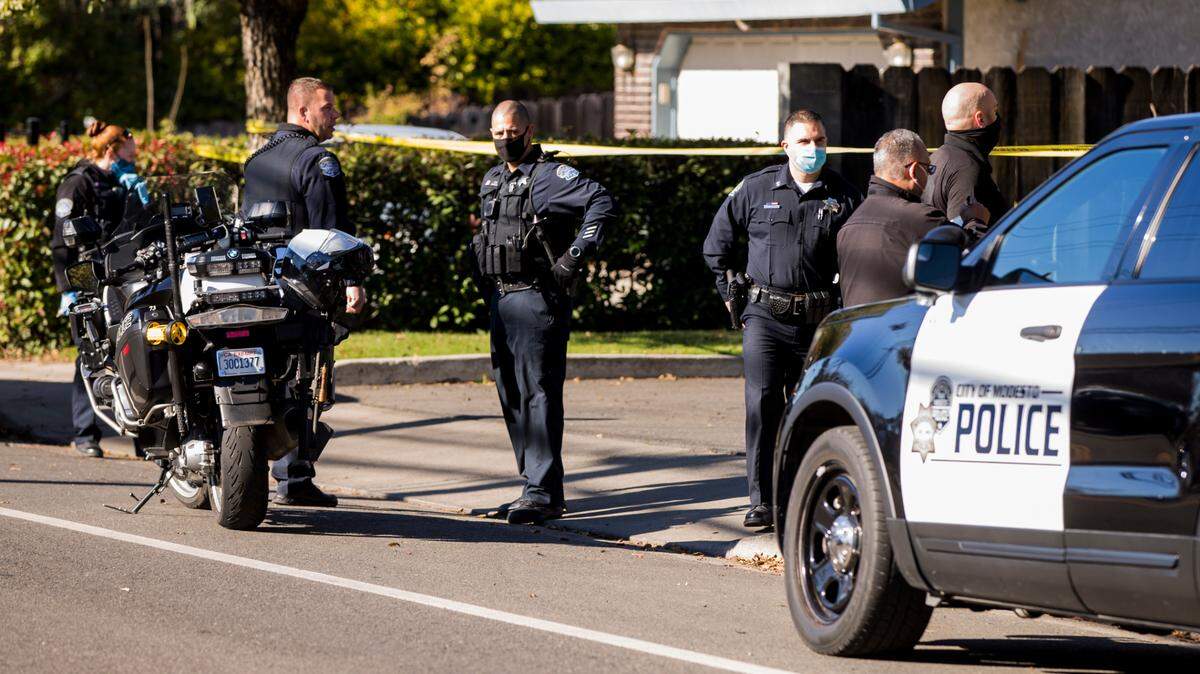
The actions of former Modesto police Officer Joseph Lamantia, charged with voluntary manslaughter for the fatal shooting of Trevor Seever, will be judged based on what a reasonable officer would do in the same situation.
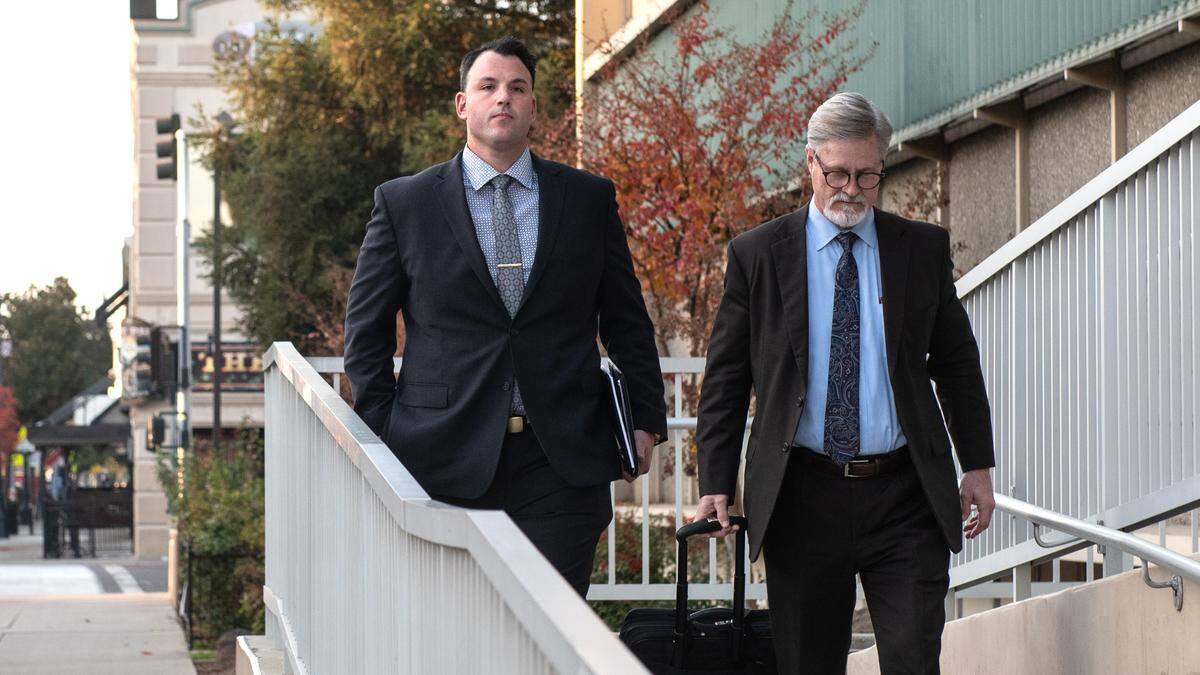
So on Thursday, the first of several former colleagues of Lamantia’s began testifying for the defense about the training they receive and his perspective on some of the events of Dec. 29, 2020, when Lamantia shot an unarmed Seever as he was running away at the Church of the Brethren on Woodland Avenue.
Detective Jacob Mertz is a member of the Modesto Police Department’s SWAT team, on which Lamantia served before he was fired and charged in March 2021.
Mertz testified that formal training about Assembly Bill 392, an amendment to deadly force law that went into effect on Jan. 1, 2020, wasn’t held until October 2021. He did say that changes to use-of-force laws generally were brought up during briefing, before officers start their shifts, but did not clarify if AB 392 was discussed.
The law added definitions for “deadly force,” “imminent” and “totality of the circumstances,” and it amended self-defense language to include “objectively reasonable force” as a standard by which an officer’s actions are judged, according to the California Commission on Peace Officer Standards and Training. The definition of “imminent” says a reasonable officer must believe that the subject of the force has the “present ability, opportunity and apparent intent to immediately cause death or serious bodily injury to the peace officer or another person.”
Jeffrey Martin, a use-of-force expert who also testified for the defense, said that given the totality of the circumstances in the shooting of Seever, an objectively reasonable officer facing similar circumstances would believe himself in immediate threat of death or serious bodily injury.
Those circumstances include reports by Seever’s family that he’d purchased a gun, that the family fled its home as a result, and that Seever’s arms were not pumping in the normal fashion of someone who is running but rather were in front of him. It also included Lamantia’s knowledge of an officer safety bulletin about Seever had previously been uncooperative with law enforcement and had posted on social media, “A good cop is a dead cop” and “All I want for Christmas is another dead MPD Officer.”
Asked about the social media posts, Mertz said, “To me, it would indicate that this guy may be making some actions toward his statements ... It would indicate that he would potentially become violent with police if he was contacted.”
Mertz also said he would expect a person to be armed if he was told that person purchased a gun the night before, that a person can fire at an officer at the same time he is running away, and that an officer needn’t see a suspect with a firearm before using deadly force.
Totality of the circumstances
Martin finished his testimony Thursday with cross examination by Deputy District Attorney Rick Mury.
According to previous testimony, Lamantia told investigators he thought Seever was intent on killing his family so he had to stop him. Once he got to the church, he felt Seever was trying to ambush him.
Martin agreed that Seever never made statements about personally shooting or ambushing an officer and that Lamantia knew Seever’s family was at a different location, away from Seever.
Lamantia fired at Seever within seconds of seeing him running away in an alcove outside the church.
Martin agreed that Lamantia didn’t warn Seever he’d shoot him the first time when he ordered him to get on the ground or the second time when an injured Seever failed to keep one of his hands raised.
As to Lamantia’s statements to investigators that Seever’s hands were “stagnant in front of him,” and he thought he was reaching for a gun in his waistband, Martin agreed that Seever also could have been holding up baggy pants as he was running or trying to keep something in his pocket. But Martin said it was more reasonable to assume Seever had a gun, based on the totality of the circumstances, knowledge Lamantia had going into the situation.
Mury asked Martin whether the fact that Lamantia was nine feet from a wall that he could have taken cover behind should be considered in the “totality of the circumstances.”
After some back and forth, Martin said, “In my opinion, no. ... Let’s say (an officer) did use available cover, does that now mean they are not going to respond to what they perceive to be an imminent threat of death or serious bodily injury? The answer to that is no.”
There is at least one more day of testimony remaining in the preliminary hearing, which is held for a judge to determine if there is enough evidence for the charge to stand and proceed to trial.
Due to the schedules of the attorneys and judge, the hearing will not resume until mid-April, when Mertz will continue testifying and more officers are expected to be called as witnesses.
This story was originally published February 10, 2023 at 3:45 PM.