Former Modesto police officer charged in fatal shooting said he thought he’d be ambushed
The former Modesto police officer charged with voluntary manslaughter for a fatal on-duty shooting of an unarmed man told investigators he thought he was going to be ambushed.
Joseph Lamantia said he thought Trevor Seever “got what he wanted” by “putting him in a choke point,” a tactical disadvantage, Sgt. James Reeves testified during a preliminary hearing this week.
Lamantia fatally shot Seever on Dec. 29, 2020, at the Church of the Brethren on Woodland Avenue within seconds of arriving at the scene. He was the first officer to arrive after Seever’s sister Allison Stewart called 911 to report her brother had bought a gun the night before and “he’s walking over here and just to watch what happens to us.”
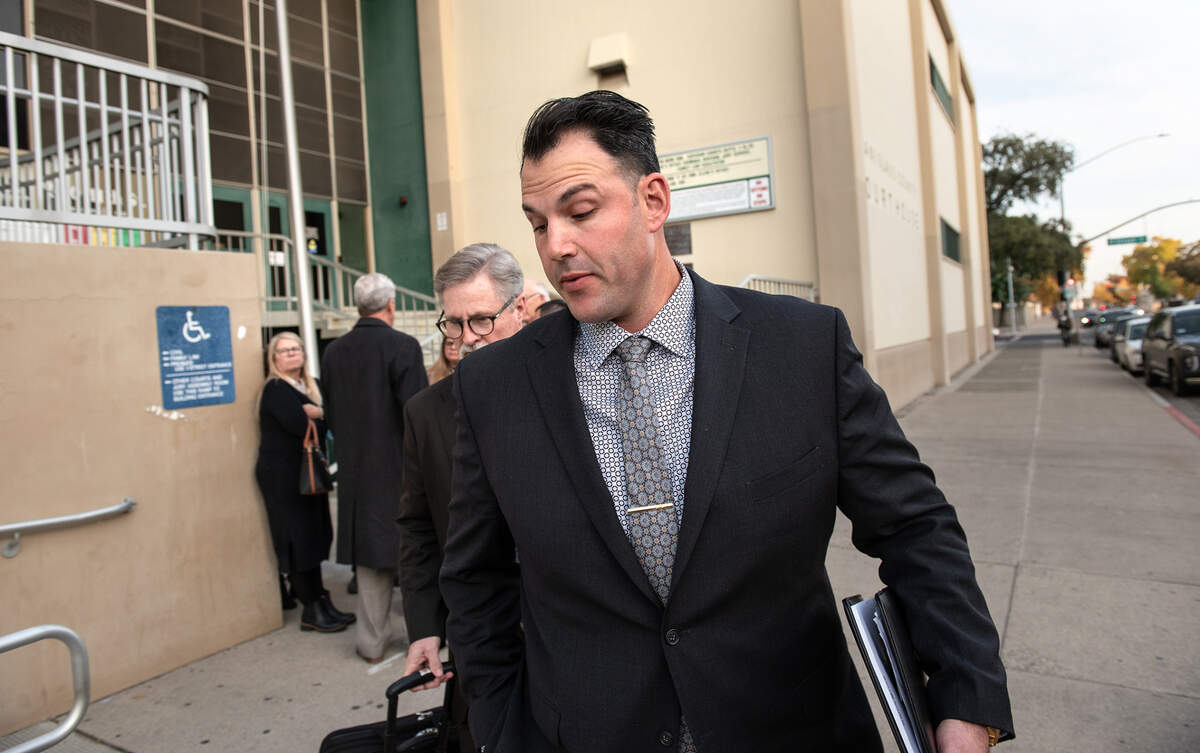
Three months after the shooting, Lamantia was fired and charged with voluntary manslaughter. The preliminary hearing is held for a judge to determine if there is enough evidence for the charges to stand and for the case to proceed to trial. Lamantia is out of custody on bail.
Lamantia, 37, was involved in five officer-involved shootings in his dozen years as a Modesto officer. Four were fatal. Prosecutors determined Lamantia and other officers’ actions were justified in the three other fatal shootings.
The hearing started Monday, continued Tuesday and is to resume Monday. Supporters of Seever, nearly a dozen at one point, attended the hearing. At times, emotions ran high. Judge Carrie Stephens started the hearing by admonishing those in attendance about an incident that took place outside the courthouse, saying people who did not behave civilly would be asked to leave.
Stephens didn’t describe the incident, but Bob Fores, the attorney representing Seever’s family in a wrongful-death claim, said he heard that someone had yelled “murderer” outside the courthouse, but said it didn’t involve his clients.
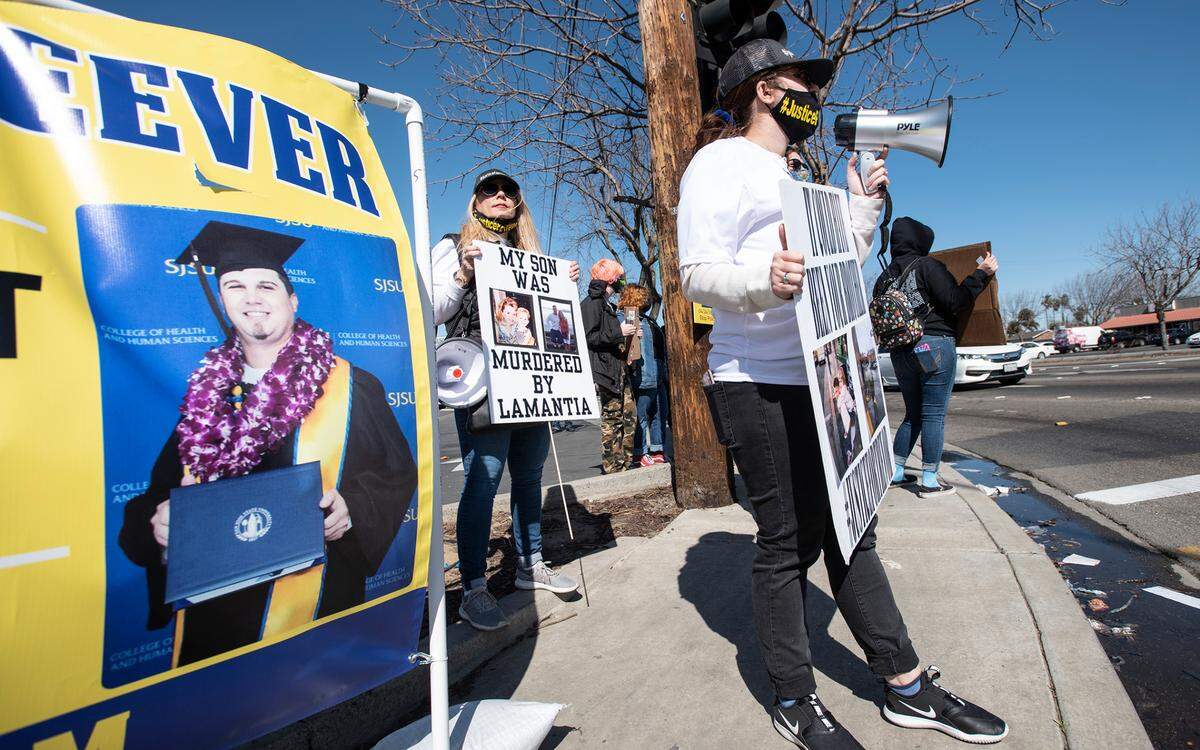
Stewart was the first to testify about her 911 call and how she and her mom and stepdad, Darlene and Ray Ruiz, left their west Modesto home and went to the Victory Life Center.
She testified about updating the dispatcher that Seever texted their mom he’d vandalized their home, and about when they saw him walking toward the Church of the Brethren, which is catty-corner to the one where they were at Woodland and Rosemore Avenue.
As Stewart gave information to dispatch, Lamantia was driving to the scene.
Sgt. Reeves testified about Lamantia’s actions and thought process as they were related to him by Lamantia during interviews following the shooting.
Lamantia began work at 7 a.m. that day as a member of MPD’s Crime Reduction Team, which is designed to proactively handle quality-of-life issues.
He was in the area of McHenry and Briggsmore avenues sometime before 11:30 a.m, responding to a nuisance call, when he heard the dispatcher ask for an available officer to respond to the call about Seever.
Lamantia was the first officer to say he would respond, forgoing the nuisance call because “the dispatcher’s tone of voice sounded concerned,” Reeves said.
Social media posts were concerning
An “officer safety bulletin” was sent to the officers on duty about concerning posts on Seever’s Instagram that read, “A good cop is a dead cop” and “All I want for Christmas is another dead MPD Officer.” Lamantia asked the bulletin also be emailed departmentwide.
More officers began responding to the call after Lamantia. Derrick Tyler, a sergeant at the time who has since retired, testified he asked dispatch for air support from the Sheriff’s Office and the California Highway Patrol but neither were available. He said he was hoping to keep a safe eye on Seever and establish a perimeter around him.
“My goal was to stabilize the situation and put him in a box, a vector, that we could search at a controlled pace,” Tyler testified. But he said he never articulated that on the radio.
Lamantia “believed that he needed to find Trevor because he was “hunting the family,” Reeves testified.
He also said Lamantia told him, “He believed that Trevor was looking to ambush a law enforcement officer or wanting to kill a law enforcement officer.”
Still, Lamantia entered the church property through a driveway on the west side, heading north.
Lamantia told Reeves he spotted Seever to his right, crouched down in an outdoor area of the church. He said the two made eye contact.
The driveway curved to the east and became what Lamantia described to Reeves as “a ‘choke point’ where the buildings got closer to the driveway” and where he would be at a tactical disadvantage.
Reeves testified that Lamantia described being very afraid, that he expected Seever would try to shoot him through the window or confront him at his patrol car.
Felt like a ‘sitting duck’
“This is where it happens; this is where I’m going to f---ing die,” Lamantia told Reeves that he thought at the time.
Lamantia told Reeves he felt he was a “sitting duck” so he pulled forward to give himself time to park and get out of his patrol car.
Lamantia had his gun drawn as he got out of his patrol car and ran around the corner to the area where he’d seen Seever.
Reeves said Lamantia described being surprised. “He thought they were going to be face-to-face and engage in a gunbattle but he said that Trevor was running away,” Reeves testified.
In video from Lamantia’s body camera that was released to the public about a week after the shooting, Lamantia yells, “Get on the ground, get on the ground,” then fires four shots at Seever.
Reeves testified that during his interviews with Lamantia, he “kind of flip-flopped back and forth” about what was in his mind at that time.
Reeves said Lamantia told him both that he thought Seever was trying to get to his relatives to harm them or that he was trying to get to a nearby grouping of redwood trees to obtain a different position of advantage.
Seever dropped to the ground after the first shots were fired. Reeves said Lamantia believed Seever was still trying to retrieve a firearm and yelled at him to “show me your hands.”
In the body camera video, Seever’s right arm can be seen dropping then going back up twice. Lamantia yells the order to show his hands several more times then fires three additional rounds. Seever then drops to the ground and yells in pain.
Seever never had a gun and Lamantia told Reeves he never saw him with one but assumed he had one based on what his family reported to dispatchers.
After the shooting, it was discovered that Lamantia didn’t have any less-than-lethal weapons with him at the time of the shooting: no baton, Taser or pepper spray.
Reeves testified that Lamantia told him he had been on 600 to 700 calls where people were reported to have weapons and agreed that staging, meeting other officers in order to make a plan, and setting up a perimeter to surround a suspect, was typically the tactic used in these situations.
Speaking of his own experience Reeves said, “the majority of the times when someone is reported to have a firearm, they in fact do not.”
This story was originally published November 22, 2022 at 12:30 PM.