California Attorney General Rob Bonta talks tariffs during visit to Modesto
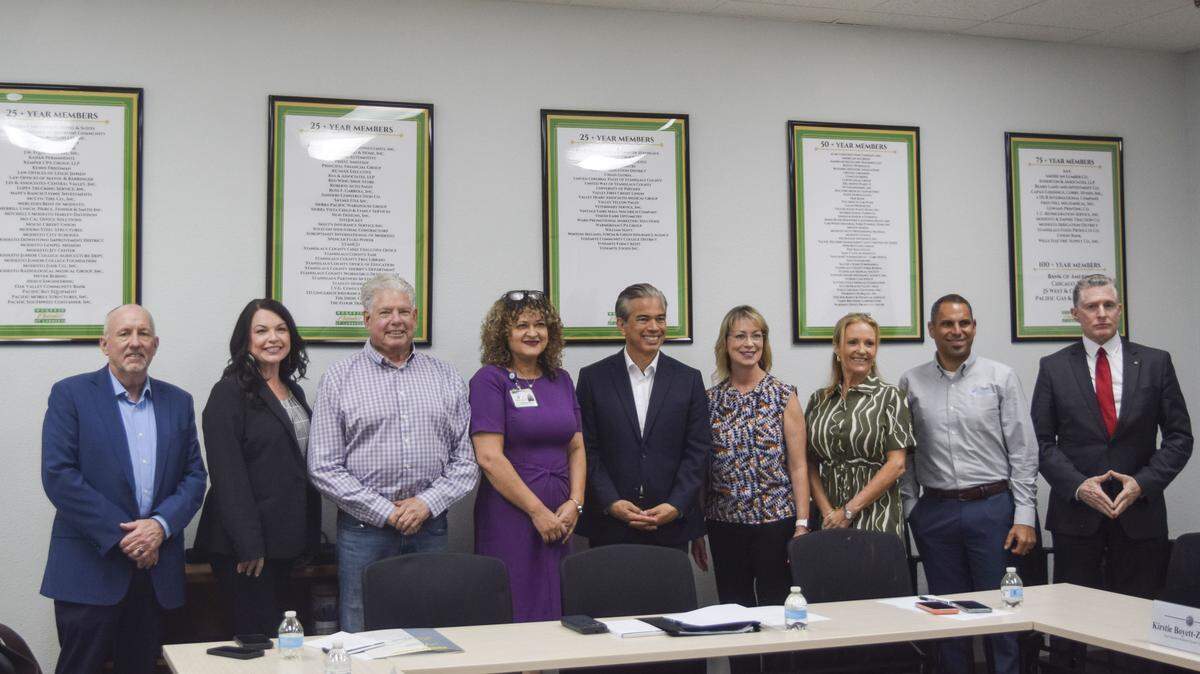
California Attorney General Rob Bonta visited Modesto on Thursday to discuss with local business leaders the impacts of President Donald Trump’s tariffs across industries in the state.
The roundtable, hosted by the Modesto Chamber of Commerce, is part of a series of discussions Bonta is holding across the state to gather firsthand accounts of how federal trade policies are affecting California businesses.
He came to Modesto in particular to learn from individuals in the agriculture industry.
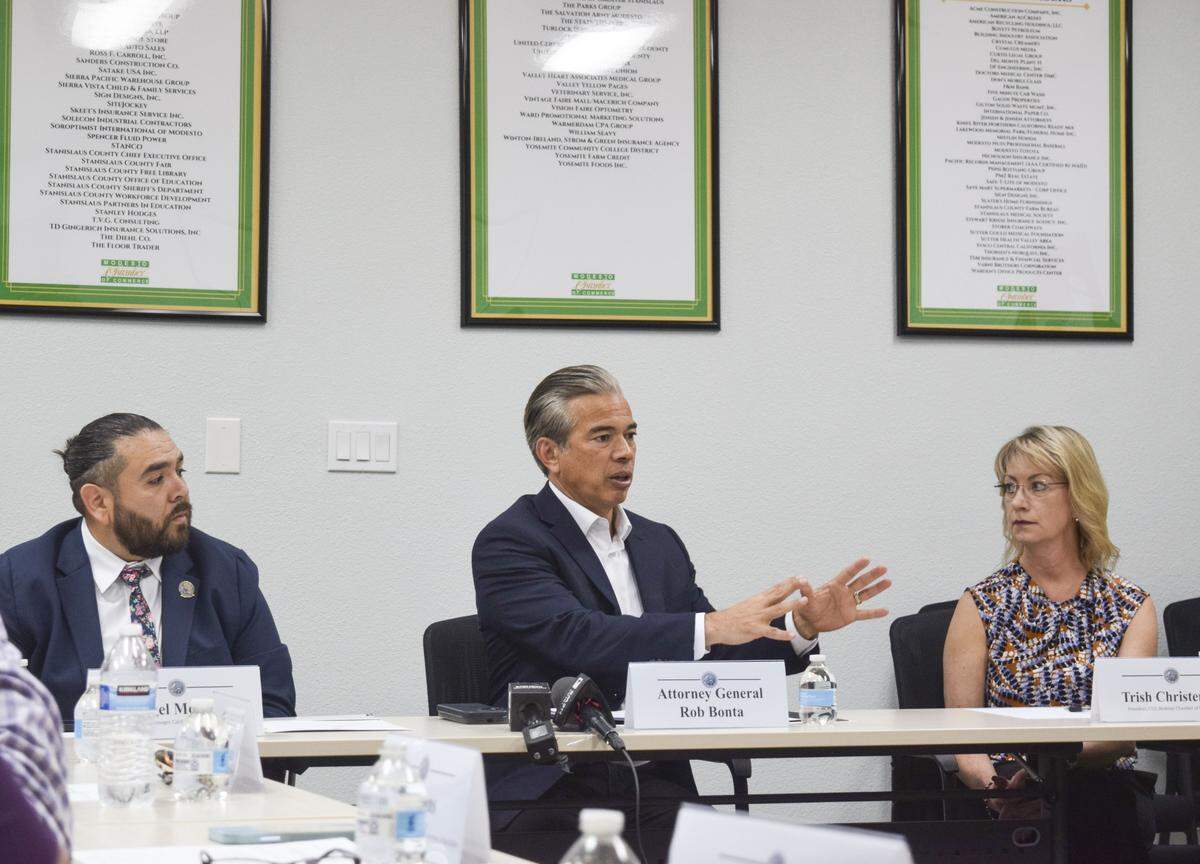
“I feel I’m at my best when I’m in meetings like this, in the community, listening to folks, especially those who are impacted by policies or practices that I can influence in some way,” Bonta said.
Speakers in the roundtable included:
- Yamilet Valladolid - Director of government and community affairs at Golden Valley Health Centers and Central Valley PACE
- Trish Christensen - President and chief executive officer at the Modesto Chamber of Commerce
- Kirstie Boyett-Zacharias - Former executive director at American Leadership Forum Great Valley Chapter
- Michael Gaffney - Division operations specialist, principal at PG&E
- Frank Ferral - Chief policy officer, Greater Stockton Chamber of Commerce
- Ed Wanket – Director, economic outreach and industry relations of San Joaquin Membership
- Suzanne Devereaux – International director of marketing, American Pistachio Growers
- Bill Lyons - Former agricultural liaison to Gov. Gavin Newsom
Impacts on industries
Business leaders described mounting financial pressure across sectors as cost increases ripple through healthcare, agriculture and manufacturing.
Valladolid said rising costs of supplies and equipment can potentially affect patient care, adding strain on a region facing a shortage of physicians, and could lead to the closure of community clinics statewide.
In manufacturing, Wanket said one company paid an additional $700,000 for equipment due to tariffs, forcing delays on planned projects. He added that fertilizer prices have surged, raising concerns for farmers.
“There’s concern that not only will it affect the prices that we pay on the shelf, but it will affect the prices for agriculture,” Wanket said.
He also pointed to uncertainty stemming from the federal government’s cancellation of funding for California’s ARCHES hydrogen hub, which he said has caused some projects to be shelved.
Devereaux said volatility in the market and hesitation from buyers have created challenges in the pistachio industry. While demand remains strong, she said ongoing uncertainty continues to complicate business decisions.
Gaffney said fluctuating prices at the pump and at grocery stores have forced him to put personal projects on hold. He said businesses are either having to find creative ways to offset rising costs, pass them down to customers or shut their doors.
Ferral brought up concerns about increased crime and retail theft. “Tariffs could lead to loss of jobs, loss of wages, which turns into other community sins,” he said.
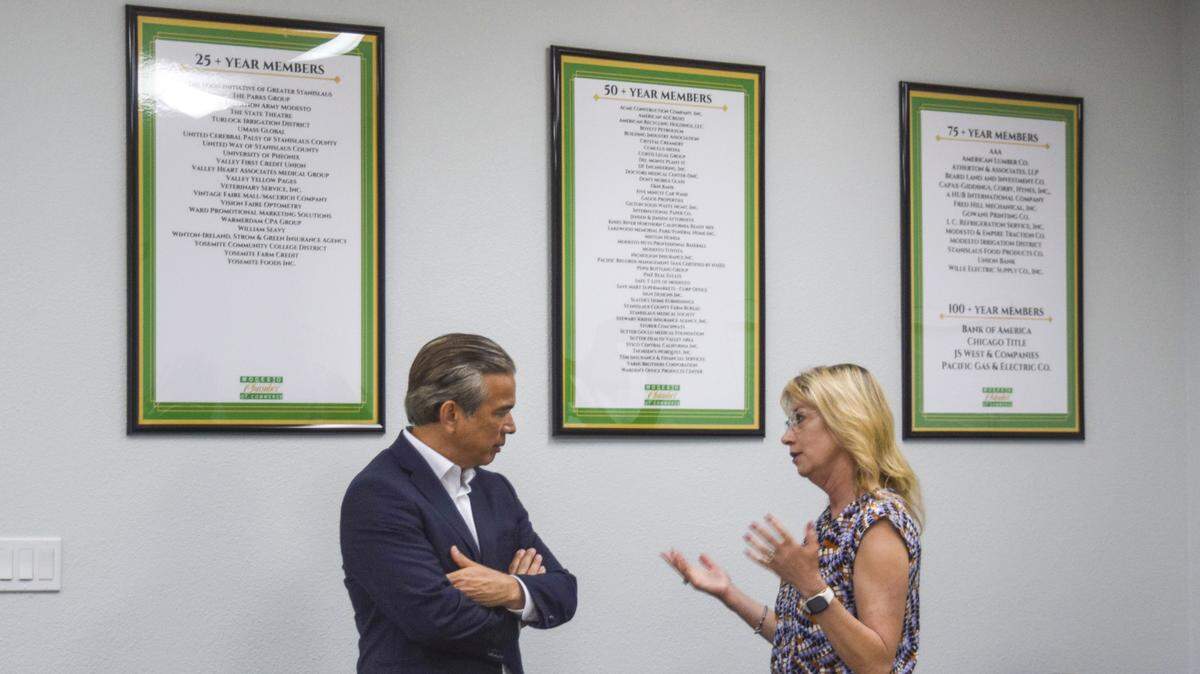
Christensen said many small businesses have been focusing on how they’re going to retain their employees. Some multigenerational businesses are closing because the operations have become too taxing due to tariffs.
Lyons added that tariffs are straining longstanding business relationships and making bipartisan cooperation more difficult outside California. “Good business makes good friends,” he said.
‘Unlawful tariffs’
California, the world’s fourth-largest economy and the nation’s leading agricultural exporter, has been at the center of legal challenges to federal trade policy.
Bonta said an initial round of tariffs imposed under the International Emergency Economic Powers Act was not authorized under the statute. After the state challenged the policy, the U.S. Supreme Court struck down those tariffs, providing relief to businesses and consumers, he said.
A second round of tariffs was later implemented under Section 122 of the Trade Act of 1974 and remains in effect. Bonta called those tariffs unlawful as well.
Earlier this month, the state filed a lawsuit challenging the Trump administration’s use of tariffs. Bonta said he does not expect additional tariffs to be imposed.
“We hope for an order from the court saying that the tariffs are unlawful, and they get struck down,” Bonta said. “Then everyone who has been subject to these tariffs will get a refund.”
He acknowledged that while some businesses may be able to withstand the financial strain until a court decision is reached, others may not survive. Even if tariffs are overturned, he said, some of the economic damage will be difficult to undo.
“It’s difficult to see when it’s imposing such harm and pain on American businesses struggling just to get by,” Bonta said.
Bonta also noted that while international trade relationships are being tested, he hopes global partners understand the policies reflect the actions of the Trump administration, not states like California that are actively challenging them.
He encouraged business leaders to share their experiences and consider joining legal efforts to help inform policy decisions.
“This is a president that I think wants to be and hopes to be pro business, at least in his words. The actions aren’t matching the words on this one,” he said.
This story was originally published March 20, 2026 at 12:48 PM.