‘No Kings’ protests against Trump planned in Stanislaus County. See when, where
Protesters across the country — including in Stanislaus County — are planning to gather for a new round of “No Kings Day” demonstrations opposing President Donald Trump and his administration’s policies.
“As President Trump escalates his attempts to control us, it is on us, the people, to show that we will fight to protect one another and our country,” No Kings organizers said. “If he believes we will roll over and allow him to take our freedoms, he is mistaken.”
The goal of these protests is to unite millions of Americans in peaceful protests to “overcome this repression.”
Here’s a look at No Kings events scheduled in Stanislaus County:
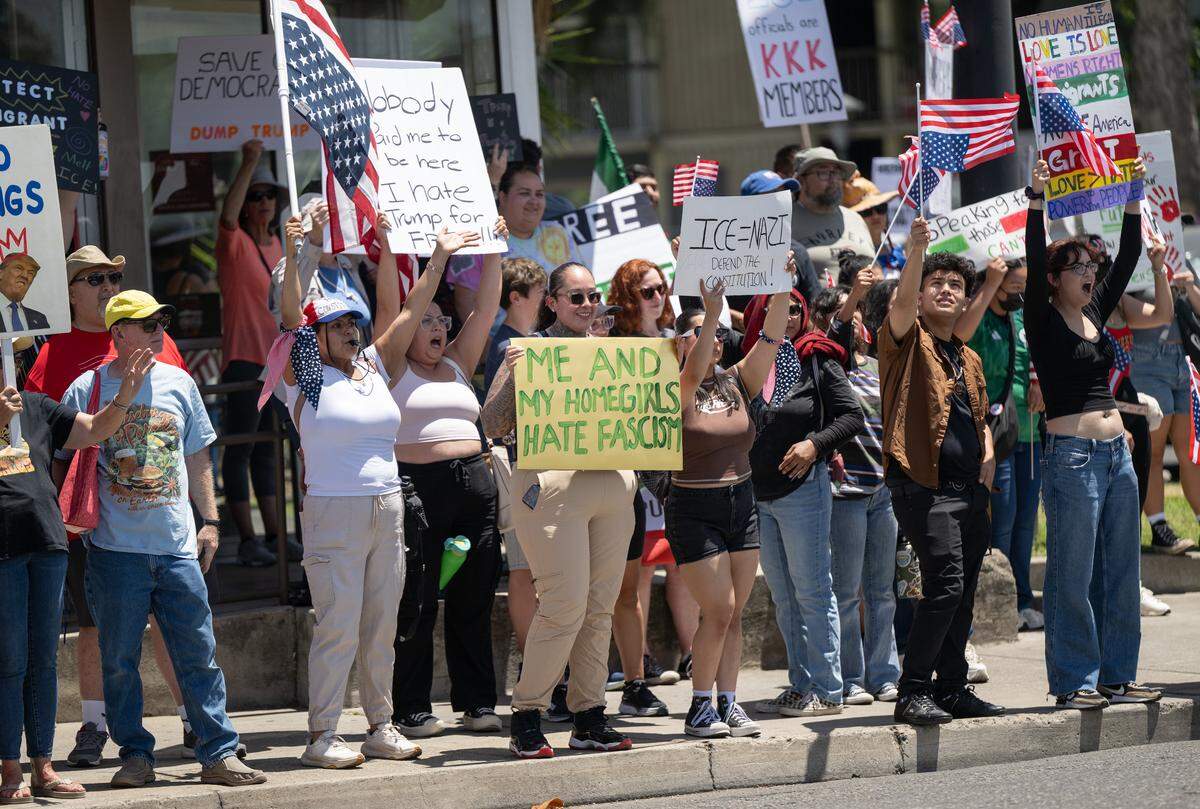
What is No Kings Day?
Organizers describe No Kings Day as a “commitment to nonviolent action.”
Several political organizations, including Americans for Tax Fairness and Amnesty International, are joining forces for nationwide protests.
“Each time we show up, we disrupt President Trump’s attempts to rule through repression and remind the country, and the world, that people power is our path to a truly free America,” No Kings organizers said.
Throughout 2025, millions of people across the country participated in what organizers called “morally grounded, nonviolent direct actions by any movement in U.S. history,” with events held in June and October.
“We expect all participants to seek to de-escalate any potential confrontation with those who disagree with our values and to act lawfully at these events,” organizers said.
When and where are No Kings events planned in Stanislaus County?
Two No Kings demonstrations are planned in Stanislaus County on Saturday, March 28.
In Modesto, protesters will gather at Graceada Park, 401 Needham St., from 11 a.m. to 1 p.m.
Another No Kings protest will be held in Turlock at the intersection of Countryside Drive and West Monte Vista Avenue from 10 a.m. to 2 p.m.
Why are people protesting Trump?
Demonstrators will gather on Saturday, March 28, to protest “the growing authoritarian actions of the Trump administration,” according to a news release.
“When our families are under attack and costs are pushing people to the brink, silence is not an option,” organizers said. “We will defend ourselves and our communities against this administration’s unjust and cruel acts of violence.”
More than 1,000 No Kings demonstrations are planned across the country.
“America does not belong to strongmen, greedy billionaires or those who rule through fear,” No Kings organizers said. “It belongs to us, the people.”
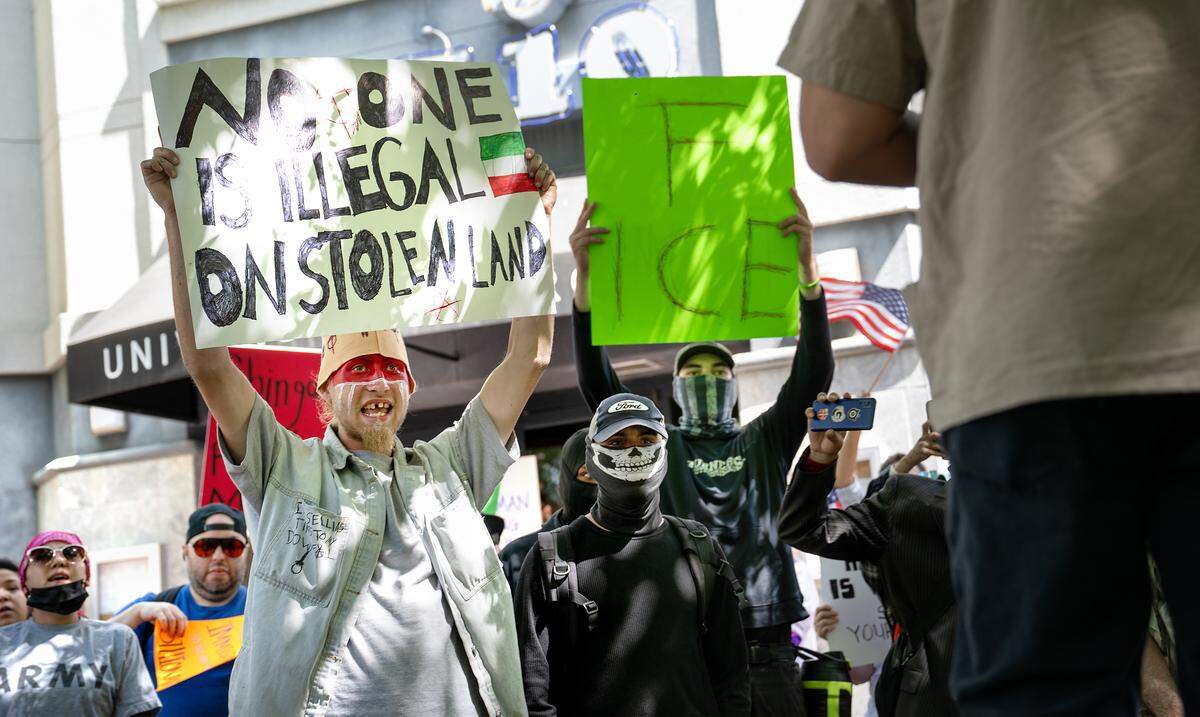
What are my rights as a protester in California?
“The First Amendment and the California Constitution protects your right to expressive speech,” Chessie Thacher, a senior staff attorney at the American Civil Liberties Union of Northern California, previously told The Sacramento Bee.
“That means that you have the right to say what you want to say, but with exceptions,” Thacher said.
These exceptions include true threats, defamation, harassment and obscenities.
If you’re in a public space, you have the right to take photos or videos of anything you can see.
Are counterprotests allowed?
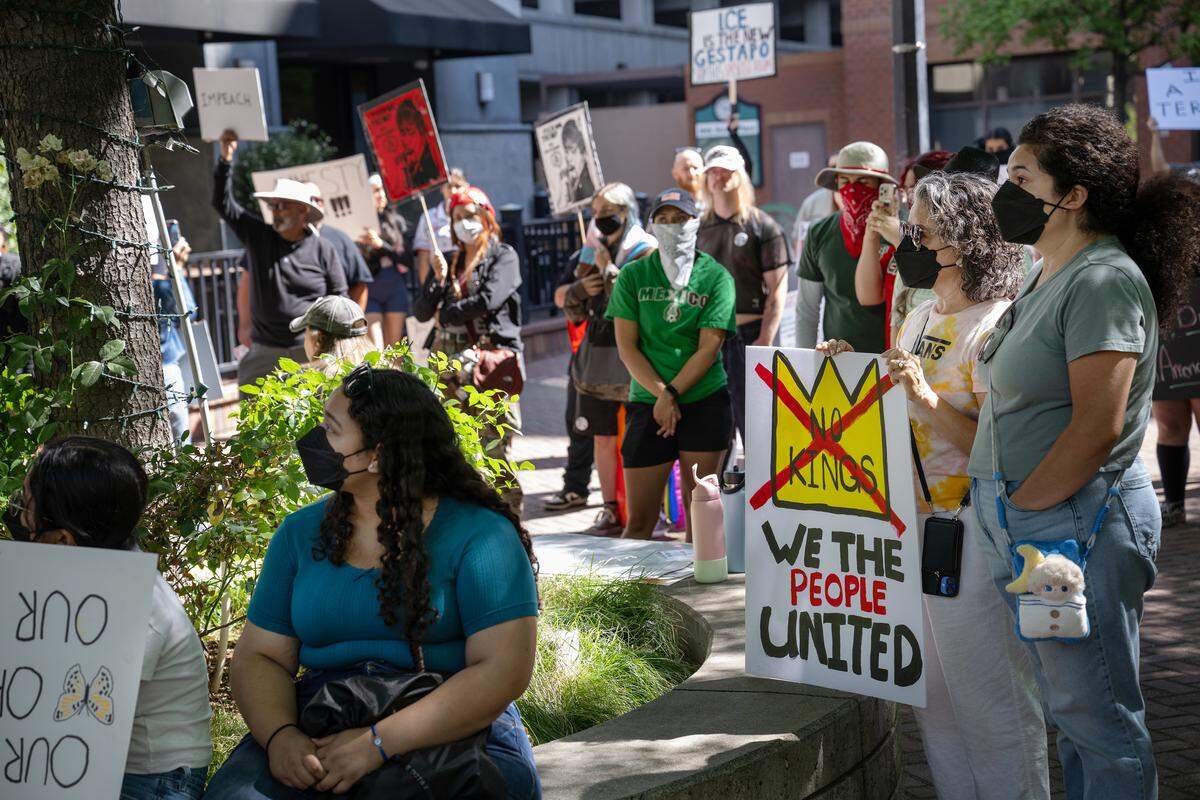
According to the American Civil Liberties Union of Northern California, those who show up to protest a protest also have rights.
“Police must treat protesters and counterprotesters equally,” the organization said.
Police are allowed to keep opposing groups apart to prevent conflict, but both sides still have the right to be within sight and hearing distance of each other.
When can police interfere with protests?
When protesters fail to comply with legal restrictions, such as evoking violence, law enforcement can intervene, the ACLU website says.
“Civil disobedience is a public, nonviolent, conscientious yet political act contrary to law, usually aimed at bringing about a change of the law or government policy,” as defined by the U.S. Department of Justice.
However, “civil disobedience is not protected speech under the Constitution,” according to the UCLA Police Department.
An act of civil disobedience includes sitting on a public road to block traffic. It can be a successful tool in non-violent action, experts say.
What can I do if my rights were violated?
Here’s what the ACLU website says to do if you feel your rights have been violated during a protest:
- Write down everything you can remember, including officers’ badge numbers and what agency they work for.
- Get contact information from any witnesses.
- Take pictures.
“Once you have all of this information, you can file a written complaint with the agency’s internal affairs division or civilian complaint board,” the ACLU said.