Boaters in Stanislaus and beyond can take these steps against invasive mussels
Boaters in Stanislaus County and beyond can join the battle against a new invasive creature.
The golden mussel can disrupt native wildlife and clog water infrastructure and boat engines, state officials said. It was first detected near the Port of Stockton in December. Most other sightings also have been in or near the Sacramento-San Joaquin River Delta, but one was as far south as Kings County.
Stanislaus had zero detections as of Thursday, April 10, according to the California Department of Fish and Wildlife. But the threat has prompted the county to suspend boating at Woodward Reservoir, fed by the Stanislaus River north of Oakdale. At Modesto Reservoir, the other site under county management, boaters must certify that they are mussel-free.
A statewide campaign urges owners to wash down their vessels upon returning home. They also should drain any lake water that remains, let the surfaces fully dry and wait 30 days before boating again. The advice applies to canoes, fishing craft, water-ski boats and anything else in streams and lakes.
The CDFW said the golden mussel is native to fresh waters in China, Korea and southeast Asia. It has spread mainly through dumping of ballast water from freight ships, including Japan, Taiwan and parts of South America. Stockton was its North American debut.
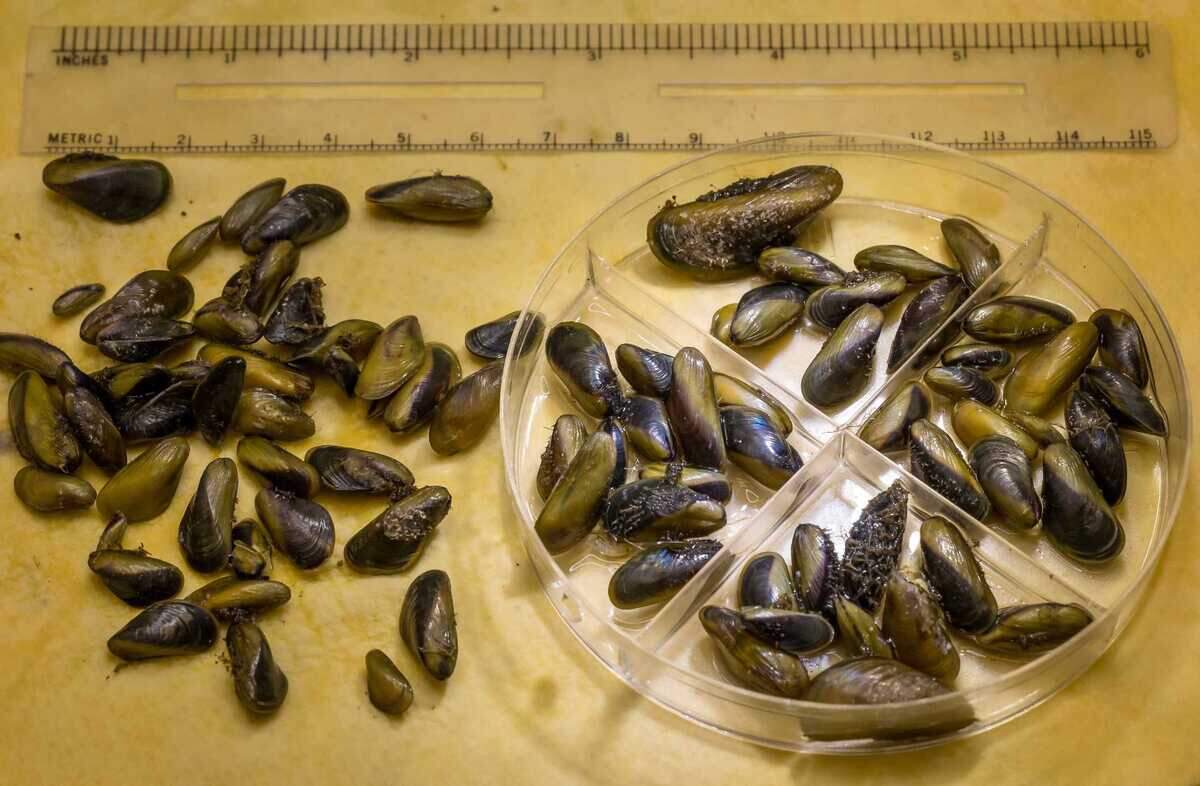
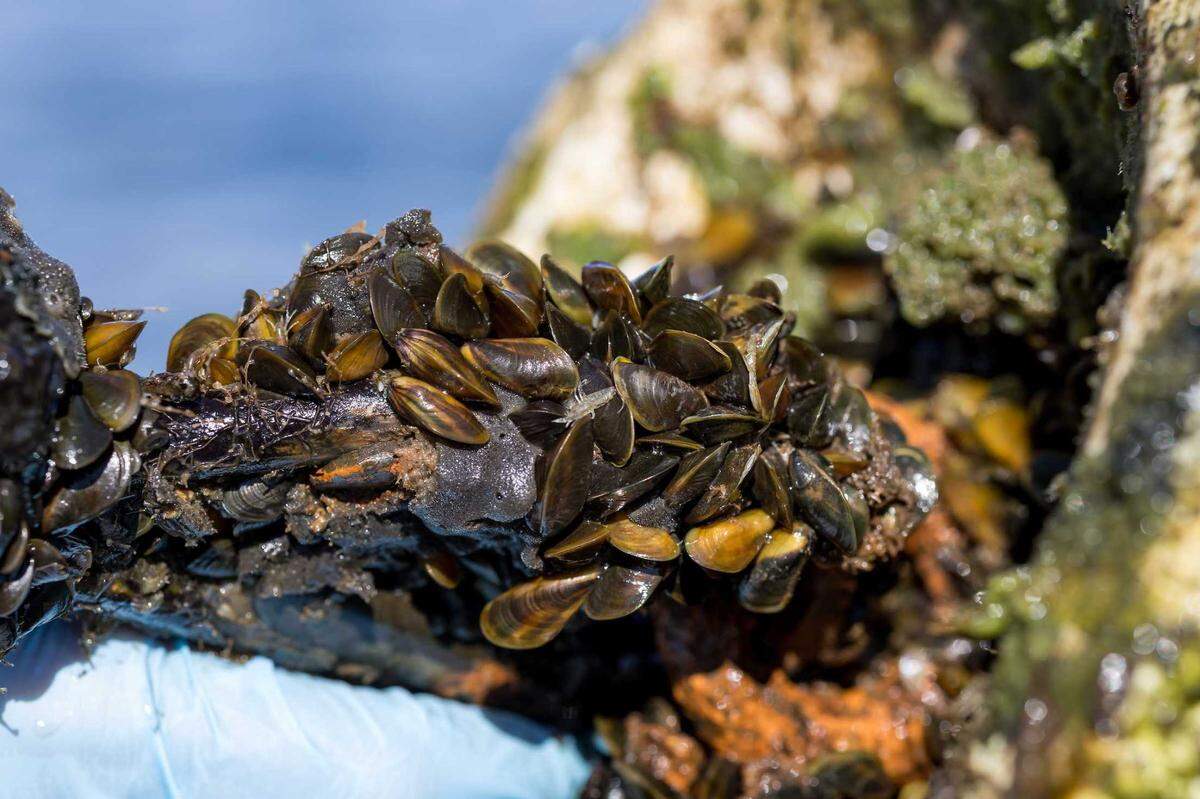
The invaders grow up to about 1.5 inches long and have shells ranging in color from light golden to brown. They attach themselves to hard and semi-hard surfaces, as dense as 200,000 per square meter. This species can outcompete native mussels for zooplankton and other microscopic food. They can interfere with canals and pumps, and attach themselves to boat hulls and engines.
Why do rules differ at two local lakes?
Woodward and Modesto reservoirs have different rules due to water chemistry, said an email from Tera Chumley, director of county Parks and Recreation.
“The golden mussel thrives in higher calcium levels,” she said. “Modesto Reservoir has low levels and therefore is at low risk, where Woodward Reservoir is at medium calcium levels and therefore at moderate risk.”
Modesto Reservoir is east of Waterford and supplied by the Tuolumne River. Chumley said the site will have mussel-detecting dogs on weekends between Memorial Day and Labor Day. The K-9’s aided earlier campaigns against the quagga and zebra mussels.
Don Pedro Reservoir on the Tuolumne asks boaters to self-inspect but remains open for now. Turlock Lake, downstream in the watershed, has been closed to recreation since 2020 for lack of a concessionaire.
New Melones Reservoir on the Stanislaus River has suspended boat launches. Tulloch Reservoir, lower on the same stream, has done the same.
What are the rules higher in the Sierra?
The Stanislaus National Forest urges visitors to follow the clean-drain-dry advice. It has numerous creeks feeding the Stanislaus and Tuolumne rivers and popular reservoirs such as Pinecrest and Beardsley. Some forest areas remain off-limits due to the winter snowpack but will open as spring progresses.
The Sacramento Bee reported on new quarantines and inspections at Folsom Lake and Lake Clementine, both northeast of the capital. Higher up in the Sierra Nevada, Lake Tahoe already required that visiting boats be decontaminated.
“Golden mussels are a greater threat to Tahoe than other aquatic invasive species,” said Dennis Zabaglo, program manager for the Tahoe Regional Planning Agency “Boaters and paddlers have a key role in protecting the waters they enjoy.”