Central Valley air quality 101: How to protect yourself from it and report on it
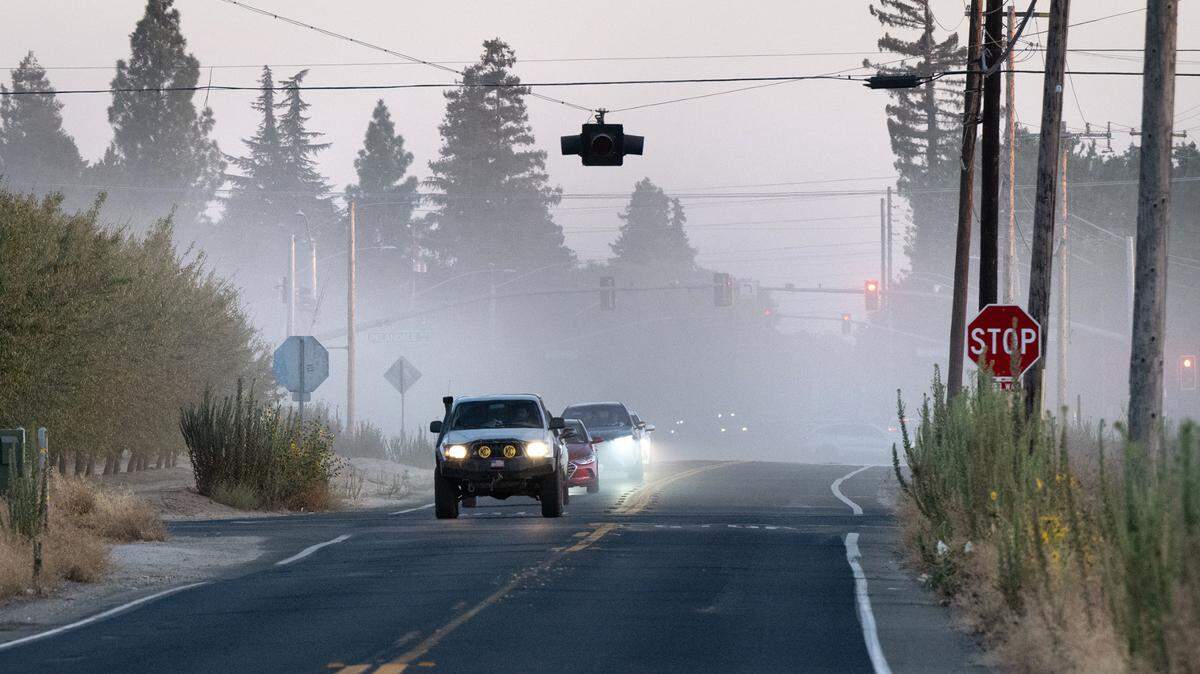
Stanislaus County is no stranger to poor air quality. At a Wednesday community meeting in Riverbank, residents gathered to discuss the region’s persistent air quality challenges and explore steps to safeguard public health.
Edgar Garibay, Project Manager of Valley Improvement Project and one of the meeting’s organizers, explained the unique geographic hurdles of the San Joaquin Valley.
“We live in some sort of bowl, like a cereal bowl, and everything that surrounds us stays in our communities,” he said. The Valley’s topography traps pollutants from major highways, diesel vehicles, tractors, wood-burning stoves, and industrial facilities, he said.
To tackle these challenges, VIP has partnered with the Central California Asthma Coalition, Central California Environmental Justice Network and the Central Valley Air Quality Coalition. These organizations are working to build an emissions reduction plan intended to help mitigate the impacts of local air pollution through the lens of environmental justice.
How to protect yourself from poor air quality
During the meeting, residents and advocates shared practical tips for mitigating the health risks of poor air quality.
These included wearing N95 masks, using air purifiers and limiting outdoor activities on smoky or high-ozone days. Residents were encouraged to download the Valley Air app to stay informed about air quality conditions in their communities.
The San Joaquin Valley Air Pollution Control District’s Clean Air Rooms Program also offers free residential air filtration units to low-income households in disadvantaged communities. To qualify, applicants must live within the district’s boundaries and have not previously received a unit.
Martha Armas-Kelly, Program Coordinator at the Environmental Justice Project of Catholic Charities in Modesto, advised paying attention to indoor air quality as well, adding that basic measures like cleaning curtains can help reduce indoor pollutants.
“We have a lot of fires right now that are going on down south, and the assumption is that they’re down south and they’re not affecting us, but all those carcinogens are traveling, and whether we want to recognize them or not, they do come into our topography, and it can go from basic things because indoor air quality is something that affects us as well,” she said.
Leaving the Central Valley altogether was also listed as an option.
“It’s gonna be hard to move out of where we’re currently at and where we call home,” Garibay said.
How to report poor air quality
Community members also discussed the importance of reporting air quality issues. Garibay urged residents to report odors or other signs of contamination that could affect their health.
Matt Holmes, North Valley Project Coordinator for VIP, explained that a sufficient number of public complaints about a facility could legally require the Air District to shut it down. He also stressed the importance of asking the air districts to have a technician certify the complaints.
“Those are things that you don’t have to live with if we use this power to report and coordinate with each other,” Holmes said.
Gustavo Aguirre Jr., Kern County Director for the Central California Environmental Justice Network, suggested going further by asking to review investigation reports to ensure inspectors properly addressed the issue and documented any violations.
In cases of restricted pesticide use near residential buffer zones, complaints should be directed to the county’s Agricultural Commissioner.
“Reports are our friends and the more reports we create, the better it is for us to really double down on these facilities that are causing a lot of pollution and problems in our communities,” Aguirre said.
Grayson resident John Mataka shared his experience during the almond harvest when he noticed thick dust in the air early one morning as children walked to school. Concerned about the potential health risks, he reported the issue to the Air Pollution Control District.
Mataka said he was told that farmers have a right to farm but could suggest to the farmer that they sweep at a different time when children aren’t outside. He said he never saw any follow-up or action taken.
“In the Valley, farmers have a super strong political hold and agencies are afraid to do too much,” Mataka said.