Second Harvest: Demand for food continues to increase thanks to pressure of inflation
A 52-year-old mother was among the dozens of people lined up outside south Modesto’s Bret Harte Elementary School on Thursday morning for Second Harvest of the Greater Valley’s Fresh Food 4 Kids program.
Parent volunteers handed out plastic bags filled with carrots, potatoes and celery, as well as oatmeal, canned and boxed food, plastic bottles of juice and iced tea, soup and other staples.
The mother of five, who declined to give her name, said she’s known about the program for a while but used it for the first time Thursday. “Everything went up,” she said about food prices. “It’s really hard for a family of seven. That’s why I came.”
The woman said she did not use the program before because she believed others needed it more.
“I’m one of those parents that don’t like to bother,” she said. “I’d rather other people have the advantage. But you have to sometimes. You have to. You are always thinking that people are more less than you, but you don’t see the fact that you are in the same boat.”
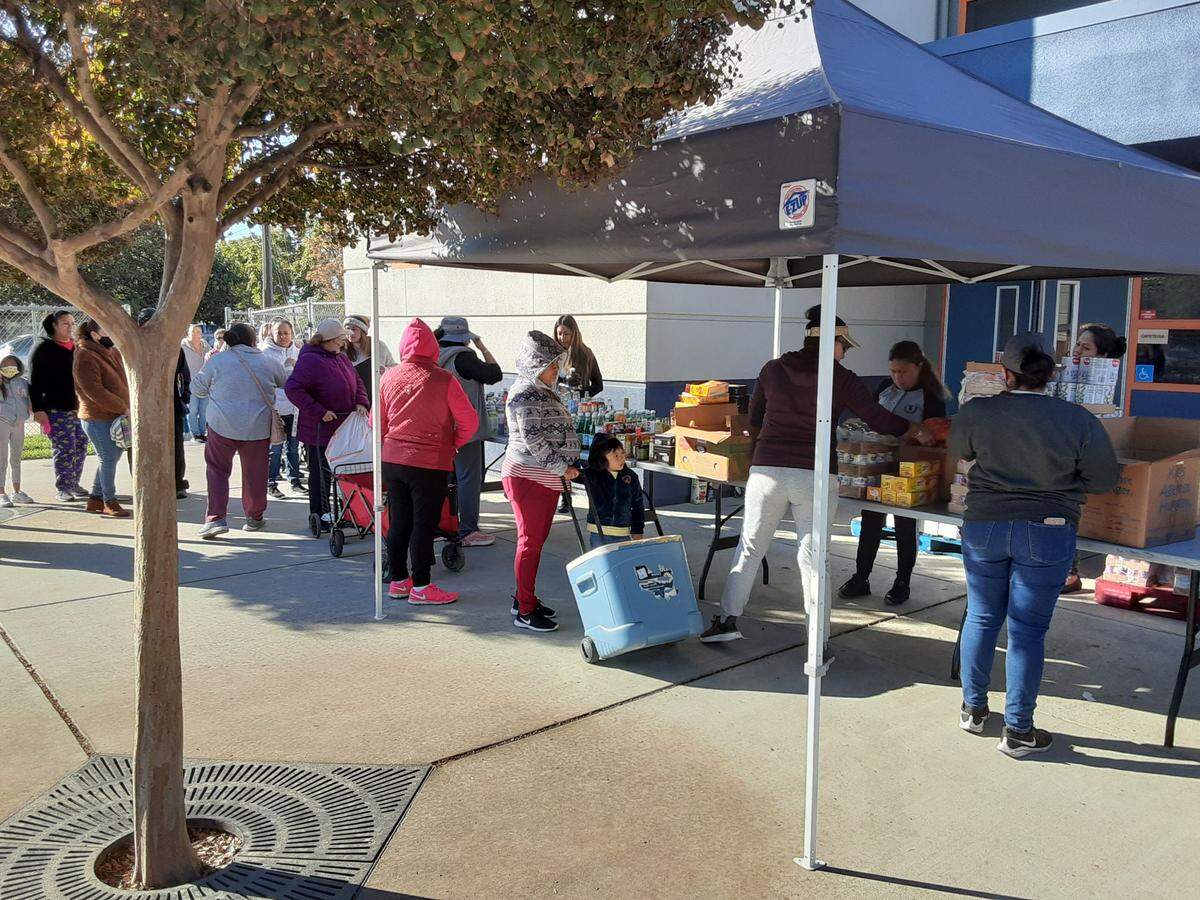
Nearly three years since the start of the pandemic, the demand for food assistance continues to increase, accentuated by the nation’s worst inflation in about 40 years.
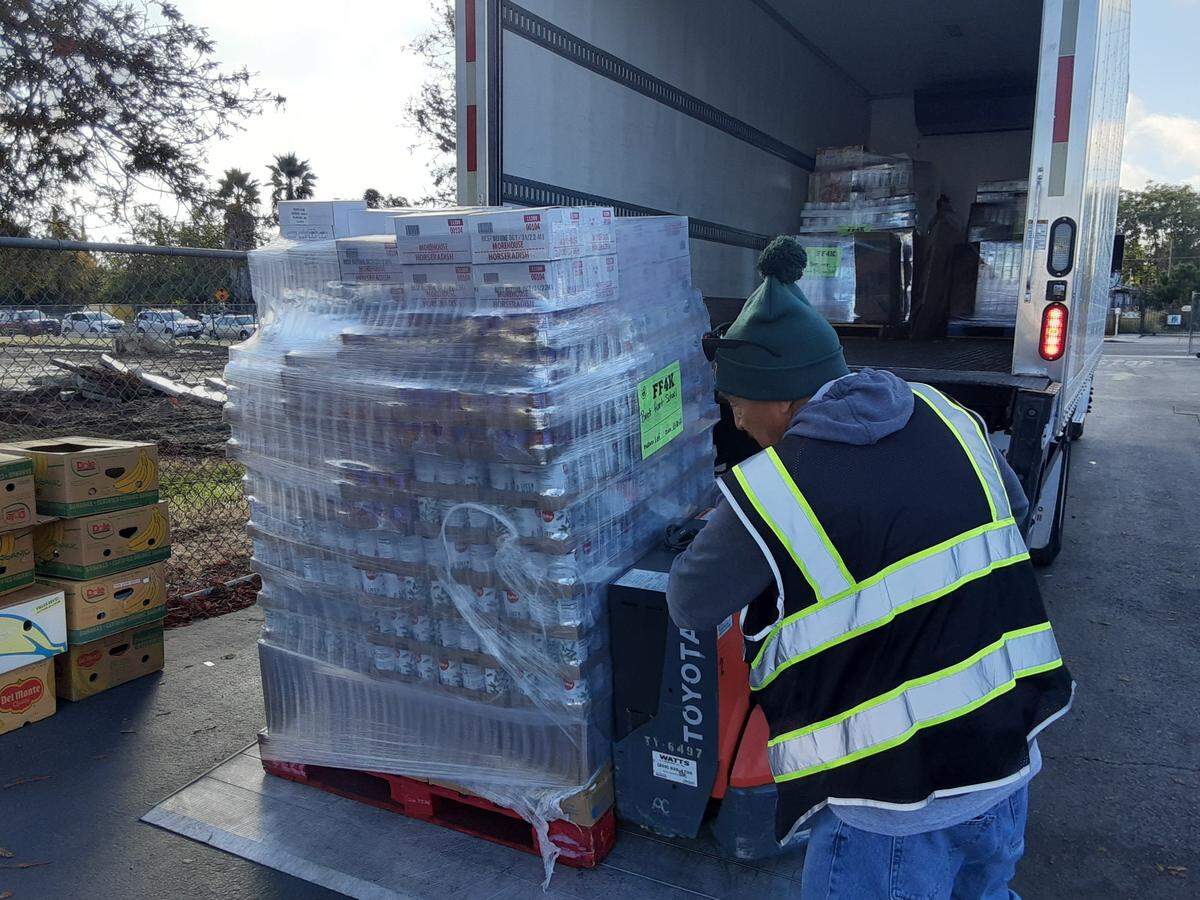
Manteca-based Second Harvest says it is providing 511,000 pounds of food per week in San Joaquin and Stanislaus counties through its programs, as well as what it provides to food pantries, a 5% increase from about a year ago. Forty-two percent of the food goes to Stanislaus County.
The food bank was providing 230,000 pounds of food each week to the two counties before the pandemic. A year ago, Second Harvest was providing the two counties with 485,000 pounds each week.
Families that never worried about having enough to eat now worry as they face rising prices and a wobbly economy, said Jessica Vaughan, Second Harvest’s development and communications director.
She said that worry can be found even among people who have what are considered solid, middle-class jobs.
Second Harvest also serves Merced, Amador, Tuolumne, Alpine, Calaveras and Mariposa counties, and the demand in those areas remains high, too.
Bret Harte Vice Principal Jordan Blansit said the program has been operating for about a couple of years and evolved out of the school providing lunches to its students when they were learning at home during the pandemic.
Blansit said Bret Harte’s Fresh Food 4 Kids program is open to anyone who lives in the neighborhoods that surround the school. She said what is good for a neighborhood is good for its school.
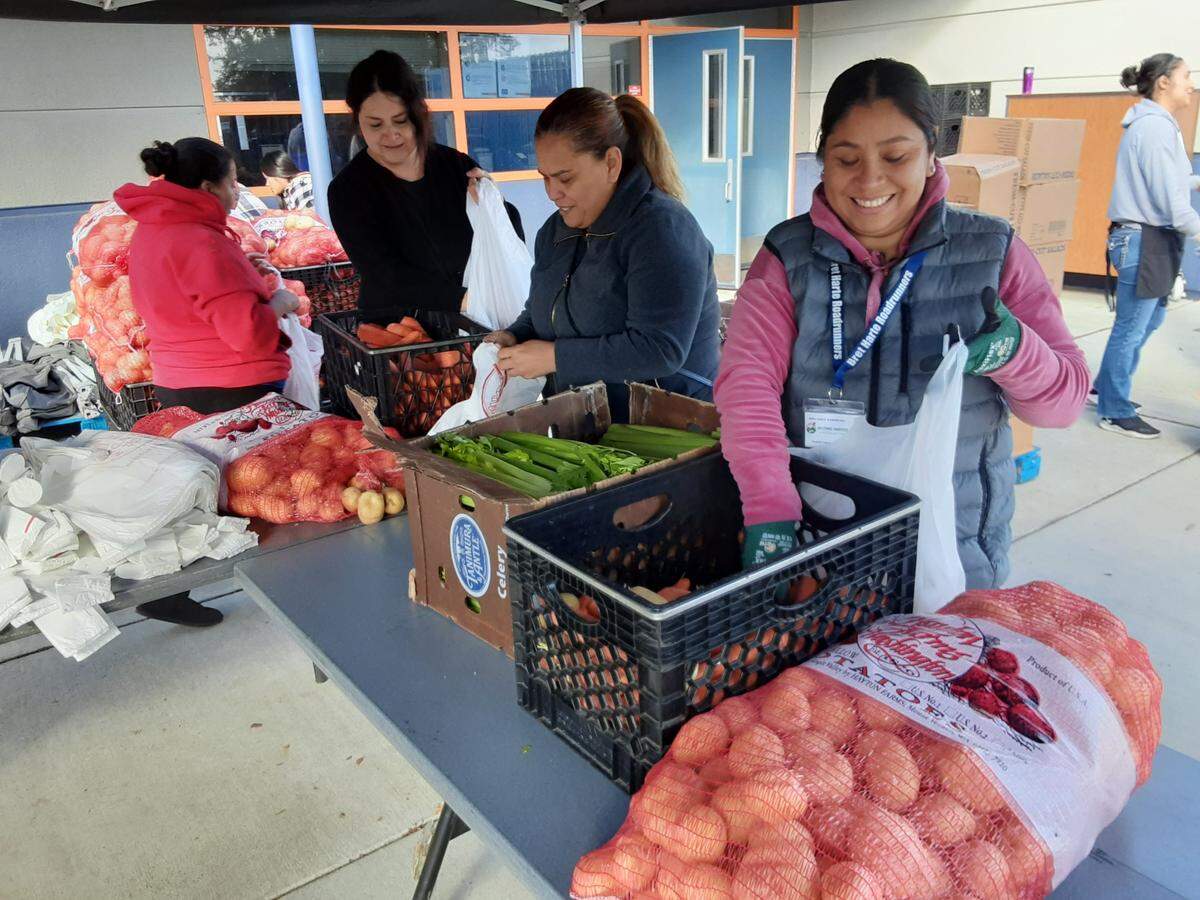
Blansit said the program offers food twice a month at the school, which has about 900 students. She said typically about 250 to 300 people will receive food each time. The amount of food is based on the size of each family. The program runs year-round and is staffed by parent volunteers.
Second Harvest has Fresh Food 4 Kids programs at 18 schools in San Joaquin and Stanislaus counties. The programs are based in schools that are not near grocery stores and-or have high numbers of students receiving free or reduced-priced lunches. The idea is to bring food into communities where the need is great, said Vaughan.
Family budget stressed
The 52-year-old mother of five said her husband works as a truck driver and they live in the neighborhood. Her children attended Bret Harte when they were younger. Rising food prices have taken a big bite out of the family’s budget, essentially tripling their grocery bill from $100 to about $300, she said.
“It’s really hard.,” she said. “Sometimes we have to leave some stuff out. Meats basically. ... And nowadays with this cold weather, you need the chicken, and the chicken is really expensive. It’s like double the price.”
Vaughan said the Bret Harte program does not give out frozen meat because of food safety concerns. The food is placed on tables outside, and the distribution runs from about 9:30 to 11 a.m.
Vaughan said Second Harvest provides peanut butter and canned tuna and chicken as it’s available. But Second Harvest is facing the same problems as shoppers in grocery stores: Some foods are hard to get and prices keep going up.
The grocery chains and food manufacturers’ distribution centers continue to donate to Second Harvest, but they don’t have as much to give as they did before the pandemic. Second Harvest CEO Keenon Krick said in an email that food from grocery chains and distribution centers is down about 25% since February.
Second Harvest is affiliated with Feeding America, a network of more than 200 food banks across the country. Feeding America has provided it with more grants to buy food. And while grocery chains and food manufacturers may not have as much food to donate, they have increased their monetary donations to Feeding America.
Vaughn said Second Harvest has been able to meet the rising demand for food.
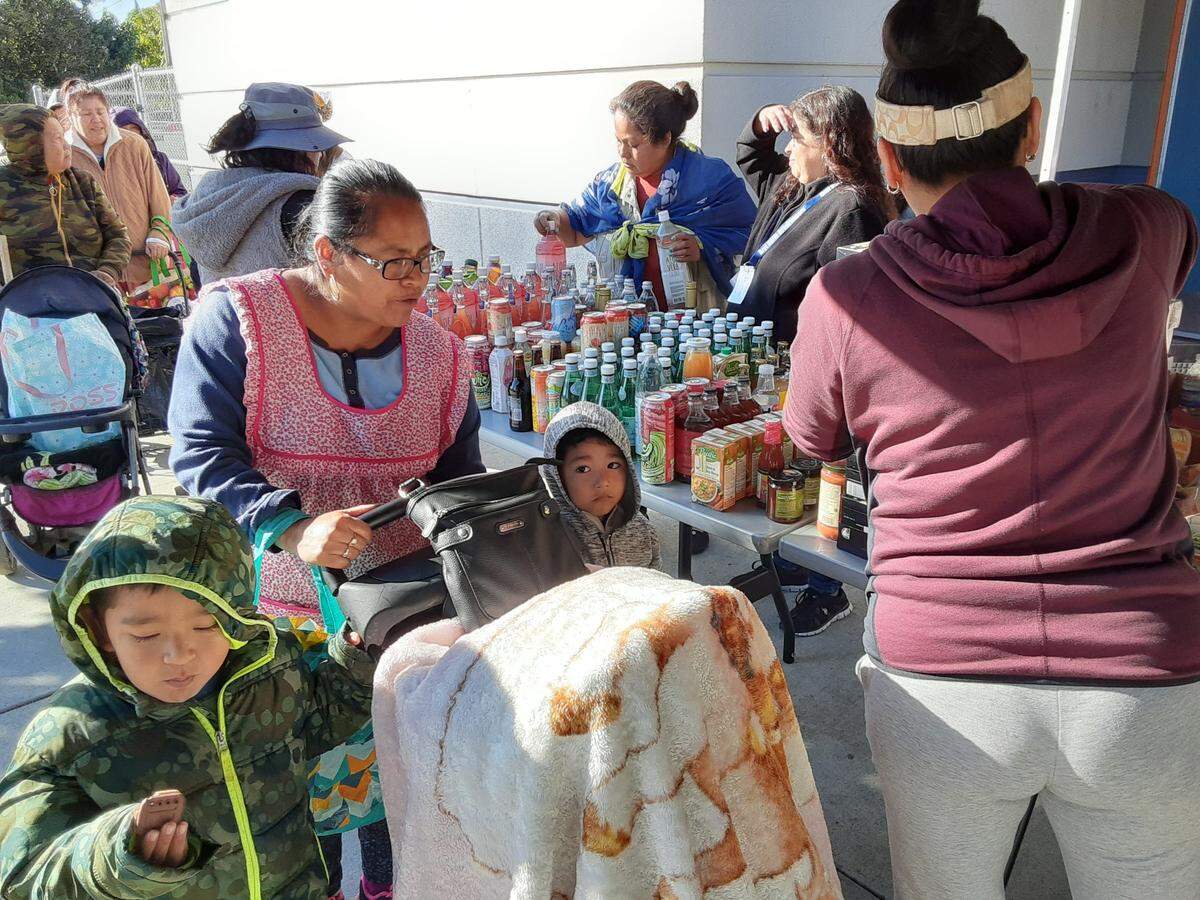
A 35-year-old mother of four — including a Bret Harte first-grader — also was among those waiting Thursday. She said she stays home with the kids while her husband works in orchards. She said they both pick cherries when they are in season.
“It helps me when I’m under pressure, when I don’t have enough money for the month to pay all my bills,” she said about the Fresh Food 4 Kids program, which she has relied upon for a couple of years.
The woman said she and her family would go hungry at times without Fresh Food 4 Kids. “I wouldn’t have food at the house for my table.”
Pricey holiday turkeys
Second Harvest needs help to get through the holidays. It provided 6,700 turkeys to its food pantries in San Joaquin and Stanislaus counties last holiday season.
Vaughan said because the price of frozen turkeys has about doubled, Second Harvest understands that may be too much for someone to donate. She suggests people consider a monetary donation that can be used for $30 Raley’s Supermarket gift cards.
Families can spend the gift cards on the main course for their holiday meal. The pantries that rely on Second Harvest will provide the side dishes. More information on how to help Second Harvest is available at localfoodbank.org. Click on the Turkey’s -R- Us link to help with the holidays. The website also has links to donate to Second Harvest’s other programs.
Krick, the Second Harvest CEO, said a year ago that it could take five years for demand to return to what it was before the pandemic. But now he and Vaughan said too much has happened in the last year to know whether that prediction will stand up.
“There isn’t really a magic number,” Vaughan said. “We’re still hoping for that five years, but we really don’t know because there are so many uncertainties right now.”
She said that includes supply-chain woes, a wonky economy and the lingering affects of the pandemic. “I think it’s just a lot of things all at once kind of creating a perfect storm,” Vaughan said.
This story was originally published November 10, 2022 at 2:55 PM.