Stanislaus County is still plagued by illegal marijuana grows 4 years after Prop. 64
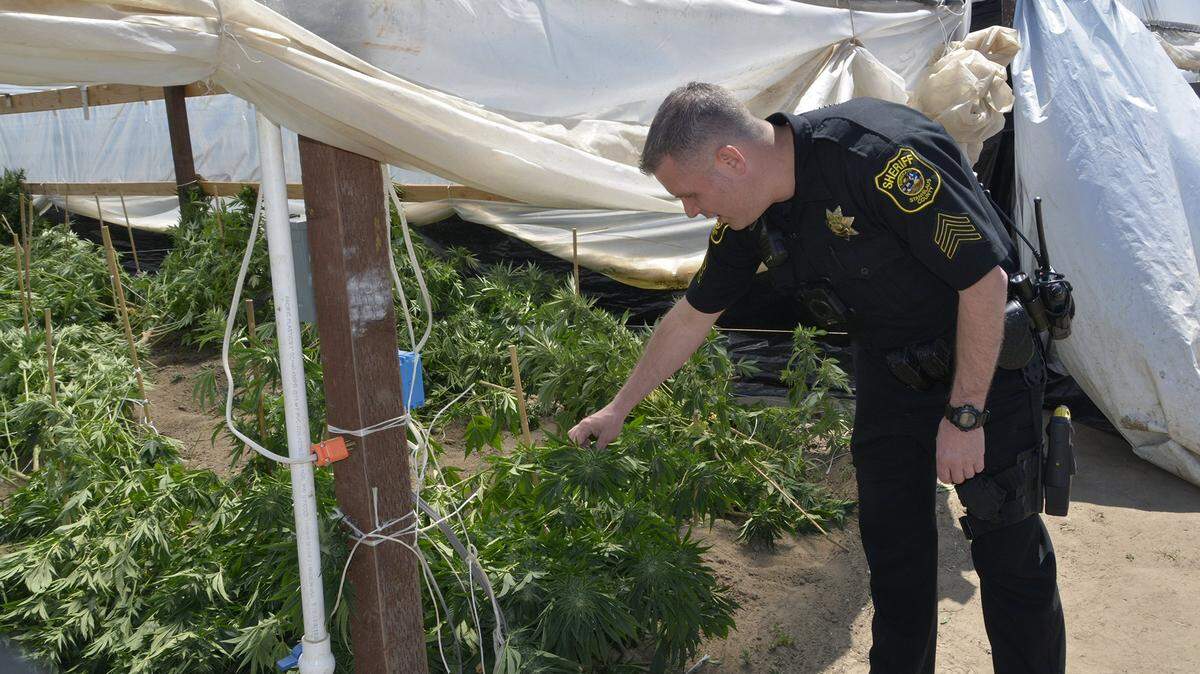
Stanislaus County has issued 39 permits for cannabis commercial operations in almost three years since adopting regulations for the newly legalized industry.
County supervisors received a report on the county’s cannabis program Tuesday and also heard about efforts to eradicate illegal marijuana grows that plague local communities.
According to the report, 16 businesses holding 26 permits are actively engaged in cultivation, distribution, manufacturing and retail sales of cannabis products in unincorporated areas. The county is reviewing applications for eight additional permits.
The county imposed a limit of 61 commercial cannabis permits in rolling out a “conservative allowance strategy” after Proposition 64 in 2016 legalized adult marijuana use and established a regulated cannabis industry in California. Modesto and the eight other cities in Stanislaus County have their own policies for approving dispensaries and other cannabis enterprises.
Some applicants who cleared background checks and the county’s vetting process ran into opposition from neighbors at land-use hearings or were not approved for waivers when their projects violated residential setbacks.
County leaders use fee revenue generated by the legal industry to fund efforts to eliminate what’s estimated to be 1,100 to 1,500 illegal pot grows within the county’s boundaries.
Top county executives said Tuesday the black market trade is marked by crime and violence, public nuisance and environmental damage. It continues to exist because these growers have paying customers.
Supervisors were told about the difficulty of prosecuting illegal growers under the softer drug enforcement laws today. Supervisor Terry Withrow said the county won’t put a bigger dent in unlawful cultivation until it starts seizing the property of owners who lease to these growers.
Sheriff Jeff Dirkse outlined the statistics from taking down illegal cultivation. The Sheriff’s Department, in coordination with other agencies, destroyed 68,100 plants and seized 6,300 pounds of processed marijuana over a 12-month period ending June 30.
The law enforcement operations resulted in 111 arrests and confiscation of 92 firearms.
Dirkse said illegal grows are the No. 1 complaint he hears from residents. He also sees numerous comments on social media chiding law enforcement for marijuana busts in the era of recreational use in California.
“They are illegal and they are not crime free,” Dirkse said of the non-permitted grows spread across the valley floor.
The sheriff noted that a shootout on Stoddard Road two weeks ago, tied to an illegal grow, wounded three people. The injuries were nearly fatal for one gunshot victim but deputies who responded were able to staunch the bleeding, Dirkse said.
The sheriff noted that three homicides in 2018 were related to illegal growing operations.
Sheriff’s office takes down illegal greenhouses
To demonstrate the scale of some illegal cultivation, Dirkse said search warrants were served in October at six addresses near Moore and McGee roads in Ceres. Authorities took down 40 greenhouses, seizing 4,072 cannabis plants, 1,484 pounds of marijuana, as well as 4 ounces of methamphetamine, six firearms and $83,000 in cash.
Four people were arrested on felony charges and 12 on misdemeanor violations. The Sheriff’s Department used 73 personnel in the raid costing $73,430, not counting the costs for other participating agencies including Ceres police and the Drug Enforcement Agency.
In 2019 and 2020 thus far, authorities eliminated almost 100,000 outdoor and indoor plants worth $717,864 through law enforcement operations, warning letters sent to addresses and volunteer compliance.
In the 2019-20 budget year, development agreements with cannabis permit holders produced $3.4 million in fee revenue against $1.4 million in cannabis-related costs to the county, according to Tuesday’s report.
The $2 million netted by the county will fund equipment purchases, a business tracking system and civil enforcement, which were put on hold by the coronavirus pandemic this year.
For the fiscal year that began July 1, revenue from the legal cannabis industry is estimated at $3.1 million, while the county’s cannabis-related costs are expected to be $3.2 million this year, county staff said.
County departments from the CEO’s office to environmental resources and planning spend time on the cannabis program; in addition, a dozen employees are assigned to the cannabis program including a manager, criminal investigator, deputy district attorney, zoning enforcement officer, five sheriff deputies, a crime analyst, community services officer and sergeant.
Salary costs for the dozen employees are $2 million a year.
Cannabis businesses also pay community benefit fees. The county has collected $368,000 as of Nov. 1.
The county is developing a grant program for distributing those funds to charities and community programs possibly starting in April.
District attorney faces challenges
With the laws decriminalizing marijuana, the district attorney faces challenges in prosecuting people who are arrested and cited as illegal grows are taken down.
Thus far, prosecutions have resulted in 23 felony and 13 misdemeanor convictions, District Attorney Birgit Fladager said.
Eleven cases have been dismissed and 29 cases are pending. Some of those charged with misdemeanor violations of marijuana growing are simply cited or, if they’re booked in jail, are released on a promise to appear in court, Fladager said. The majority of those defendants are not making court appearances, she said.
Laws have reduced cultivation without a permit to a misdemeanor. A person with a first misdemeanor conviction is eligible for a diversion program or other options.
Fladager said her office is focused on felony marijuana cases involving violence, firearm charges, endangerment of minors or environmental damage. For example, an illegal grow near the San Joaquin River was causing seepage of chemicals and hazardous materials into the waterway, prompting California Fish & Wildlife and other state agencies to get involved with the investigation.
In addition to violation of environmental statutes, the grower was charged with another felony alleging he hired a minor to help with cultivation.
In another case, two people were kidnapped, pistol whipped and robbed after they agreed to sell a pound of black-market marijuana to the three alleged assailants.
“We are focusing on folks who are committing violence and we are focused on those who commit environmental harm to our rivers, lakes and streams,” Fladager said.
This story was originally published November 12, 2020 at 8:20 AM.