Velvet Grill continues indoor dining, pushing back as fines of $1,000 per day pile up
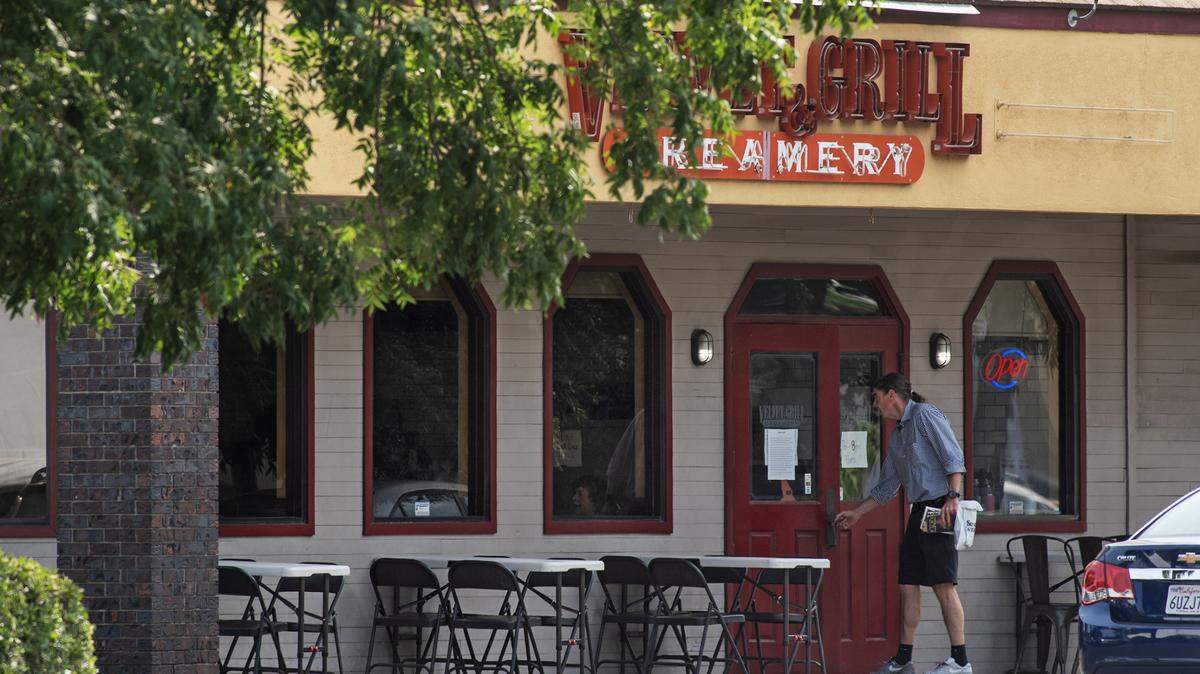
The corporation that owns the Velvet Grill & Creamery restaurants is appealing Modesto’s decision to fine each restaurant $1,000 for every day they continue to serve customers indoors, in violation of the state’s public health order designed to contain the new coronavirus pandemic.
The city imposed the civil penalties Aug. 29 on the Dale Road and McHenry Avenue restaurants after it tried several times to gain compliance and warned the restaurants they would be fined if they did not stop indoor dining. The fines amounted to $40,000 as of Thursday.
Bill Owen — an officer and director with Velvet Restaurants Inc., which owns the two restaurants — confirmed Wednesday that they continue to serve customers indoors. He has said he did not believe the public health order is constitutional and that no one is forcing customers to eat at his restaurants.
The fines are on hold pending the appeal before a hearing officer. City spokesman Thomas Reeves said Wednesday that Modesto is “trying to schedule with an available hearing officer during COVID-19” and no date has been set.
Fines can top $100,000 in a year
Gov. Gavin Newsom on July 1 tightened restrictions — including banning indoor dining — in Stanislaus and 18 other counties that had seen a surge in COVID-19, the disease caused by the new coronavirus. The Velvet Grill restaurants were subject to 21 complaints over indoor dining from early July to mid August. Restaurants are allowed to offer outdoor dining and takeout.
Reeves said the civil penalties can reach $100,000 per restaurant in a calendar year. He said if Modesto prevails against the Velvet Grill it could record the penalties with the county clerk-recorder’s office as a personal obligation against the business owner.
He said Modesto is covering new ground as it enforces the state’s public health orders. For instance, it does not know if the hearing officer could side with the city but reduce the fines. But Reeves said Modesto could end up collecting pennies on the dollar.
So is that effective enforcement when a business does not follow the rules and fair to those that do?
Reeves said the Velvet Grill is an outlier. As of Aug. 21, Modesto’s code enforcement officers had opened 127 cases since April 29 against businesses suspected of violating whatever public health order was in place at the time.
He said, with the exception of the two Velvet Grills and Tru-Fitness, all of the other businesses the city has investigated have come into compliance without enforcement action.
Modesto started fining Tru-Fitness $1,000 per day on Sept. 8 for allegedly operating indoors. Reeves said as of Wednesday the gym had not filed an appeal. Tru-Fitness has until Sept. 23 to do so. The gym owner declined to comment Thursday.
Reeves said Modesto’s focus has been on gaining compliance voluntarily and through educating businesses. He said the city has found success with that but said he can only speak about the businesses the city has received complaints about and investigated.
“We acknowledge that times are tough for everyone right now,” Reeves said. “We are willing to work with any business to try to make it easier for them to do business, and I believe we are doing that. ... Many businesses are making many sacrifices that affect their families and their employees.”
Appeal to Superior Court
Velvet Restaurants Inc. claims in its appeal that the restaurants have not violated any laws or health codes or created a public nuisance. Modesto is citing its own municipal code in claiming the restaurants are a public nuisance by engaging in conduct that puts the public’s health at risk.
Reeves said if Velvet Restaurants loses before the hearing officer it can file an appeal in Stanislaus County Superior Court. Owen, the Velvet Restaurants officer, said he has asked the city whether he has any additional appeal options with the city before that step.
Leslie Jacobs, a professor at the McGeorge School of Law in Sacramento, said the governor and the state have the authority to take reasonable measures to protect the public’s health in a pandemic, including prohibiting indoor dining or requiring people to wear masks.
She said the measures are broad and blunt because they are designed to protect all of the public and authorities are dealing with a disease in which there still are a lot of unknowns.
She said it makes sense Modesto would use its municipal code to enforce the state’s public health order. She said when she looked at the governor’s executive orders as recently as July she found ambiguity in how those orders would be enforced.
This story was originally published September 19, 2020 at 5:00 AM.