Modesto mayor’s proposal for urban limit line won’t make November ballot
Modesto has not done enough homework to ask voters in November to approve an urban limit line, which would put a boundary around the city and direct where growth could and could not occur.
That was the conclusion City Manager Joe Lopez and Mayor Ted Brandvold announced at Tuesday’s City Council meeting in which they pulled the urban limit line proposal from the agenda, though the city also was facing serious opposition over the proposal.
Council members were expected to discuss and vote on whether to place it on the November ballot. Tuesday’s meeting was the deadline for that.
“It has become evident there is a great public interest in this issue, and we need to take a little more time for additional outreach,” Brandvold said at the meeting. “I look forward to continuing this process with the public, working out this outreach, along with our citizens and council.”
Brandvold led the effort to put an urban limit on the ballot, despite some council members saying he had brought the council into the discussions at the last minute and opponents saying the city had not done sufficient public outreach and the city was doing its planning for an urban limit backward.
Modesto drew opposition from Stanislaus County, the Stanislaus Local Agency Formation Commission, which regulates cities’ growth, the Modesto Chamber of Commerce and Wood Colony residents.
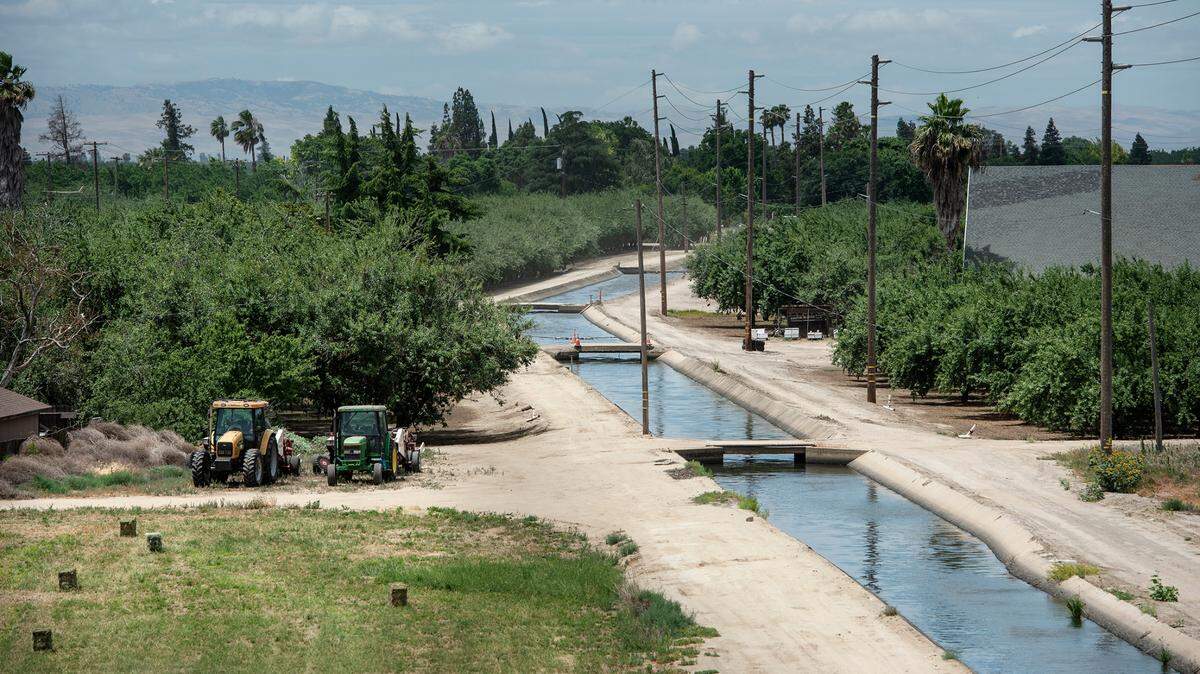
The proposed urban limit would have carved out more than 1,100 acres in the colony, the farming community west of Highway 99, for business parks and housing. Attorney Thomas Terpstra sent the city a petition in May signed by landowners within those roughly 1,100 acres who support the urban limit line.
But other Wood Colony residents outside of the proposed limit feared it would not protect them and once growth started it would not stop.
County Counsel Thomas Boze wrote to the mayor and council July 10 that the city had failed to provide adequate outreach; to fully review the proposal’s impact on the economy, traffic, infrastructure, surrounding communities and farmland; and to give the public and neighboring communities enough time to review the project.
But city officials have said Modesto would have completed all of the needed work for an urban limit.
Why the public does not trust government
Boze wrote the county is very concerned that apparently the proposal was “developed through a quid-pro-quo agreement over the future of the Wood Colony area between private interests, without the benefit of public participation or environmental review.
“... There is no better example for why the public lacks trust in government than the impression left here that this project came to be as a result of closed-door compromises. The public perception could very easily be that the public was not invited to the conversation until after the deal was struck.”
Brandvold said he has was upfront and open in developing the proposal, said the public was not shut out of the process, and the city conducted extensive public outreach to the extent it could during the pandemic. “I didn’t want to move forward only on the petition the landowners provided,” he said. “That’s why we did a survey (and additional outreach). We wanted to hear from the other side.”
As it became apparent more outreach was needed he said he worked with the city manager to change course. But the mayor also did not have the votes to put the measure on the ballot.
He needed at least four of the seven council votes (including himself). But only six council members could vote. Councilman Mani Grewal could not because he owns land in the roughly 1,100 acres.
Update the general plan
Council members Kristi Ah You, Jenny Kenoyer, Bill Zoslocki and Doug Ridenour said Wednesday they would have voted against the proposal. They said it had been rushed and there was not enough engagement with the community.
When asked Wednesday how he would have voted, Councilman Tony Madrigal said in a text he had been holding off on a decision until after the public hearing before the council vote.
Council members at Tuesday’s meeting called for Modesto to undertake a comprehensive update of the city’s general plan. These plans are blueprints for how cities grow and develop. Modesto’s last comprehensive update was in 1995. An update includes extensive public outreach.
Zoslocki said he wants Modesto to do a comprehensive update over the next two years. Zoslocki has advocated for this since joining the council in 2013. (The Chamber of Commerce in its letter implored Modesto to do a comprehensive update and not rely on a ballot measure to determine its land-use policies.)
“This is the only way we can start addressing how we build a tax base of properties that help pay for our expenses,” Zoslocki said at the council meeting. “We can clearly see Modesto is underfunded. It has been for decades. And it’s time to stop that nonsense and build a city around a general plan that generates income (revenue for the city) and produces commercial properties and industrial properties and not just houses.”
The City Council in November 2019 directed staff to start developing a ballot measure for an urban limit line that could be placed on the November 2020 ballot, conduct extensive public outreach, and investigate how an urban limit would effect surrounding cities and communities as well as Stanislaus County.
But then the new coronavirus pandemic struck, and the city focused on the pandemic.
‘I don’t see it as a defeat’
Still, Brandvold brought the urban limit line proposal forward a couple of months ago, and the council held three workshops from June 25 to July 9 to discuss it. He has said Modesto needs an urban limit to secure the land along Highway 99 in Wood Colony to produce jobs. He said the line would protect the farmland in the rest of the colony as well as the other areas outside of the line.
“I don’t see it as a defeat,” Brandvold said Wednesday about the urban limit not making the ballot. “Modesto always has had a special challenge. First preserving our agricultural heritage and (then) finding appropriate land that we can use to produce jobs.”
Brandvold said he worked with former councilman and farmland preservationist Denny Jackman and Modesto land-use attorney George Petrulakis in developing the urban limit line. Brandvold said it was a good compromise between providing land for jobs and protecting farmland. But he said it became apparent that more outreach is needed.
Councilwoman Kenoyer said she was surprised when she recently learned the proposal was coming back to the council.
“We were not consulted about what we thought about the map (for the urban limit line),” she said Wednesday. “We didn’t have any input. ... We were rushing to put it on the ballot. ... This was poorly planned, and the council was not part of it.”
This story was originally published July 16, 2020 at 6:00 AM.