Supreme Court does not take up homeless camping. Modesto stays on its course
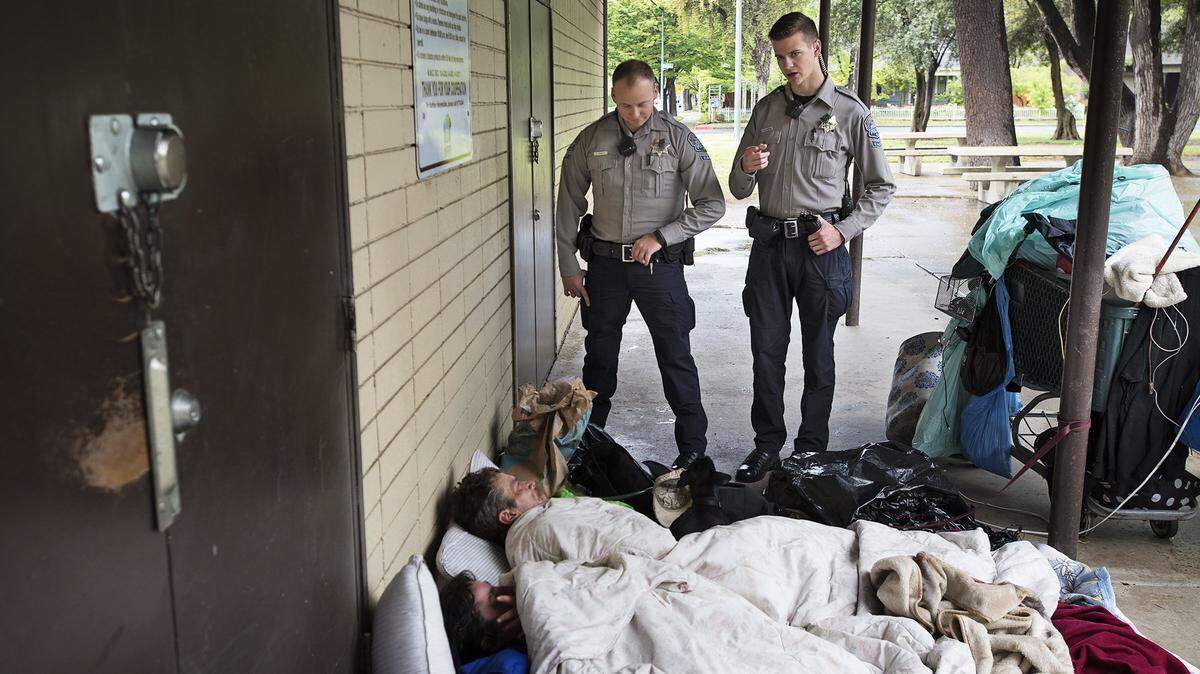
The U.S. Supreme Court will not take up the case that made it harder for cities to prosecute people who sleep on sidewalks, in parks and on other public property when they don’t have a shelter bed. But it also spurred Modesto to take more action in addressing homelessness.
The justices on Monday did not comment as they left in place a September 2018 ruling that struck down a Boise, Idaho, ordinance. Boise had asked the Supreme Court to review the case.
The 9th U.S. Circuit Court of Appeals held that Boise could not make it a crime for homeless people to sleep on public property when no alternative shelter is available. The decision the justices refused to review found that the Boise ordinance violated the constitutional ban on “cruel and unusual punishment.”
The circuit court ruling applies across several Western states, including California, where homelessness is a crisis in many communities.
Modesto has been a leader in embracing the circuit court ruling, first opening Beard Brook Park to homeless campers soon after the September 2018 ruling and then replacing that by opening the Modesto Outdoor Emergency Shelter with Stanislaus County in February.
The outdoor shelter was a temporary solution until officials could bring more shelter and services online. The shelter, which was a tent city underneath the Ninth Street Bridge in the Tuolumne River Regional Park, closed this month. It was home to about 450 people.
That came as the county’s 182-bed low-barrier shelter with services opened at The Salvation Army’s Berberian Center near downtown and the expansion of the center’s traditional emergency shelter from 120 to 170 beds. (Officials have said there also are other shelter options for the people who had been living at the outdoor shelter.)
“It does not change our course at all,” Modesto spokesman Thomas Reeves said about the Supreme Court’s decision. “We’ve been working steadfast on a program in partnership with the county (and others), and we’ve had a lot of really great progress, and there’s a lot more to do.”
Modesto has continued to enforce its ordinances against camping in city parks or sleeping in them when they are closed. The police have rolled out an enforcement plan with the closure of the outdoor shelter.
But officials say citing someone is the last resort, and is not done unless someone refuses help and there is an available bed that complies with the circuit court ruling. (The police have a daily inventory of available beds.) The ruling said a shelter that requires religious participation does not comply because a homeless person could object because he is of a different faith or of no faith.
Homeless people could refuse a bed because they have a dog and don’t want to give up their pet or they suffer anxiety attacks when in confined spaces such as a shelter. The Boise ruling does not address those situations.
Modesto officials say they make every effort to work with homeless people in these circumstances, but if they still refuse a bed, they face being cited.
This story was originally published December 16, 2019 at 4:41 PM.