As Labor Day brings summer’s last hurrah, medical workers get grim drowning refresher
Lupe Yamashiro arrived at a Doctors Medical Center trauma symposium on Tuesday morning intent on sharing her drowning-prevention message with a room of nurses, respiratory therapists and other medical professionals.
But when she got to the conference room doors and saw pictures of her son Julian projected on screens, she realized she wouldn’t be able to get the words out.
There was her little boy, smiling sweetly. But there next to him was a shot of the backyard pool where after a few minutes of frantic searching, her husband found the 3-year-old unresponsive on May 1, 2016. Five days later, Julian was pronounced dead.
About a week later, Riverbank resident Yamashiro got in touch with the Safe Kids Stanislaus coalition to work toward ensuring other families don’t have to go through what hers did. And as she stood just outside the conference room Tuesday, Safe Kids coordinator Rena Lepard, who’s also a registered nurse, shared the mother’s message on her behalf.
Lepard called Yamashiro a warrior who has given her pain a purpose. A business owner, she uses some of her income to sponsor children in water safety classes. With friends and family there for support, she works information booths at community events. She buys in bulk a Scholastic water-safety book titled “Clifford Takes a Swim,” which she hands out — including with candy on Halloween.
Recently, Yamashiro said, she’s connected with some local Realtors, giving them Safe Kids Stanislaus information packets and the Clifford the big red dog books. She asks them to offer the materials to young families who are buying homes with pools.
She and her husband were first-time homeowners — and pool owners — themselves when they moved into their Riverbank home in March 2016. It was the morning after a joint birthday and housewarming party that Julian drowned.
“It only takes a couple of minutes. For us, it happened so fast,” she recalled Tuesday, able to bring herself to talk in a small group gathered near where the symposium continued.
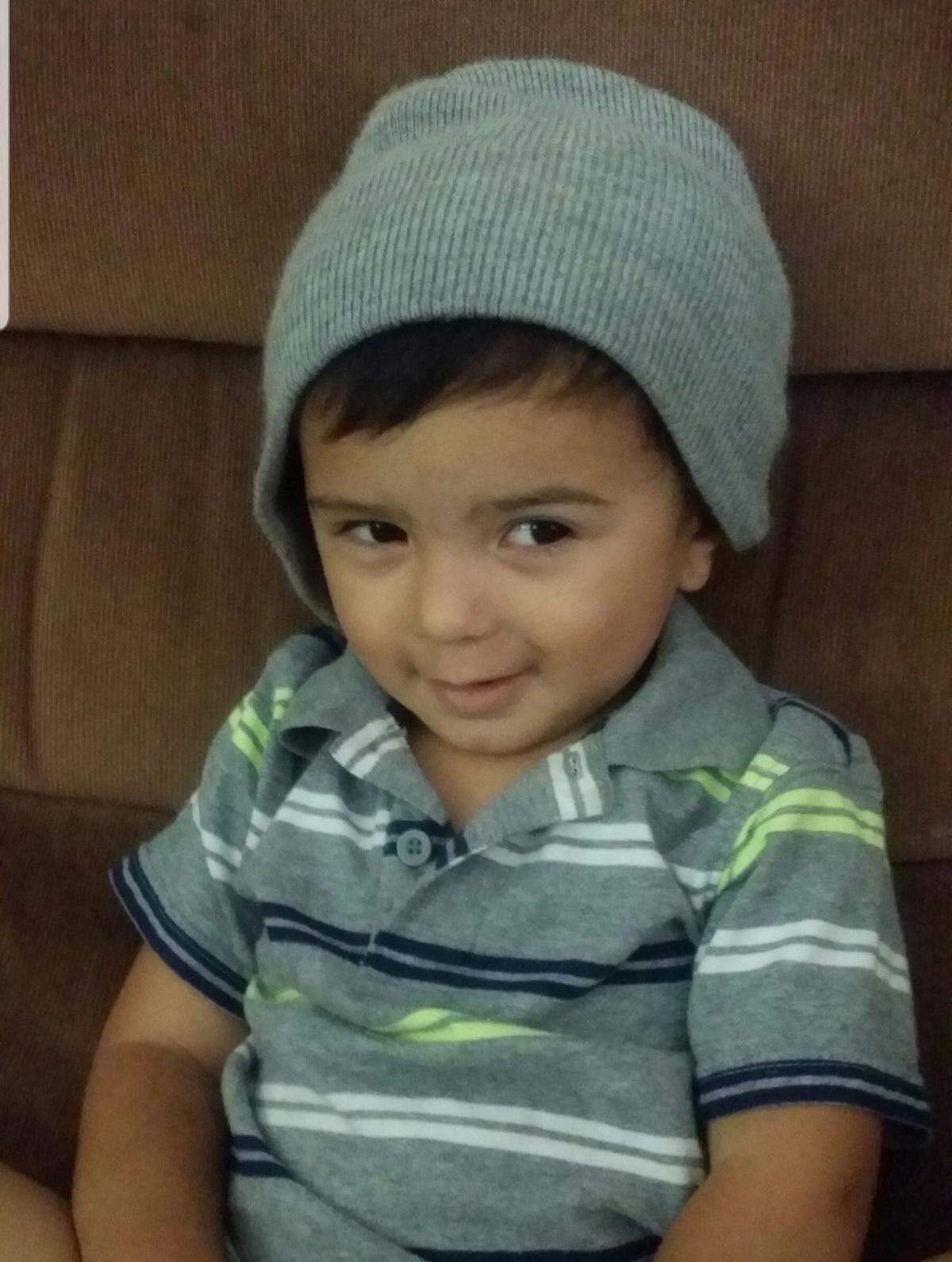
“I had so much backlash from my family thinking I had done what a lot of people think: ‘You left your son at the pool, you were not taking care of him.’ That’s not what happened at all. We all were inside and Julian just wandered off and we didn’t know.”
No one thought he got outside the house, let alone into the fenced pool area. But that’s just what happened, and the pool gate — not self-latching — apparently had been left ajar from the evening before. Yamashiro’s husband eventually turned to one of the windows from which the pool was visible and, to his horror, saw Julian in the water.
Tuesday’s symposium was timed to give emergency medical personnel a refresher as Labor Day weekend surely will send an end-of-summer crush of families to rivers and reservoirs in still-hot September. The Modesto-area high temperatures for the holiday weekend are forecast at near 92 degrees Saturday, 94 Sunday and 93 Monday.
But data shared at the meeting by Dr. Benjamin Schifrin, an emergency medicine specialist at Doctors Medical Center, show that the great majority of drownings occur in residential pools.
To start with, even in coastal communities, no more than 2 percent of drownings are in saltwater, he said. And of the 98 percent in fresh water, 50 percent are in private pools.
“Your backyard swimming pool is where drownings happen, OK?” Schifrin emphasized. “And they happen to the people who live there.”
The next-highest number is 20 percent, in lakes and rivers and creeks, the doctor said. Irrigation canals also fall in that category, but Schifrin commended the Modesto Irrigation District for a strong safety awareness campaign that appears to have helped bring those drownings down.
Fifteen percent of drownings are in bathtubs. That is a parental attention problem, the doctor said.
“That’s baby in the bathtub, then another kid distracts you. That’s how that drowning happens, consistently year in and year out.”
Only 3 percent of drownings are in public pools.
Drowning is endemic, Shifrin said, and 85 percent of the victims are male. He called drowning the testosterone-driven “fate of the male,” noting that in more than 50 percent of the cases, alcohol is involved. Risky behavior like diving or jumping into unsafe areas adds to the problem.
“The real tragedy is that up to a third of Americans, especially nonwhite, can’t swim, period,” Schifrin said. Add in those who can’t swim “effectively,” meaning if their watercraft capsized in a river or reservoir, they couldn’t swim well enough to reach shore, and the percentage rises to half.
Backyard pools, the doctor said, are “toddler-killing machines.” And of the inflatable “water wings” that parents slide onto the arms of little ones, he said, “They drown kids.”
“Never, ever, ever, ever put your kids in water wings, OK?” he said. “Kids don’t have lats, kids don’t have delts, kids don’t have pecs. Now you’re forcing their arms up like this,” he said, holding his arms straight up from his sides. “They don’t have the strength to use them for flotation to get them out of the water. They increase their drag when they try to swim. They keep their hands from getting in the water to be able to paddle.”
Her Julian was afraid of the pool, Yamashiro said, which adds to the mystery of his drowning. He didn’t like to get near it, and did so only because he liked to be his daddy’s little helper.
“If my husband was cleaning the pool, Julian wanted to be there,” she said, but he was always buckled into a life jacket and was watched like a hawk.
Since his death, and with two younger children who now are ages 4 and 5, Julian’s parents have emptied their pool and put a framework and cover over it. They’ve added alarms and extra locks to doors into the backyard, Lupe Yamashiro said, and generally steer clear of the area.
“Our kids don’t go into the backyard. We don’t even try to do anything back there,” she said.
And though she sponsors water-safety education for other children, anxiety over having her kids in the water has kept Yamashiro from getting them swim lessons. She’s connected with a woman who is becoming certified to teach swimming and water safety to disabled youth, though, and hopes to overcome her own fears to have her children taught.
“I’m working on it,” she said.
This story was originally published August 27, 2019 at 2:41 PM.