How can Modesto reduce homelessness? Organizers want to start in eviction court
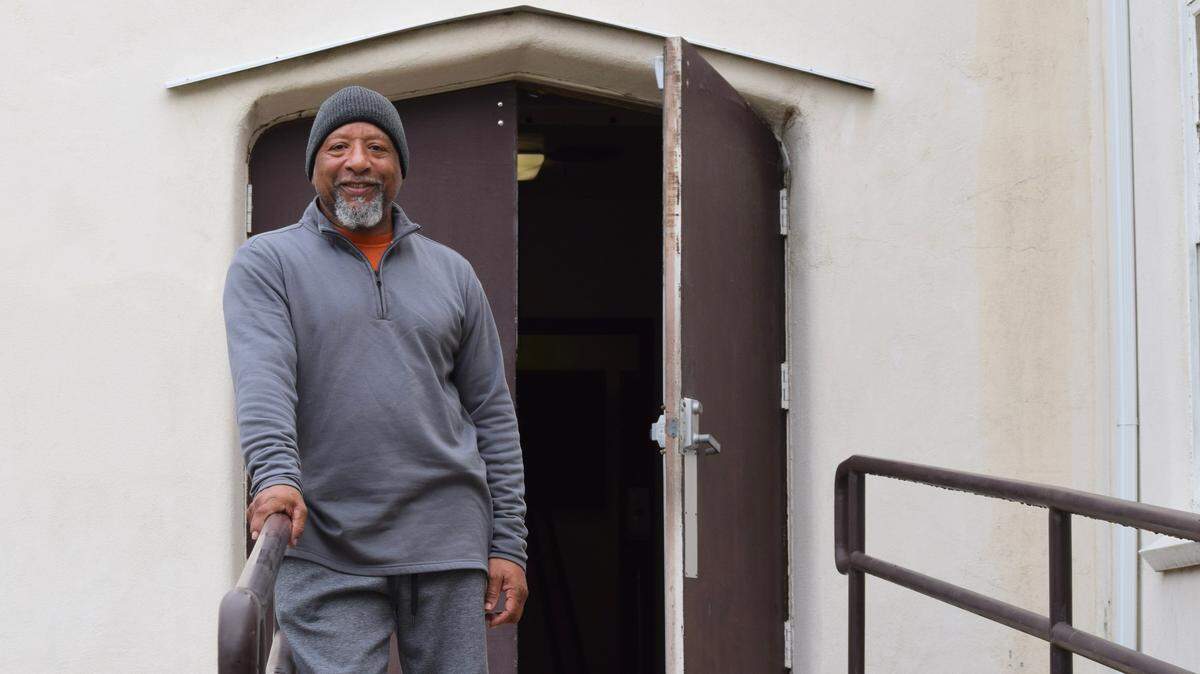
After Leon Callen joined Christian Love Baptist Church in Modesto as a minister during the COVID-19 pandemic, he began reaching out to his community, wanting to see the needs of the congregation, as well as the broader neighborhood.
One of the issues that struck him immediately was homelessness, which was being exacerbated by the pandemic. He became interested in the root causes of why people in Modesto and Stanislaus County ended up unhoused. Many people, Callen noted, were facing homelessness after being evicted from their homes or apartments, and they hadn’t been able to afford legal representation to assist them in court.
“(It’s) a community issue,” Callen said. “On the one end, we’ve got to try to get people in homes, but on the other end, we have to stop people from becoming homeless.”
Unlike during criminal proceedings, where a public defender is provided to individuals who cannot afford a lawyer, eviction court has no such policies.
Tenants who can’t afford to hire legal representation or access it pro bono must go through the eviction process alone, while most landlords and property management companies come to the proceedings with lawyers in tow.
“If a person steals a toothbrush from a Walgreens, they have a right to an attorney,” said Janine Nkosi, a sociology professor at California State University, Fresno, and a regional organizer for Faith in the Valley, a faith-based grassroots community organization that serves the Central Valley. “Served with an eviction notice and their housing is at stake, they don’t have that same right.”
According to a Faith in the Valley report from 2019, fewer than 1% of tenants have legal representation in eviction court, compared to 76% of landlords.
This results in an uneven playing field in eviction court — and a system that’s stacked against tenants. Evictions go on an individual’s record for seven years, making it difficult to find housing once the person has gone through the proceeding.
And Nkosi said that with a lack of legal representation for most tenants facing evictions, their chance of winning in court is slim to none.
“Not in one instance, did we see — when we were observing in housing court with tenants — tenants prevail,” she said. “That’s because the court system moves very fast, it’s very complicated and it’s difficult to understand all of the legalese. It makes it very difficult for tenants’ rights to be upheld in housing court.”
Success of right-to-counsel policies
In recent years, activist groups have fought against this imbalance in eviction proceedings, often through the enactment of so-called right-to-counsel policies that make it a city or county requirement for attorneys to be provided in eviction court, just as they would be during a criminal proceeding.
After seeing promising reports following the development of right-to-counsel programs in cities like New York, San Francisco, Denver and Los Angeles, activists, including Callen, are working to bring the same kind of policies to Modesto.
San Francisco has one of the country’s most robust right-to-counsel programs. It evolved from a pilot program that engaged a loose association of nonprofit legal services and pro-bono attorneys to a centralized network of legal aid and rental assistance programs. It’s implemented by the Mayor’s Office of Housing and Community Development in partnership with the San Francisco Eviction Defense Collaborative.
Following the initial passage of the universal right to counsel under Proposition F in 2018, the program was restructured into a one-stop, centralized model a year later. Now, a tenant served with an eviction notice is given instruction on how to connect with the Eviction Defense Collaborative and then referred to the appropriate resources, which range from rental assistance to legal assistance for a court proceeding.
Of the tenants who applied for assistance in the first six months, 67% were able to stay housed and the majority were able to stay in their own homes.
In New York City, which began implementing right to counsel in 2017, evictions dropped by nearly 20% over two years in qualifying neighborhoods, and almost 85% of tenants who got free lawyers through the program during that time were able to avoid eviction.
The local effort
Leading the effort locally is the Stanislaus chapter of Faith in the Valley. Anthony Arauza, a community organizer with the organization, said the importance of implementing a right-to-counsel policy in Modesto is key to “mitigating the effects that evictions have.”
The difficulty of finding housing after an eviction is registered on an individual’s record, as well as the added stress of having to keep a job and take care of family members during the proceedings can add up quickly.
“We’ve worked with community members who have unjustly been put out of their homes due to the pandemic or for other petty reasons and have, as a result, experienced eviction and subsequent (homelessness),” he said. “It’s not a cure-all for the housing crisis … but it definitely has shown and has been proven in other jurisdictions that it prevents people from being on the streets, or living in a park, or living in their car.”
Of the households in Stanislaus County, Nkosi said she and her team found 15,000 are vulnerable to eviction now that the statewide pandemic moratorium has been lifted. According to a report by Faith in the Valley, there were 1,677 evictions recorded in Stanislaus County during fiscal year 2018-19, though the true number may be higher, as some evictions occur informally.
Experts have said it’s not yet clear if there will be a swell of evictions in the moratorium’s wake, but thousands have been left even more vulnerable by the economic effects of the pandemic.
“Prior to the pandemic, people were literally one unexpected life event away from potentially losing their home,” Nkosi said. “Now all of a sudden, the pandemic hit and everyone is experiencing an unexpected life event.”
Because an eviction stays on an individual’s record for years, it “follows you around like a sentence” she said. Once evicted, it becomes harder to find another affordable place to live and can quickly turn into a spiral toward homelessness for the individual — or an entire family.
Typically, right-to-counsel policies work one of two ways, Nkosi said. Either a city puts in place a local ordinance — as New York and San Francisco did — that codifies a right to counsel in the city’s laws. Or cities can enact a so-called universal right to counsel and divert funding money — say, from the American Rescue Plan — to bring “much needed legal defense or legal representation programs to their jurisdiction.”
Additionally, Nkosi said, right-to-counsel activists advocate for a comprehensive approach to eviction and housing assistance, from education and outreach, partnerships with local community organizations and pre-litigation interventions to rental assistance and litigation interventions.
This is the approach Faith in the Valley and its partners pushed for in Fresno, where city officials have been receptive to calls for renter protections and launched an eviction protection program in August.
In it for the long haul
In Modesto, Arauza said Faith in the Valley is seeking “real representation and effective representation” for tenants. It has presented its plans to the City Council, he said, and entered into discussions with individual council members as well as staffers. Arauza said he and his colleagues are committed to this effort for the long haul.
Jessica Hill, Modesto’s community development manager, said she and other city staff have had conversations with Faith in the Valley about right to counsel, but the issue is currently not on the city’s agenda. Instead, Modesto is working with local organizations including the California Rural Legal Association to build out their capacities to help tenants during eviction proceedings.
Callen, the minister from Christian Love Baptist Church, said he and other clergy see the policy as a way to help address broader community needs surrounding housing and homelessness.
Callen said he, other clergy and lawyers who are either affiliated with churches or members of congregations themselves are coming together to advocate for a right to counsel with Faith in the Valley. The hope is that showing up in large numbers will emphasize the importance of the policy to city staff and council members.
“If you have a leak, you’ve got to figure out how to patch it up,” he said.
‘This story was produced with financial support from the Stanislaus Community Foundation, along with the GroundTruth Project’s Report for America initiative. The Modesto Bee maintains full editorial control of this work.
To help fund The Bee’s economic development reporter with Report for America, go to https://bit.ly/ModestoBeeRFA
This story was originally published October 25, 2021 at 5:00 AM.