Power outages from metallic balloons increase in Stanislaus. Is it a pandemic thing?
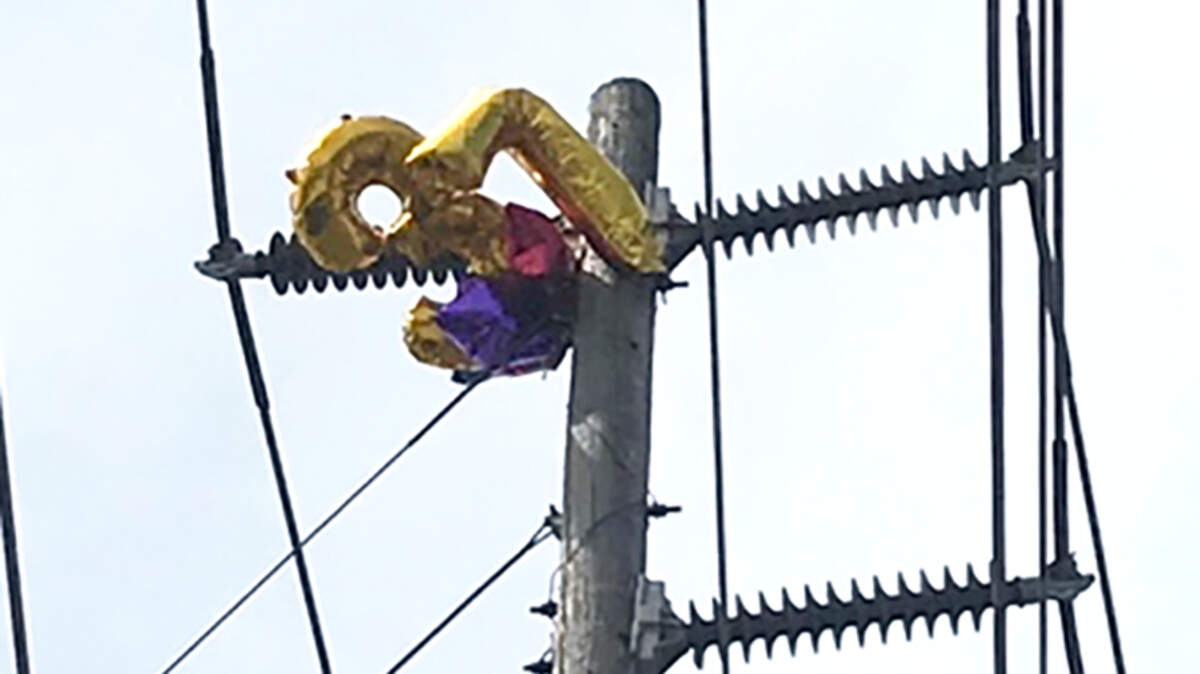
Power utilities in Stanislaus County have seen a rising number of outages caused by metallic balloons this year.
They urge customers to handle balloons safely as they celebrate Mother’s Day, graduations and other upcoming events outdoors.
And they suspect that COVID-19 has aggravated the problem, as people turn to balloons at home in lieu of the usual gathering places.
The Modesto Irrigation District went from 16 balloon-caused outages in 2016 to 53 last year, spokeswoman Melissa Williams said by email. The count so far this year is 26.
The Turlock Irrigation District and Pacific Gas & Electric Co. also contend with the helium-filled menaces.
“Mylar balloons are a deceptively innocent-looking hazard for power lines,” TID spokeswoman Constance Anderson said by email.
Mylar is a mostly plastic material that gives the metallic sheen to some balloons. The more common latex balloons also can cause outages, but not to the same extent.
“The metallic coating of Mylar balloons can conduct electricity,” Williams said, “and when balloons float up or float down into power lines or into electric substations, they can cause damage and also possibly spark fires.”
Balloons also can injure or kill animals that ingest or get tangled in them, according to the U.S. Fish and Wildlife Service.
The danger can come from one person accidentally letting go of an inflated balloon, or from the planned release of a large number.
Balloon industry has tips, too
The concerns have prompted efforts to ban or sharply restrict the products. The Balloon Council, an industry group, has fended off most bills.
The council has these safety tips on its website:
- Attach a weight to the balloon string so it stays near the ground.
- Do not let younger children play with balloons without supervision.
- Deflate them when they are no longer in use, and toss them in the trash.
One last bit of advice from the council: “Despite the funny voice helium can give you, it should never be inhaled.”
The experts at healthline.com agree. Helium can displace oxygen in the blood, causing dizziness, nausea and in rare cases death.
PG&E sees a 30% jump
PG&E reported a nearly 30% rise in balloon-related outages last year over 2019, to 453 across its vast service area.
The company timed its most recent plea for Valentine’s Day, when pandemic-weary couples might have considered balloons.
“Metallic balloons are an easy way to make at-home celebrations more festive, but nothing puts a damper on a romantic evening faster than a widespread power outage for you, your friends or your neighbors,” said Ken Wells, vice president for electric distribution, in a news release.
He also said that “we suspect that there could be a correlation to the pandemic and the advent of creative at-home celebrations.”
MID also sees a possible link. “While the COVID-19 pandemic has sparked creative celebrations – including drive-by parades, yard decorating, porch drops and outdoor gatherings – we encourage people to celebrate safely ...,” Williams said.
The utilities also warn against trying to retrieve balloons from power lines, which can cause electrical shock. Their crews will come out and handle the job.
This story was originally published April 29, 2021 at 4:00 AM.