Governor’s order will likely keep Stanislaus County schools closed longer than most
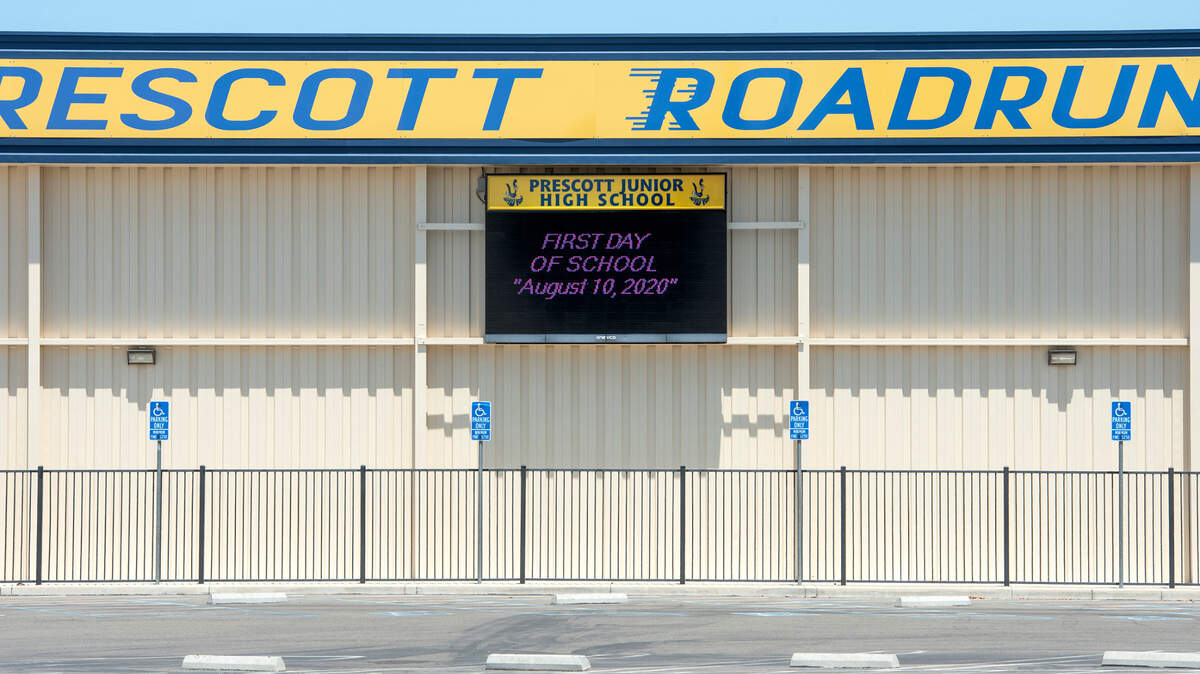
The decision of when to return to classroom learning in Stanislaus County will no longer be in the hands of local health officials and superintendents as long as the county remains on the state’s watch list for rising coronavirus cases.
All public and private schools in the more than 30 counties – including Stanislaus – currently on the state’s COVID-19 watch list won’t be able to physically reopen their doors this fall, Gov. Gavin Newsom announced Friday. The schools cannot reopen until the county is off the list for 14 days.
And when those schools do open, masks will be required for older kids and staff will be tested consistently.
The Democratic governor previously said reopening schools should remain a local decision that considers COVID-19’s spread in a community.
Stanislaus County Superintendent of Schools Scott Kuykendall believes the decision should remain local.
“You have small school programs that currently have the capacity to bring students back safely in small groups outdoors or are planning on meeting with students one-on-one in a safe environment and I would hate to see an executive order squash some of those innovative and creative ideas to educate our children,” Kuykendall said. “What we currently have as official recommendations for our schools, which was published on Monday, is strong enough and it reflects our current situation as it’s related to the spread of COVID-19.”
On Monday, Kuykendall and county Public Health Officer Dr. Julie Vaishampayan announced that all schools would begin the fall semester with online distance learning but that schools would reopen slowly as soon as “health conditions allow.”
Kuykendall said many districts had hoped to start by bringing teachers back to campuses to conduct distance learning from their classrooms.
“That allows our schools to be poised to open as soon as possible,” he said. “We could potentially begin with meeting with students one-on-one, then in small groups, then alternate days, with the goal of all students returning to campus full time.”
He said this approach would work best with smaller districts and specifically elementary schools where all of the students are contained in one classroom, unlike junior high and high school.
But the governor’s blanket policy for watch list counties would stifle those creative solutions that some districts had hoped to implement, Kuykendall said.
“Considering the fact that we are one of the worst counties as far as the number of cases per capita it would probably take us longer to get off the watch list than other counties,” he said.
Stanislaus County has been on the watch list since the positive rate of coronavirus cases exceeded the state’s threshold of 8% in mid-June. The rolling 14-day rate has not fallen below that number and on Wednesday was at 18.16%.
“At the very least, outdoor instruction should be allowed as an option for schools that are small enough to provide for outdoor, in-person instruction with social distancing,” Kristin Olsen, chairwoman of the county Board of Supervisors, said on Facebook following the announcement.
Newsom’s new instructions also require kids in third grade and up to wear masks, while face coverings for younger children are encouraged. Daily temperature checks and physical distancing would also be required.
Ceres Unified School District Superintendent Scott Siegel said he appreciates the guidance on the masks. He said the district would enforce it to the extent possible but he doesn’t want school officials spending too much time disciplining students who refuse to wear masks.
He said overall he has mixed emotions on the mandate.
“It is hard to one size fits all (every district),” he said. “That said, it is nice to have very well defined criteria to reopen.”
To monitor COVID-19 in education institutions, some teachers and staff would be tested every other month, while others every month.
Should students or educators test positive for the virus, a classroom would have to close and quarantine for 14 days.
If an entire student body and staff reach an infection rate of 5%, the school would need to close. A district would close if more than a quarter of its schools close.
The Sacramento Bee contributed to this report.
This story was originally published July 17, 2020 at 10:59 AM.