
Coronavirus have you scared to touch a door handle? These tools mean you don’t have to
If the coronavirus pandemic has you nervous to touch pretty much anything out in public, you’re not alone.
Concern over picking up the virus or other germs has sparked an uptick in key-like items called “touch tools.”
Maybe you’ve seen them advertised on social media.
The tools are made to attach to keychains and have a hook at one end to prevent people from having to use their hands when doing everyday tasks like opening doors, flushing toilets or pressing elevator or ATM buttons.
Many are fashioned from brass — an alloy of copper and zinc — and some claim to be antimicrobial.
While some such tools were available pre-coronavirus, they seem to have popped up everywhere during the pandemic. Here are some of the most popular touch tools on the market.
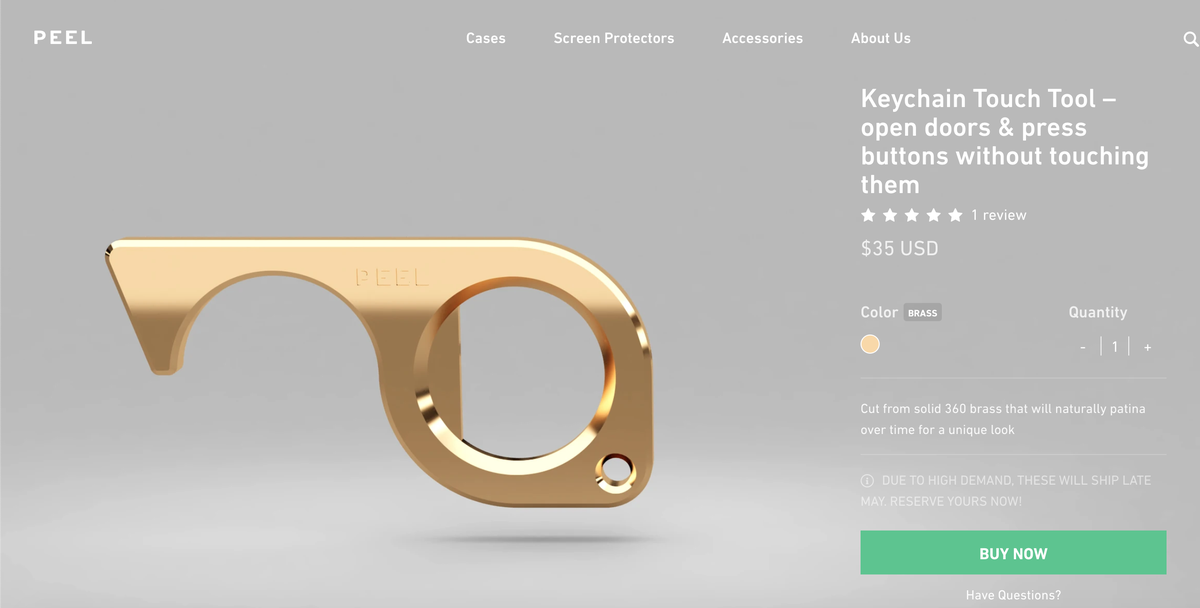
Peel
One popular version from Peel is $35 and features a rounded hook to make it easier to open doors. The top of the hook is angled such that it can easily be used to press elevator buttons.
Another cool feature? Its handle doubles as a bottle opener, the company said online.
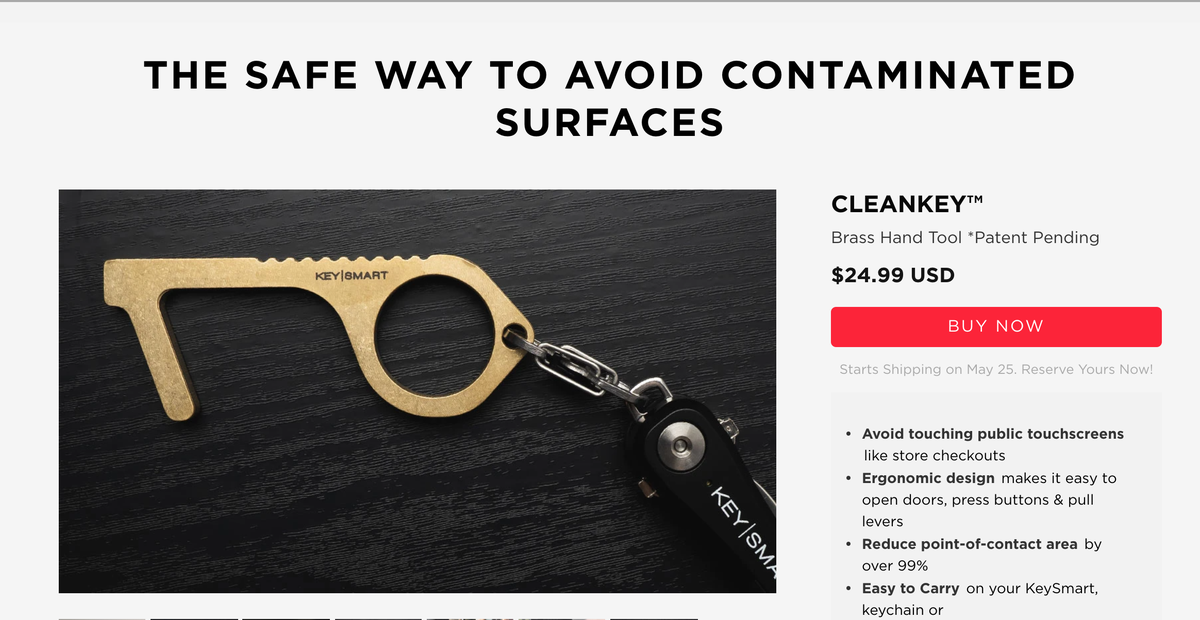
CleanKey
The CleanKey from KeySmart is $24.99 and also made of brass. The hook is more angular and claims to “reduce point-of-contact area by over 99%,” according to its website. The tool can be used to open doors and to press buttons or sign your name on touchscreens.
Its packaging claims the key “kills 99% of bacteria within three hours.”
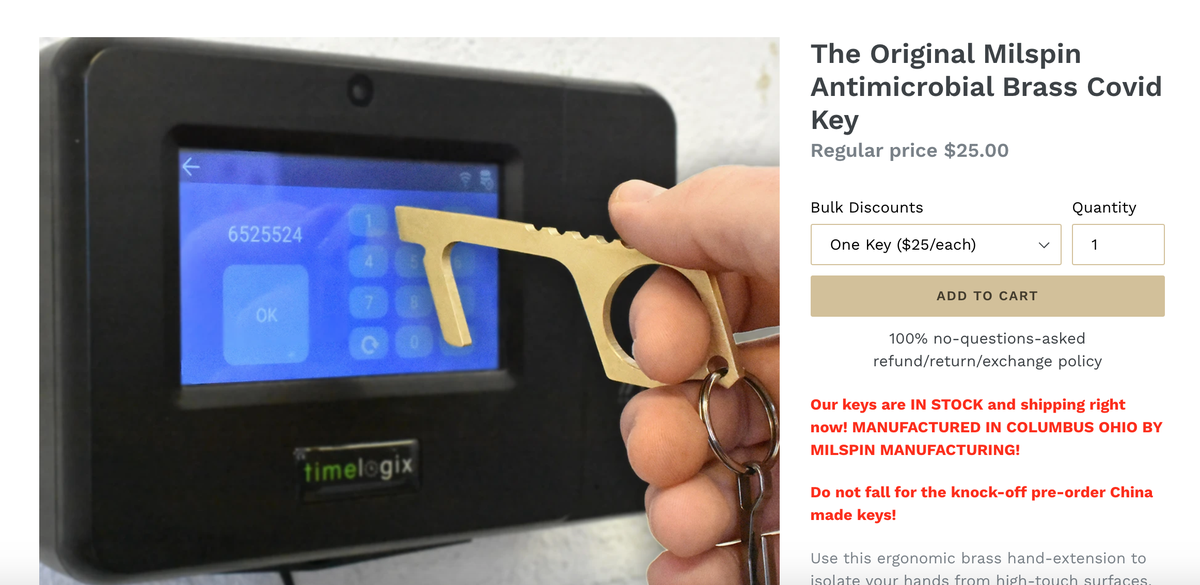
Covid Key
The Milspin Covid Key is $25 and made of 260 brass “for maximum antimicrobial properties,” the company said online.
Like other touch tools, there’s a hook for opening drawers and doors and a nib on the end that makes it easy to use touchscreens like those in grocery stores or at ATMs.
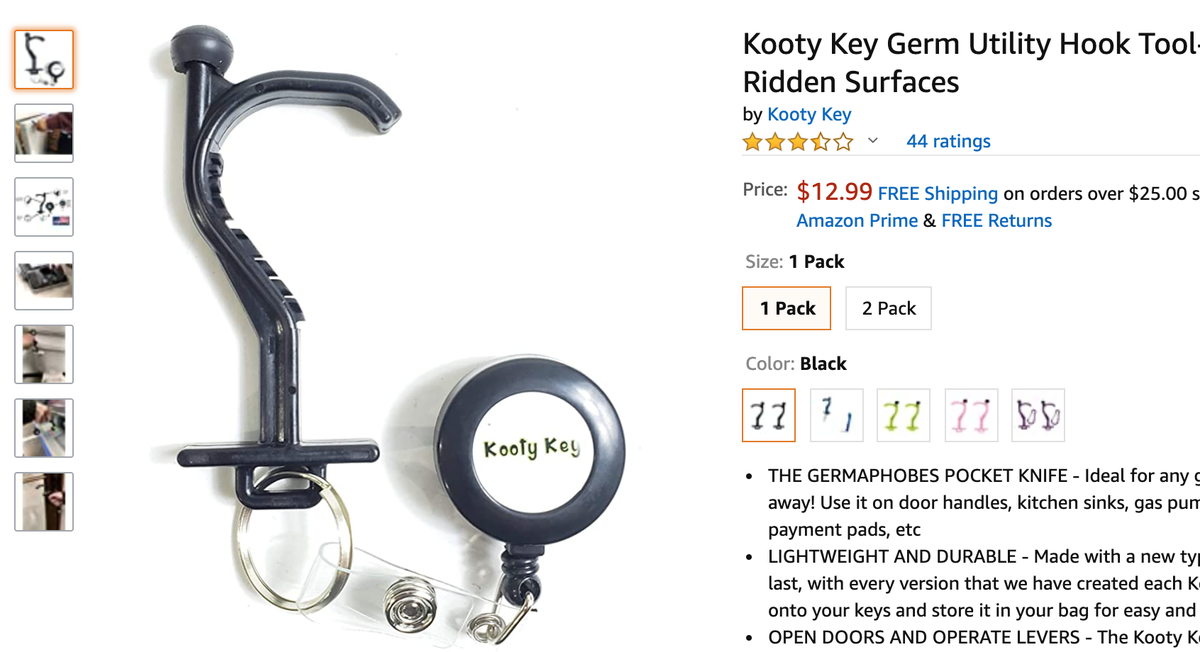
Kooty Key
The Kooty Key Germ Utility Hook is a little different than its brass brethren.
The $12.99 tool comes on a retractable key chain and claims to be made of “antimicrobial plastic,” according to its Amazon listing.
The end of the tool also has a rubber stopper to help prevent it from damaging any surfaces you may use it on.
Hygiene Hand
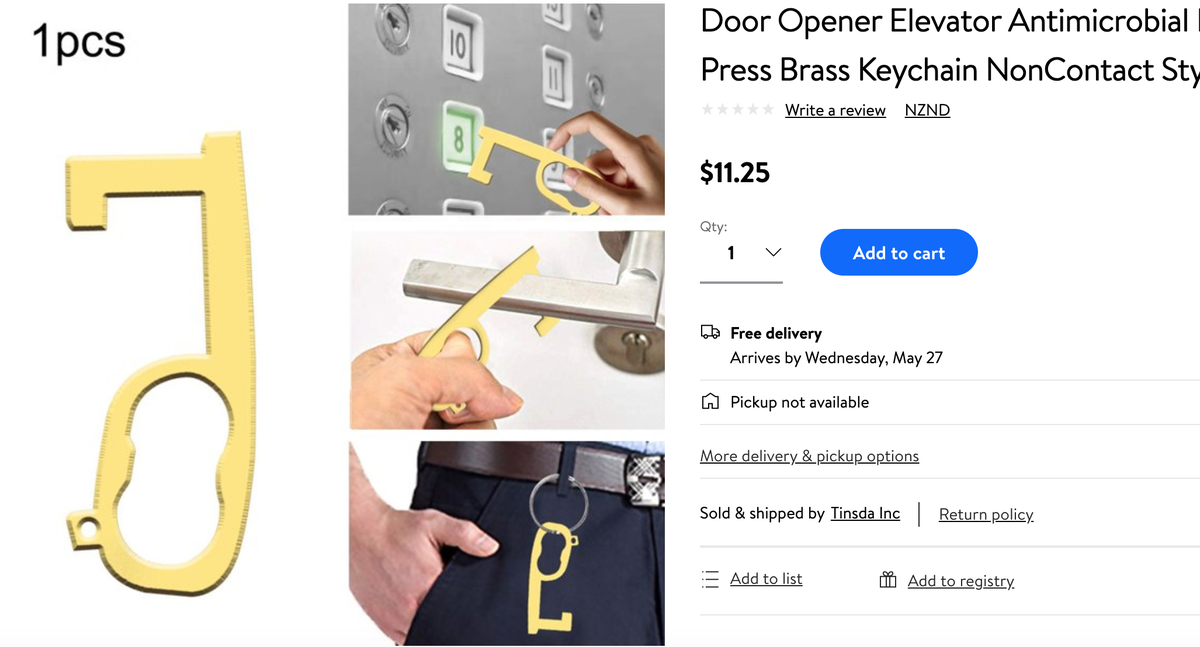
Do you have larger hands? The $11.25 Hygiene Hand NonContact Stylus is your best bet as it has a larger finger loop than most other touch tools, Forbes reported.
It’s made from an aluminum alloy and can also be used to carry grocery bags or move chairs, according to its Walmart listing.
Can these tools really protect you from coronavirus?
“Copper and copper alloys, like brass and bronze, are inherently antimicrobial,” Adam Estelle, director of rod & bar at the Copper Development Association, told Wirecutter. “This is a universal property of the material, like conducting electricity.”
Something that is antimicrobial “kills or inhibits the growth of microorganisms such as bacteria, fungi and algae,” according to ScienceDirect.
While copper has been known to be antimicrobial for some time, that doesn’t exactly mean it’s going to kill the virus on contact, Wirecutter reported.
A highly publicized study published in the New England Journal of Medicine found that SARS-CoV-2, the virus that causes COVID-19, remained on copper for up to four hours.
“On copper, no viable SARS-CoV-2 was measured after 4 hours,” the study said, adding that “SARS-CoV-2 was more stable on plastic and stainless steel than on copper and cardboard.”
The four-hour window gave Nick Guy at Wirecutter pause.
“Unless you’re properly cleaning the touch tool after each use, and making sure that if it touches surfaces more hospitable to germs (such as polyester clothing or a plastic wallet), you clean or dispose of them, all you’re doing is providing a less-than-ideal surface for the virus and other contaminants to live on,” he wrote for the outlet.
Dr. Glenn Randall, a professor of microbiology at University of Chicago, agreed that users should be careful to ensure that their touch tools don’t touch anything else before they can be disinfected or tossed in a plastic bag for at least four hours, Health reported.
However, he said the tools are a good alternative for touching buttons or handles in public with the caveat that they not be used as substitutes for frequent hand washing or sanitizing, according to the magazine.
This story was originally published May 13, 2020 at 6:31 AM with the headline "Coronavirus have you scared to touch a door handle? These tools mean you don’t have to."