Free testing offered to detect nitrate in SJ Valley domestic wells
The nonprofit Valley Water Collaborative provides free domestic well testing and clean drinking water to people in the San Joaquin Valley who are affected by high nitrate levels. The service is part of a 35-year agreement between the agricultural, dairy and treatment plant industries and the state water control board.
The Central Valley is deeply impacted by high nitrate levels and other drinking water contaminants, especially in unincorporated areas that rely on domestic wells instead of public water systems that treat and filter groundwater.
“Our priority-one basins which have the highest levels of contamination are Modesto and Turlock, so we were finding a lot of positive results there — ‘positive’ meaning tested positive for high levels of nitrate,” said Sara Bernal, community outreach manager at Valley Water Collaborative.
Logan Davis, a water sampler for GeoAnalytical Labs who does testing for Valley Water Collaborative, said he works with owners to schedule a time for him to come by. He will take water samples from the well and put them in vials that get tested for contaminates back at the lab.
“Then, depending on the results, [Valley Water Collaborative] will send them bottled water or install a filter in their house,” he said.
Nitrate, the largest concern in Stanislaus County, is a contaminant that can be dangerous to drink if pregnant, an infant or small child, or for those with underlying health issues. In some cases, it can cause what is known as “blue baby syndrome,” a deadly condition that prevents an infant’s body from providing oxygen through the bloodstream.
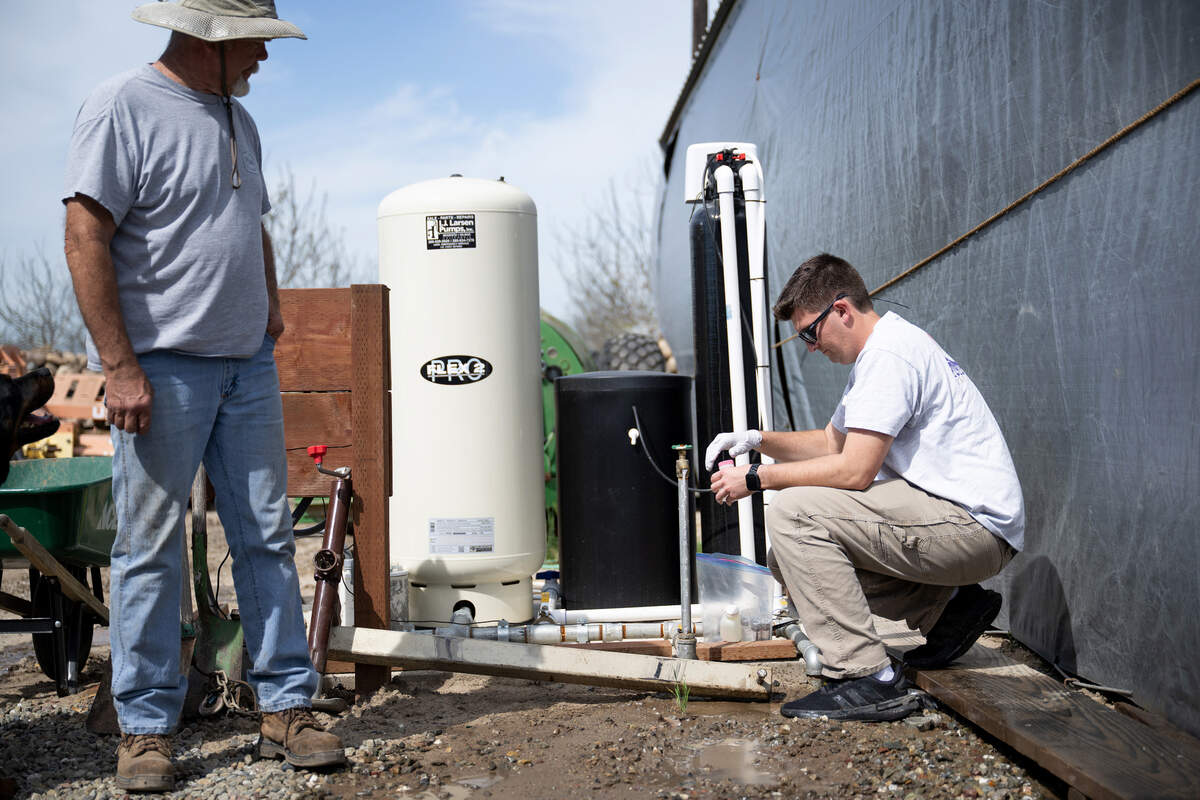
There are only specific types of filtration that can address nitrate, such as reverse osmosis or ion exchange. Basic commercial tap filters or water jugs are not effective in removing nitrate. Additionally, boiling water with high levels of nitrate will make the nitrate levels worse, not better.
Unlike some other contaminants, nitrate has no smell, taste or visual cues to identify that there may be an issue.
“If we are offering services in your areas, it’s because they’ve been identified as areas of concern,” Bernal said. “The only way you’ll know is if you get tested.”
The collaborative has had some challenges with people being open to having their wells tested because they are concerned the wells may be shut down, but Bernal said that’s not what they are there for.
“We will never tamper with your well, disconnect it, or do anything to jeopardize your access to that well water,” she said. “So don’t be afraid to get your well tested out of fear that we will shut it down if contaminates are found.”
Contact Valley Water Collaborative at 209-750-3867 or contact@valleywaterc.org