
Wildfire updates: Dixie, Tamarack fire growth slows as officials ease evacuation orders
The massive Dixie Fire saw limited growth leading up to Saturday morning, providing a much-needed respite for crews who have battled the blaze for weeks, contending with wild weather patterns and extreme growth surges.
But officials said that the slow growth may prove to be just a lull, rather than signify the end of the blaze.
In its morning incident report, the state fire agency said the fire encompassed 240,795 acres (376 square miles) — an area eight times the size of the city of San Francisco. The fire is California’s largest this season and the 11th-largest in state history by acres burned.
The fire increased by 200 acres between Friday morning and Saturday morning, but containment remained stagnant at 24%.
Just under 6,000 firefighters are battling the blaze, which ignited July 14 above the Cresta Dam in Feather River Canyon in the burn scar of the deadly 2018 Camp Creek fire. Crews are fighting the fire in two zones: the east, which is managed by the U.S. Forest Service, and the west, which is managed by Cal Fire.
Throughout the week, cyclical weather patterns have slowed the fire during periods of humidity and whipped it back up during hotter daytime periods. But multiple periods of slow growth have allowed crews to secure much of the west zone perimeter that sits near populated areas of Butte and Plumas counties, and officials are now confident those fire lines will hold through weather changes.
“Fire behavior is expected to increase due to drying conditions today,” officials wrote in Cal Fire’s report. “Fire continues to move towards control lines burning unburned interior islands and ridges. No growth is expected on the West Zone, but interior islands will continue to burn as planned.”
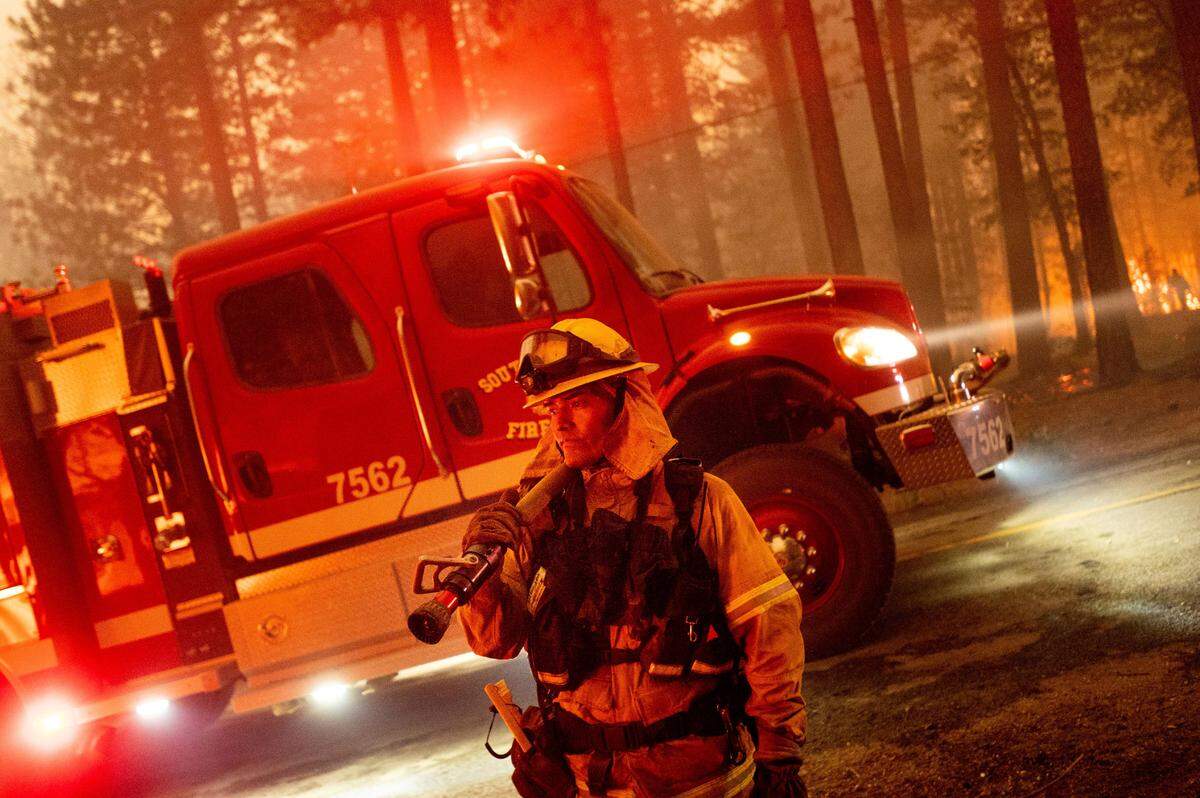
Containment in the west zone caused officials to lift some evacuation orders Saturday morning, allowing some Butte and Plumas county residents to return home for the first time in weeks. Residents in the Lake Almanor area and the area west of the highways 39 and 36 junctions are now under an evacuation warning, rather than a mandatory order, and residents of Chester, Pulga and East Concow had their warnings lifted altogether.
The east zone of the fire remains mostly uncontained and crews are prioritizing structure protection in the area.
According to Cal Fire, the Dixie Fire has destroyed 66 structures. The Associated Press reported that 36 of those were in the Plumas County town of Indian Falls, population 53. The town was all but destroyed by the fire.
More than 10,650 structures remained under threat Saturday morning.
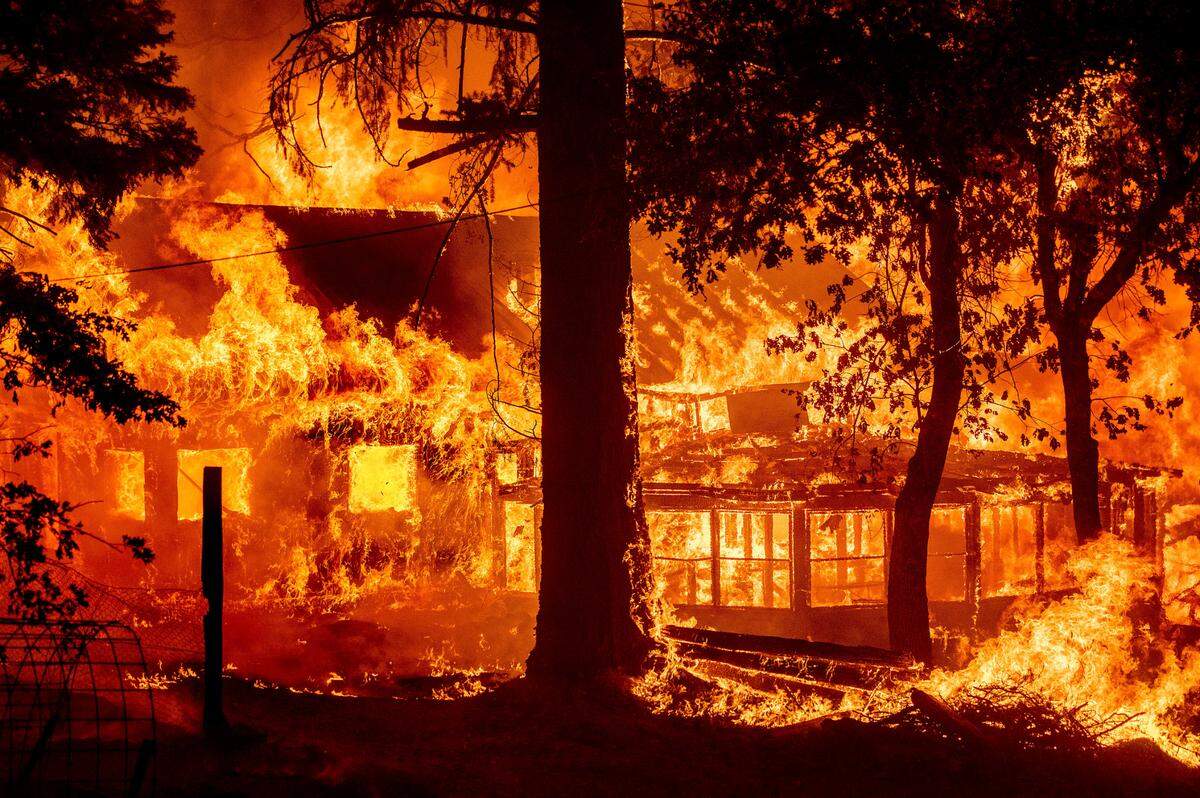
Numerous mandatory evacuation orders remain in place, including for the communities of Meadow Valley, Bucks Lake and Prattville in Plumas County; Butte Meadows, Jonesville, Philbrook and High Lakes in Butte County; and the area of Colby Creek in Tehama County.
Detailed information on evacuation zones spanned seven pages of Cal Fire’s incident report. Many roads are closed, including stretches of Highway 36, 70 and 89.
Officially, the fire’s cause remains under investigation. But Pacific Gas and Electric Co. in a July 18 filing to state regulators said its equipment may have started the fire. In a quarterly report released Thursday, PG&E said officials “believe it is probable that (the company) will incur a loss in connection with the 2021 Dixie fire.”
Tamarack Fire
Firefighters appear to have turned the tide on the Tamarack Fire, pushing containment to 79% Saturday and keeping growth minimal all week. The fire is burning in Alpine County and Douglas County, Nevada.
Rain throughout the week helped crews slow fire expansion, allowing the California and Nevada governors to visit the fire site and speak about containment efforts.
The Tamarack Fire had charred 68,696 acres as of Saturday morning.
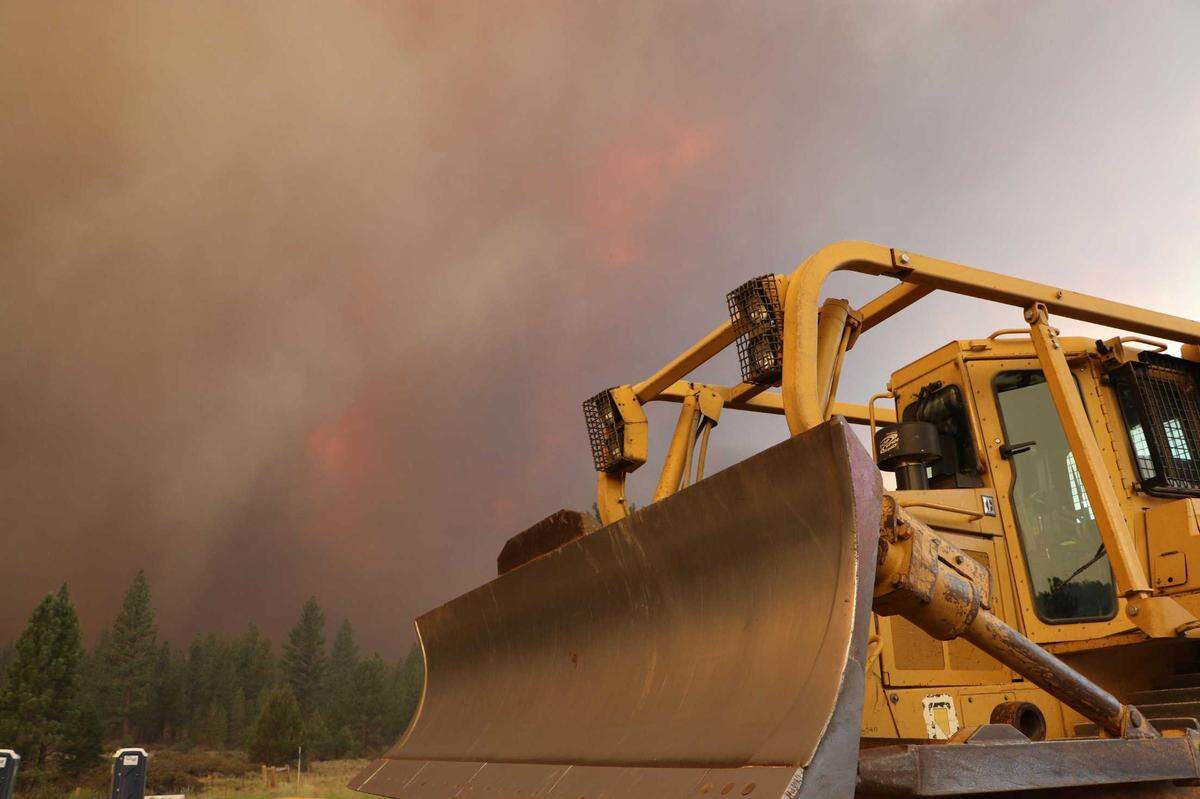
Crews have contained all but the southwest portion of the fire, which is burning in rural Alpine County away from structures. Officials said Saturday they would focus on mop-up efforts in populated areas as well as securing the last bit of the fire perimeter.
“Smoke and spots within the fire perimeter are protected by the containment line,” officials said in a Saturday news release. “Fire equipment and personnel will decrease as the incident meets objectives and the current team prepares to transition.”
At a news conference earlier in the week at the fire site, California Gov. Gavin Newsom and Nevada Gov. Steve Sisolak praised collaboration between the states in managing the fire. But the governors also added to a chorus of ongoing criticism of the U.S. Forest Service for their handling of the fire and called on the agency to raise pay for firefighters.
“At the end of the day, the U.S. Forest Service is understaffed and under-resourced,” Newsom said. “It has been for years and years and years. ... You look at the federal pay for these men and women, it’s deplorable, it’s unacceptable.”
The Tamarack Fire was ignited by lightning in early July on U.S. Forest Service land and began to grow explosively in mid-July amid heavy winds. The U.S. Forest Service has faced criticism for originally leaving what was then a small fire to burn itself out.
The Alpine County and Douglas County sheriff’s offices lifted all mandatory evacuation orders at the beginning of the week. Some areas of the Humboldt-Toiyabe National Forest remain closed.
An interactive map from the Alpine County Sheriff’s Office shows that at least 15 buildings were destroyed within the county. Estimates for Douglas County have not yet been released.
Other California wildfires
▪ A series of lighting strikes Thursday set off multiple fires in the Shasta-Trinity National Forest. The largest has been dubbed the McFarland Fire, and is 1,079 acres and 5% contained.
The fire is burning in a remote area of Trinity County, two miles south of Highway 36 near the town of Wildwood. It is expanding in a densely forested area that has not seen wildfire in decades.
“The dry forest conditions are making suppression very challenging,” U.S. Forest Service officials wrote in a midday Saturday incident update. “Ground and air resources have been aggressively attacking it.”
Trinity County has issued a series of evacuation warnings for areas near to the fire. The California Type 2 Incident Management Team will take over fire suppression efforts Saturday afternoon.
Most of the other lightning fires that began Thursday remained under five acres. One, dubbed the Monument Fire, has expanded to 70 acres in rural terrain that is “difficult to access,” officials said.
▪ The Beckwourth Complex, which previously held the title of California’s largest wildfire this year, has remained stagnant for the past week.
The fire complex is now 98% contained and officials lifted all evacuation orders and warnings.
The larger of the two fires within the incident, the Sugar Fire, flared and destroyed several homes in the town of Doyle in mid-July. The fire ultimately burned over 105,600 acres.
Like the Tamarack Fire, lightning started the Beckwourth Complex in early July.
▪ The Lava Fire, which raged in Shasta-Trinity National Forest in late June and early July, has remained at about 78% containment for nearly two weeks. The fire is burning in the rugged terrain near Mount Shasta, making it difficult for firefighters to access the fire to mop up.
Despite the stagnant containment, the fire has expanded minimally over the past two weeks. The only minor expansion occurred in wilderness areas near Mount Shasta.
The fire flared at the beginning of the month, forcing evacuations for thousands of Siskiyou County residents. The fire also burned through thousands of acres of marijuana farms run by the local Hmong population.
This story was originally published July 30, 2021 at 8:41 AM with the headline "Wildfire updates: Dixie, Tamarack fire growth slows as officials ease evacuation orders."