Valley Children’s spent $107M on new land. Investment will pay for care, hospital says
AI-generated summary reviewed by our newsroom.
- Valley Children’s spent $107 million to acquire 277 acres already zoned for development.
- Hospital leaders say the land is a long-term investment to generate revenue for care.
- It’s not yet clear whether the hospital will build, partner or sell the land.
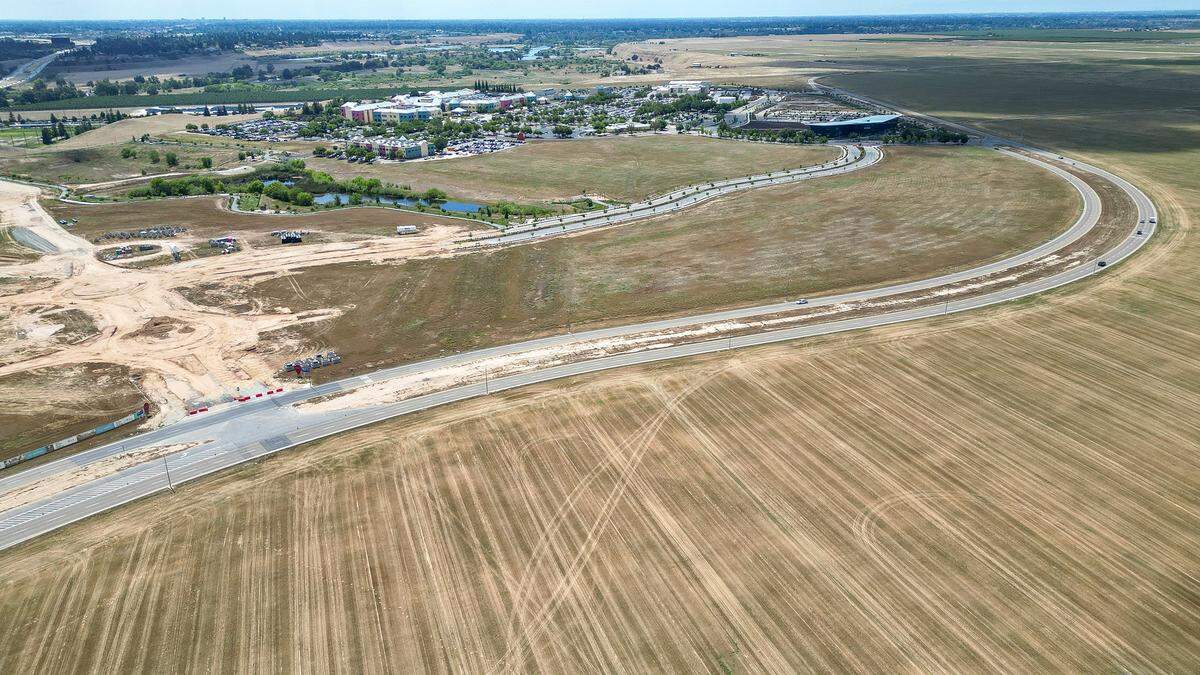
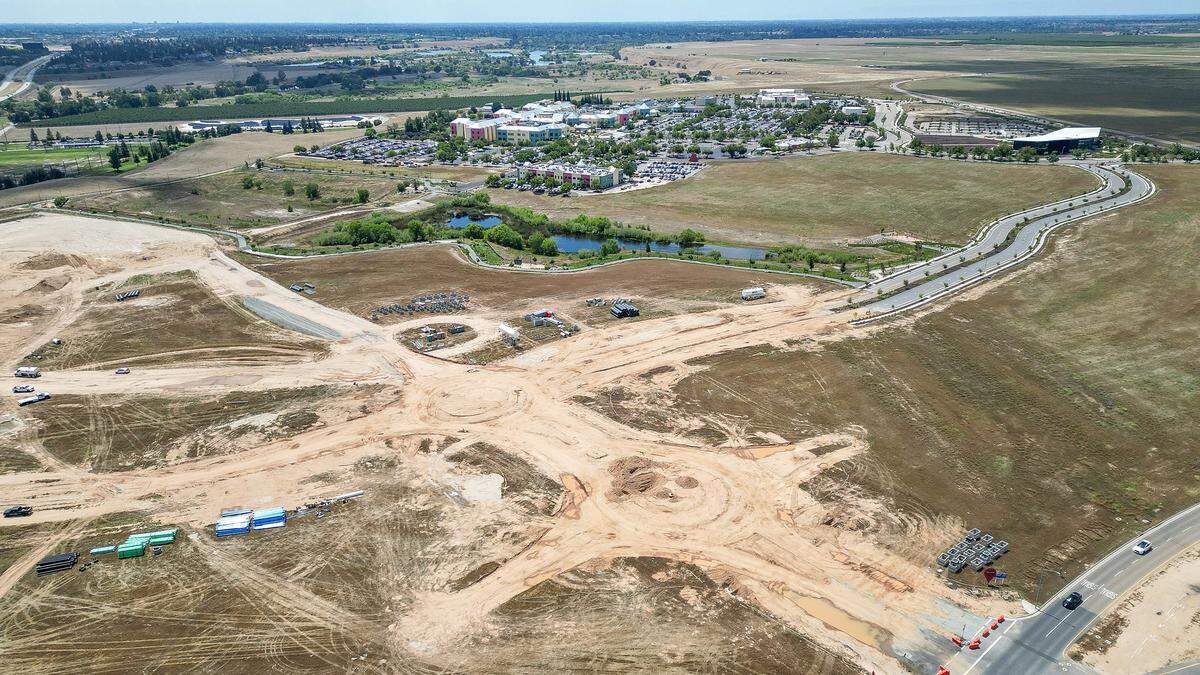
In its latest expansion move, Valley Children’s Hospital says it spent $107 million from its reserves to add another 277 acres of land already approved for residential and commercial development.
The recent acquisition, made through the nonprofit hospital’s purchase of the corporation that owns the land, brings Valley Children’s campus up to more than 700 acres along Highway 41 in Madera County. The hospital’s leadership described the move in an announcement last month as another long-term investment intended to generate extra revenue streams to pay for healthcare.
In an interview with The Fresno Bee, hospital spokesperson Zara Arboleda said such moves are necessary because of the uncertain future of state and federal funding for Medi-Cal, which pays for the treatment of 74% of Valley Children’s patients.
“We have got to diversify revenue in order to protect our ability to provide patient care,” she said.
The latest land addition — which includes open space bounded by Highway 41, Children’s Boulevard, Road 40 1/2 and Ave 10 — positions Valley Children’s as the main landowner today along the freeway between the Riverstone community and the Fresno-Madera county line. For decades, Richard Gunner, a developer and the land’s previous owner, planned it as the future site of residential and commercial development anchored by Valley Children’s campus.
It’s not yet clear whether Valley Children’s will be the entity that builds on the 277 acres. But Arboleda said whatever revenue the hospital makes from the land, “we’re going to reinvest all of that back into pediatric care.”
The purchase comes two years after financial decisions at Valley Children’s, long considered a top pediatric facility and trustworthy institution, came under public scrutiny in the Fresno area.
Nonprofit tax filings showed CEO Todd Suntrapak was assigned a total compensation of more than $5 million annually near the start of the decade — a pay level that has since decreased but at the time was blasted as exorbitant by Fresno-area politicians. The hospital then revealed its plans to build apartments, hotel space and retail shops on its campus, which was approaching 500 acres at the time.
What will Valley Children’s do with Gunner Ranch land?
The Valley Children’s campus is part of the 1,135-acre Gunner Ranch West Area, where plans first approved by Madera County’s Board of Supervisors in 1994 allow housing for more than 8,000 people and millions of square feet of commercial space.
The planned community was always meant to be anchored by the Valley Children’s campus. Gunner donated a river bluff parcel for the hospital so it could move to Madera from Fresno in 1998. In the decades that followed, Richard Gunner was able to get the area fully entitled for future development, but his own plans to build there never took off.
Valley Children’s simultaneously extended across Highway 41 and to the San Joaquin River’s edge, acquiring multiple working orchards and the Valley Golf Center, as it also bought more Gunner land.
The 277 acres recently purchased are zoned for medium density residential and mixed-use commercial development.
Arboleda told The Bee that the hospital’s exact plans for the land “are still to be determined,” though they could involve development, partnerships or the land’s eventual sale.
The Bee asked how much revenue the hospital expects to generate from its $107 million investment, and Arboleda said she did not have a specific answer.
“It all depends on what decisions are made for the use of that property in the years or decades to come,” she said.
Valley Children’s says its ‘not trying to be a developer.’ Why did it choose real estate?
Prior to unveiling the concept for the hospital’s commercial plans in 2024, Suntrapak, the hospital’s CEO, had told The Bee that Medi-Cal’s reimbursements did not cover the cost of Valley Children’s treatment services. He said then that Valley Children’s was looking for extra revenue streams to help pay for medical care in the long-term.
Ge Bai, a professor of health policy and management at Johns Hopkins University, told The Bee at the time that it’s OK for a nonprofit hospital to make money from a for-profit wing if the organization is transparent and using the extra revenue to advance its mission.
The Medi-Cal program, which is funded by the state and the federal Medicaid program, has since started shrinking because of state budget deficits and President Donald Trump’s “One Big Beautiful Bill Act.” The bill, approved last year, includes Medicaid cuts totaling nearly $1 trillion over 10 years.
“We’re not trying to be developers, but we are a pediatric healthcare network responding to an increasingly changing healthcare environment,” Arboleda said. “Traditional funding alone isn’t going to help us.”
The hospital’s latest Form 990, the annual public tax form nonprofits file with the IRS, shows Valley Children’s had $557.6 million invested in publicly traded securities in the fiscal year ending Sept. 30, 2024. The hospital had another $374.5 million invested in “other securities.”
That year, the hospital had investment income of $42.4 million — which can include “dividends, interest and other similar amounts,” the IRS form says.
The Bee asked Arboleda how Valley Children’s decided entering the development realm was better than putting more money into its existing investments. She said that although those investments have helped build Valley Children’s reserves and keep the hospital stable, “the times we’re in require thoughtful, innovative solutions.”
Arboleda also pointed to similar moves by other major nonprofit healthcare organizations: Cedars-Sinai in Los Angeles announced its purchase of a nearby shopping center last month, Mayo Clinic has a venture capital arm, and Children’s Hospital of Philadelphia has also purchased non-clinical real estate, Arboleda said in a follow-up email.
This story was originally published April 28, 2026 at 9:45 AM with the headline "Valley Children’s spent $107M on new land. Investment will pay for care, hospital says."