See how UC Davis bird barn will turn raptor flight secrets into smarter drones
AI-generated summary reviewed by our newsroom.
- UC Davis runs a bird flight lab capturing raptor motion with sub‑millimeter cameras.
- Researchers analyze wing, tail and body maneuvers to inform drone design and rehab.
- Army-funded imaging enables motion capture data used with wind‑tunnel tests and 3D models.
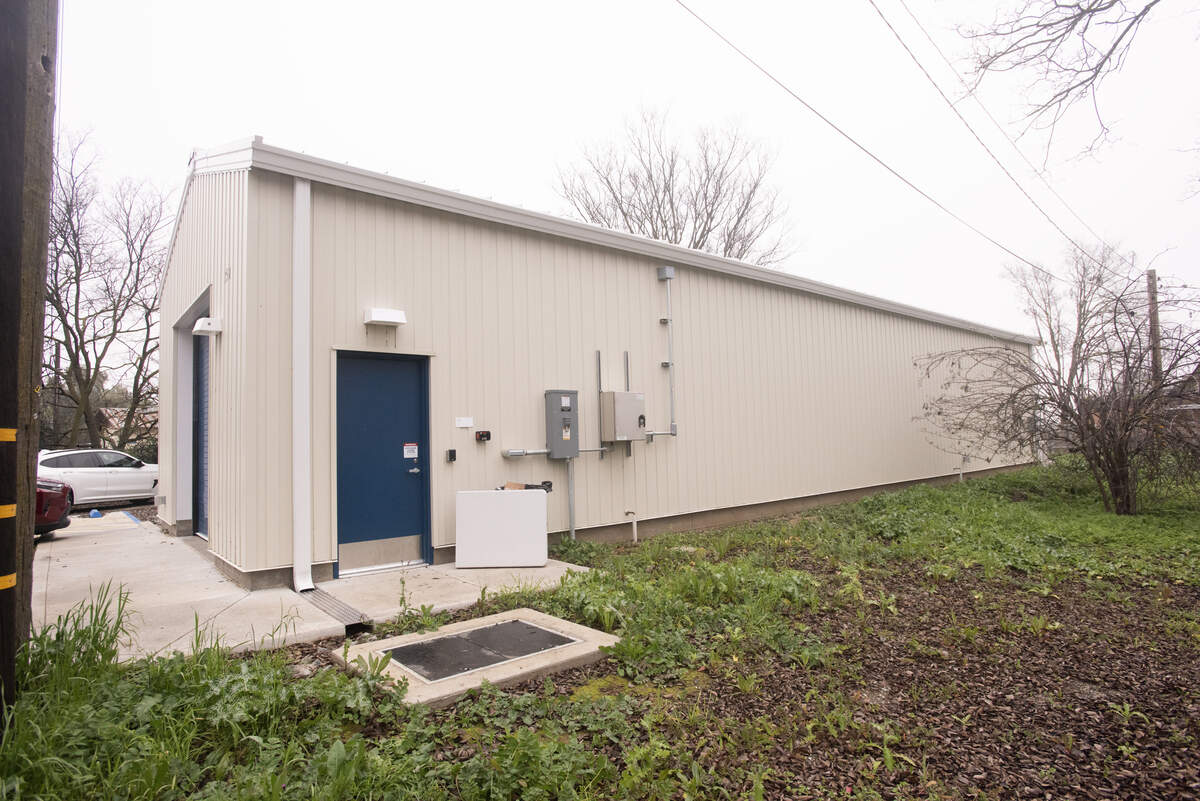
An unassuming metal barn at the edge of the UC Davis campus is now home to some of the most sophisticated high-speed cameras in the country — and the birds that put the equipment to the test.
Inside, engineers and veterinarians have created the Center for Animal Flight and Innovation, believed to be the only U.S. laboratory — and one of just a handful worldwide — designed to record raptors in motion with ultra‑sharp, slow‑motion video. The facility focuses on hawks and other birds of prey, tracking every twist of a wing and flick of a tail as they thread through obstacles or dive at high speed.
Researchers say those midair maneuvers might eventually reshape how drones are built and flown, and provide better ways to care for injured birds. By decoding how raptors steer, brake and recover in tight quarters, they hope to inspire more agile un-crewed aircraft and more effective rehabilitation techniques.
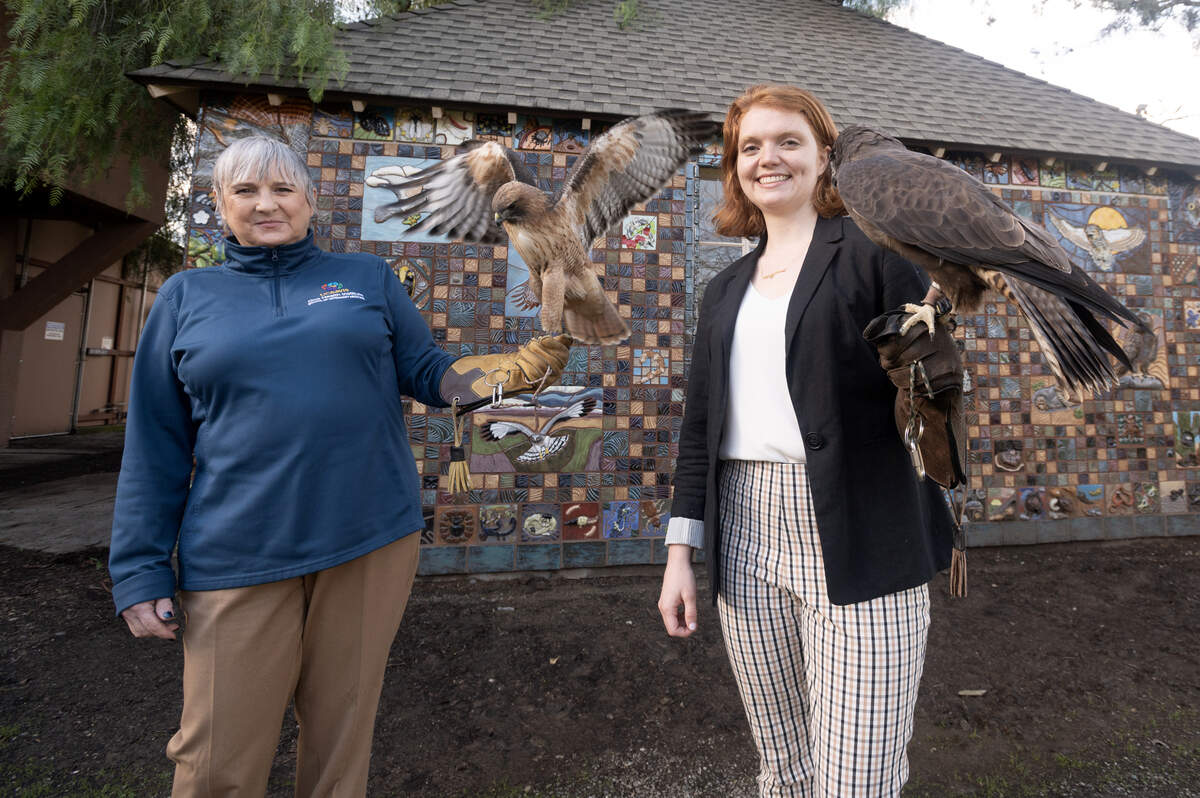
The center grew out of a partnership between Christina Harvey, an assistant professor of mechanical and aerospace engineering, and Michelle Hawkins, a professor in the School of Veterinary Medicine who also works with the California Raptor Center. A grant from the U.S. Army Combat Capabilities Development Command Army Research Laboratory paid for the high-end imaging systems that make the work possible.
“We’re the only lab in the U.S. that I’m aware of that could fly birds in this type of facility,” Harvey said in a news release from the university.
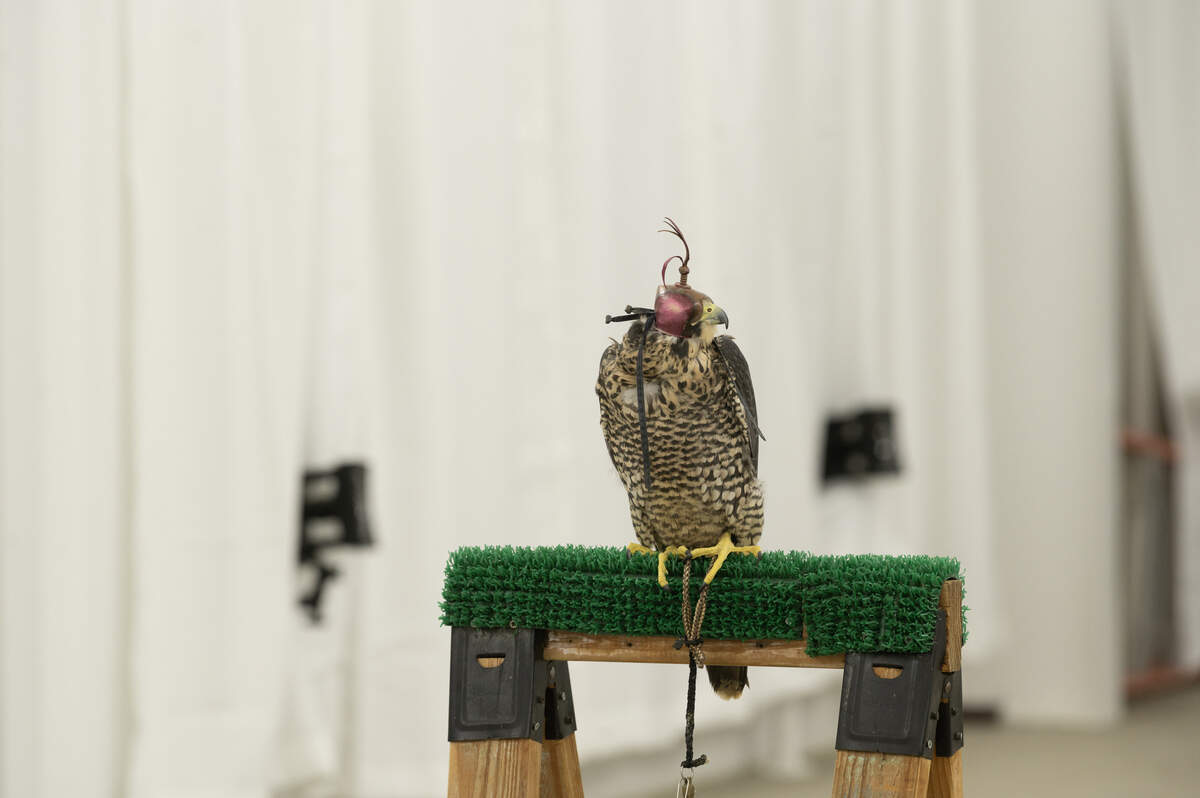
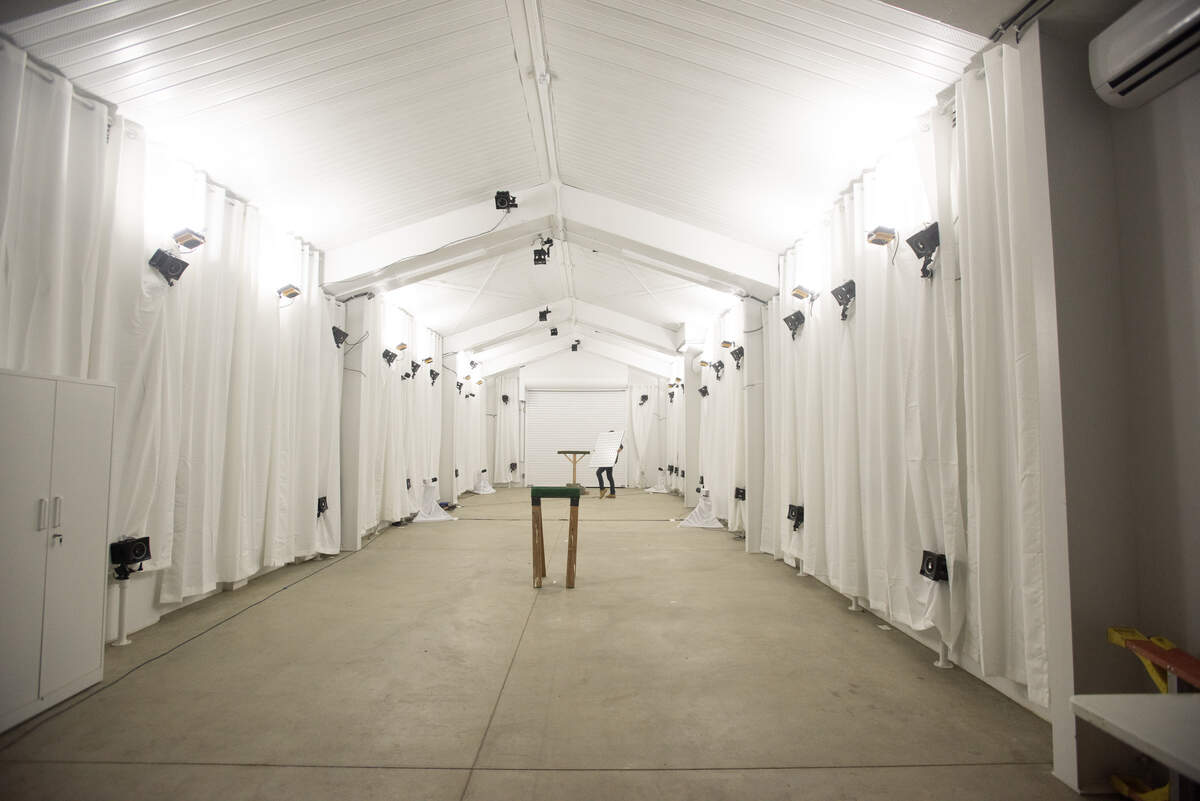
The metal barn’s walls are lined with white curtains and bright white lighting that mimics daylight to keep birds comfortable. Rows of infrared cameras at floor level and ceiling height enable researchers to track the movements of birds’ wings, tails and bodies by putting small reflective dots on them, a set-up similar to the motion-capture technology used by animation studios, UC Davis said in a news release. The system can track a bird’s movements with sub-millimeter accuracy, according to Harvey.
The Bird Flight Research Center can work in conjunction with other facilities in the College of Engineering. Engineers there can observe the video reconstructions and pull out wing shapes, make 3-D print models of them and test them in the College of Engineering’s wind tunnel, according to UC Davis.
“The wind tunnel gives us the experimental ability to do the aerodynamic force calculations, whereas this lab lets us get the true biological information of what’s happening,” Harvey said.
This story was originally published February 23, 2026 at 1:18 PM with the headline "See how UC Davis bird barn will turn raptor flight secrets into smarter drones."