
Deadly slide at Castle Peak: 8 dead, 1 missing, 6 rescued in California avalanche
Under a high avalanche warning in the Sierra, a slope near Lake Tahoe collapsed and buried a group of 15 skiers, killing at least eight people in the deadliest avalanche disaster in California history.
The slide struck around 11:30 a.m. Tuesday near Castle Peak in Nevada County, sweeping up four ski guides and 11 clients. Rescuers battled high winds and blinding snow for hours, locating six survivors.
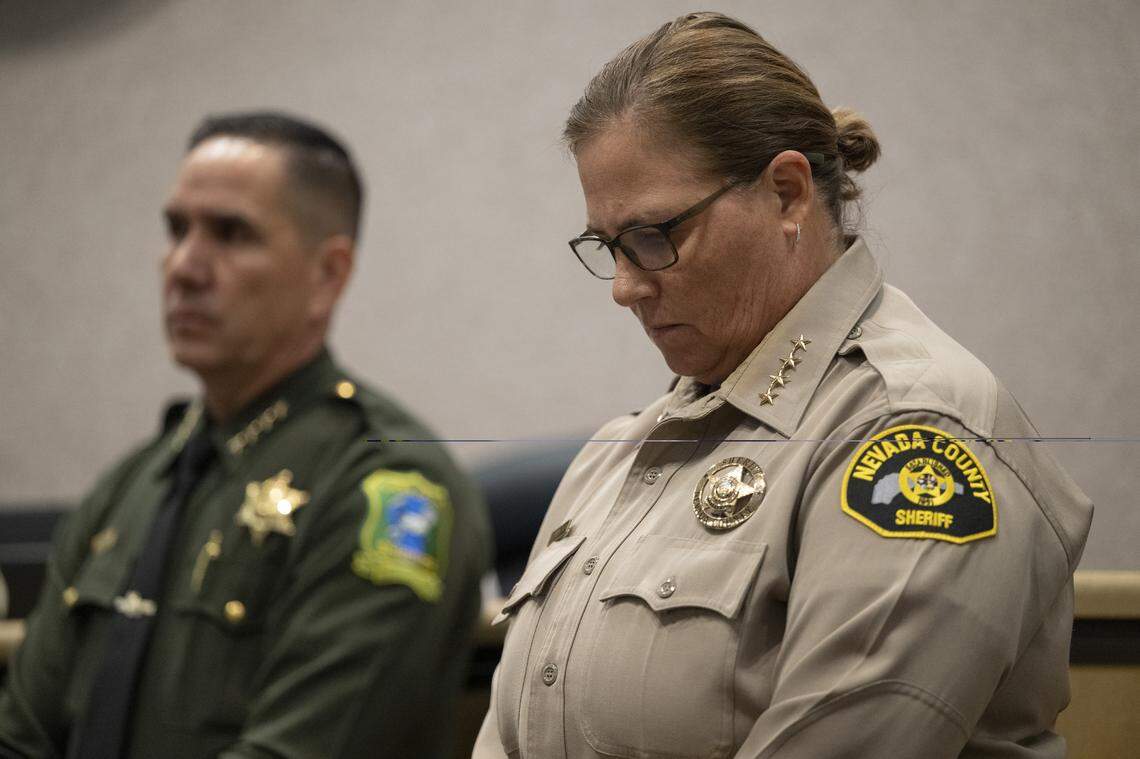
One person in the group remained unaccounted for as of Wednesday afternoon and was presumed dead, said Nevada County Sheriff Shannan Moon. The incident was the second-deadliest avalanche in the United States since at least 1951, according to data collected by the Colorado Avalanche Information Center.
“Our mission now is to get them home, and making sure that we’re doing it safely and in constant conversation with those families,” Moon said of the people who died.
The tragedy unfolded despite a “high” backcountry avalanche warning issued that morning by the Sierra Avalanche Center, a nonprofit organization focused on winter recreation safety and education. Under this rating, large avalanches are considered very likely, and travel in avalanche terrain is not recommended.
As authorities shifted from rescue to recovery, questions mounted about what motivated the group to travel through the backcountry during a period of high danger.
“We’re still in conversation with them on the decision factors that they made,” Moon said.
High avalanche risks
The ski group — which included nine women and six men — was part of a guided three-day backcountry ski trip led by Blackbird Mountain Guides of Truckee. The skiers were returning from the Frog Lake Huts, a backcountry lodge about 10 miles from Truckee, when the avalanche struck in rugged, ungroomed terrain near the Pacific Crest Trail.
Blackbird Mountain Guides was incorporated in 2020, according to a filing with the California Secretary of State’s Office. In addition to Truckee, the company also has offices in Bellingham, Washington, and Mount Shasta, according to its website. No injuries to guides or staff were reported to the Occupational Safety and Health Administration in recent years, according to the agency’s online database.
A post on the company’s Instagram page just days earlier warned about avalanche hazards, and Blackbird Mountain Guides lists avalanche safety courses using curriculum developed by the American Institute for Avalanche Research and Education, among its offerings.
The research organization told The Sacramento Bee in a statement it “was not involved in the planning or on-the-ground operations of the trip on which this incident occurred.”
“Travel in avalanche terrain involves inherent and dynamic risk,” the statement said.
Moon said the Sheriff’s Office was still in conversation with officials from the guide company about their decision to take the trip in such perilous conditions.
The avalanche came amid a powerful winter storm that dumped multiple feet of snow in the mountains and prompted warnings of high avalanche danger in the Lake Tahoe backcountry. Forecasters rated avalanche danger as “high,” the second-most-dangerous level below extreme.
The National Weather Service had a winter storm warning in place through 10 p.m. Thursday for the entire Sierra Nevada range, warning that elevations above 3,500 feet could receive 4 to 8 feet of snow by the end of the storm.
Search and rescue
Weather conditions hampered the search and rescue effort.
“Extreme weather conditions, I would say is an understatement, lots of snow, gale force winds, winds making it impossible to see,” said Moon at a Wednesday press conference.
Sheriff’s Office Capt. Rusty Greene said survivors reported that someone saw the avalanche occurring and yelled before they were overtaken by the snow. The group was “fairly close together” when it occurred, he added.
Moon said dispatchers received a 911 call at 11:30 a.m. reporting an avalanche in the Castle Peak area, north of Interstate 80 near Donner Summit in the Tahoe National Forest.
The Sheriff’s Office coordinated a large-scale mutual aid response with Truckee Fire, the Placer County Sheriff’s Office and Tahoe Nordic Search and Rescue, as well as the Washoe County Sheriff’s Office and its search and rescue team from Nevada. About 50 rescuers deployed from both sides of Interstate 80, using Sno-Cats and skis to reach the remote site. Interstate 80 was closed, and deep snow and whiteout conditions delayed equipment access.
Rescuers reached the survivors after 5:30 p.m. Tuesday by traveling in a specialized snow vehicle and then continuing on skis. The six survivors had sheltered in place and attempted to locate missing members of their group before rescuers arrived, Moon said. Three deceased skiers had been located by members of the group prior to the arrival of search teams.
Moon said it took several hours to transport survivors from the avalanche site to the trailhead, where ambulances were waiting to take the injured to a hospital.
Just before 10:45 p.m., the Nevada County Sheriff’s Office said it had rescued six of the skiers who had been located earlier. “ Of the six rescued, four are men and two are women.
The recovery effort remained active Wednesday, but Moon emphasized that weather and avalanche conditions — not a lack of resources — were limiting access.
“It’s not a resource issue as we speak,” she said. “It is the conditions — weather conditions and safety conditions for our response teams.”
Chris Feutrier, a forest supervisor of the U.S. Forest Service’s Tahoe National Forest, said the avalanche path was about the length of a football field and was triggered when a “persistent weak layer” of snow collapsed under a heavy load of new snowfall.
The avalanche occurred about a mile from another slide reported in early January in the Castle Peak area, Moon confirmed, though the exact location was not yet available.
Cause of death pending
The presumed dead include seven women and two men.
Authorities said the cause of death had not been determined. Nevada County contracts with Placer County for pathology services, and the deceased would be transported to the Placer County morgue in Roseville after recovery and identification.
Moon urged the public to avoid backcountry travel during the current storm cycle and to check conditions with the Sierra Avalanche Center before heading into the mountains.
“Please avoid the Sierras during this current storm and in the upcoming days,” Woo said. “Please allow us to focus all of our resources on continuing to recover these bodies for the family and bring them home.”
Officials said they would release the names of the victims after notification of next of kin.
History of Castle Peak fatalities
Tuesday’s avalanche came about six weeks after a separate, fatal slide on the backside of Castle Peak claimed the life of a 42-year-old man. The site is also close to where three other fatal avalanches occurred in 2021, according to previous Bee reporting.
Castle Peak is popular year-round for hiking and mountain biking in summer and backcountry skiing and snowshoeing in winter. It’s about 80 miles northeast of Sacramento and 30 miles west of Reno, Nevada.
Backcountry skiers often reach Castle Peak from the Castle Peak trailhead near Boreal, following routes that cross multiple avalanche-prone slopes. The area is also near the Pacific Crest Trail. Sierra Nevada Geotourism calls the peak “one of the icons of Donner Summit” due to its accessibility to the major mountain highway and the trail.
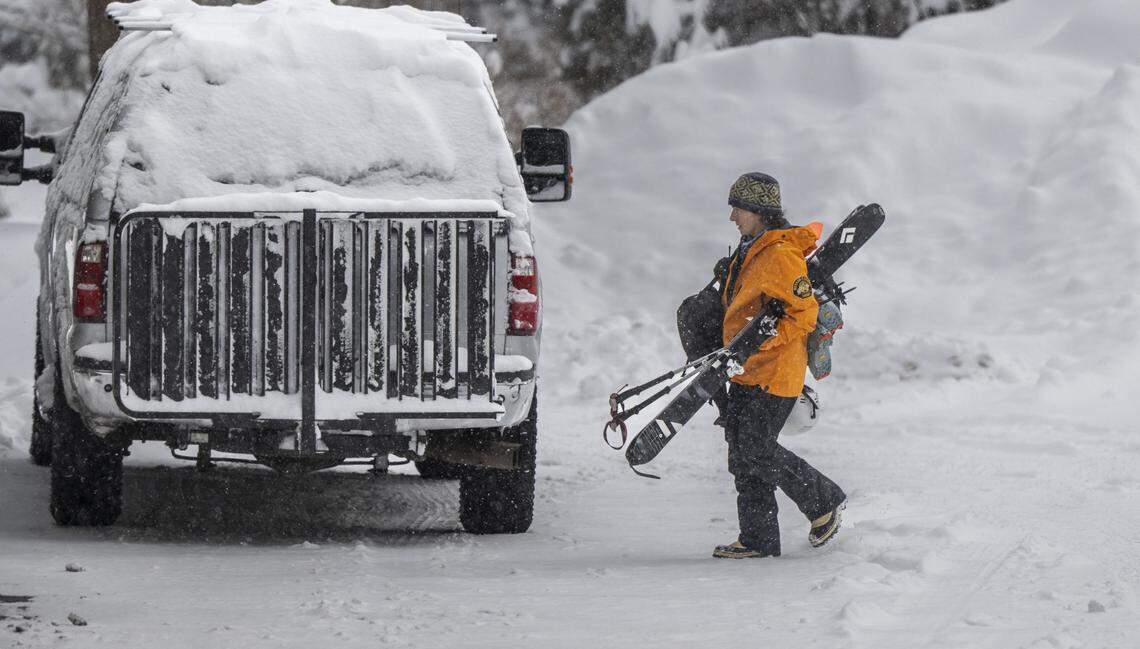
In the parking lot at Boreal ski area on Wednesday, skiers and snowboarders waited for chairlifts to open for a chance to ride the newly accumulated snow. Some people questioned why the group embarked on the trip, though they acknowledged that such risks are sometimes taken.
“All of us who grew up in this area are aware of avalanche danger, and you know when to check and when to be careful,” said Justin Kucera, who was gearing up for a day of riding with his son on Wednesday at Boreal Mountain, a ski resort across the mountain pass from the Castle Peak turnout and trailhead.
“I mean I get it, I’ve always been a risk-taker,” added Kucera, who had come from Chilcoot, further north in the Sierra. “I’ve gone out on days when it wasn’t good.”
But, he said, mountain guides carried the added responsibility of keeping their clients safe.
Boreal staff left their ski lodge open to rescue crews, marketing director Tucker Norred said Wednesday. Searchers had dispatched at least one Snowcat, the tracked vehicle that ski resorts use for grooming trails and other operations, from Boreal Mountain into the backcountry, he added.
The ski area had pushed its own opening back until noon, as ski patrollers performed avalanche mitigation work and safety inspections, Norred said. As he spoke, muffled booms could be heard in the distance – the sound of explosives being used to clear out avalanche paths at nearby Sugar Bowl Resort.
Norred did not know the status of the rescue operation, he said, as Boreal Mountain was not involved beyond the use of its facilities.
Norred, a backcountry skier who has explored the terrain around Castle Peak, said the storm on Monday and Tuesday came in layers that exaggerated the avalanche danger. High avalanche conditions arise in the northern Sierra when cold storms follow warm spells, Norred said.
“I’ve been back there, and I would not want to go out there on a day like yesterday,” he said.
Before Tuesday’s avalanche, the deadliest California avalanche on record killed seven people at Alpine Meadows in March 1982. Eleven people were killed on Mount Rainier in Washington in 1951.
Reactions from Truckee community
Skiing is a community bond in Truckee and other Tahoe-area mountain towns. News of the catastrophic avalanche — which killed the spouse of a member of the local volunteer search and rescue team — cut a wide swath through that community, even as people tried to enjoy skiing a fresh blizzard’s deposits after a long drought of new snow.
At RMU Truckee, a combination ski shop and cocktail bar that is a mainstay of the historic downtown, employee Mac Coppes hurried to set up for the 2 p.m. opening — with his snow pants still on and his face flushed from skiing at Sugar Bowl Resort. A three-year resident of the area, Coppes said the threat of avalanches is always there for skiers, but that it’s a fear that can fade in intensity over time.
After this week’s tragedy, it was front of mind. “It’s such a hit to the community,” Coppes said. “It just makes it more real for everyone.”
The scale of the tragedy meant it was reverberating not just in Tahoe, but throughout the ski community nationwide, Coppes said, noting friends from the East Coast had texted him about seeing the news.
Down the street at Tahoe Dave’s Ski and Boards, a longtime area staple with five shops spread through the mountain towns, Yvonne Moore said it was the size of the group caught that shook her and other locals she spoke to.
“It’s always tragic,” she said, but in this case, “the numbers are shocking.”
Striking, too, she said, was the intensity of the blizzard this week. Even by the Sierra’s high standards, snow had been coming down at a remarkable pace.
Because the guides were likely local residents, Moore said grieving would spread communitywide and was “certain” to touch Truckee. While people have raised questions about the decisions made by Blackbird Mountain Guides, Moore said she and her partner, who was also working at Dave’s, were choosing compassion over judgment.
“It’s easy for us to judge being on the outside,” Moore said. “But there are so many different scenarios and circumstances, we are doing our best not to judge and to just have compassion.”
The Bee’s Theresa Clift contributed to this story.
This story was originally published February 18, 2026 at 3:58 PM with the headline "Deadly slide at Castle Peak: 8 dead, 1 missing, 6 rescued in California avalanche."
