
When are traffic meters active on California highway onramps? How they work
What do the traffic meters on some California highway onramps do, and do you have to obey them? Here’s what to know.
The meters are intended to control the flow of traffic onto state highways to diminish slowdowns and collisions, said Nick Liccardo, a senior transportation engineer with the state Department of Transportation.
When meters are active, a red light stops drivers before they enter the freeway and a green light a short time later signals them to proceed.
The system is designed to avoid a glut of vehicles entering freeway congestion at once, which can cause further slowdowns or result in crashes as vehicles try to merge, Liccardo said.

How do onramp traffic meters work?
Sensors embedded in the pavement monitor congestion on state highways. When traffic is heavy or there are backups because of crashes or road work, onramp meters are activated.
The metering system automatically adjusts how long motorists are held before entering the highway depending on traffic conditions, Liccardo said.
Most meters now allow one vehicle per green light, but a few allow two at a time. The meters can allow up to 900 vehicles per hour per lane or as few as 240 vehicles per hour per lane.
Originally, meters also used sensors in the pavement to detect vehicles awaiting entry to the freeway, but newer meters use radar sensors instead, Liccardo said.
When are onramp traffic meters active?
Originally, onramp traffic meters were active during set periods of time on weekdays, normally peak traffic hours in the morning and evening for that stretch of highway.
But the meters now can be activated at any time of day, including weekends and holidays, as traffic conditions warrant.
“It doesn’t matter when it is,” Liccardo said.
Illuminated signs at onramp entrances also alert drivers if traffic meters on that ramp are active.
Are you required to stop at traffic meters?
Yes, drivers are required to stop at red lights at onramp traffic meters. If the meters are off, showing no signal, you’re not required to stop.
Can I get a ticket for not stopping at an onramp traffic meter?
Failing to stop at a red light at a highway onramp traffic meter can earn you a ticket with fines and fees often totalling more than $500, The Sacramento Bee previously reported.
What if the light stays red?
Caltrans commonly receives complaints from drivers that an onramp traffic meter won’t turn green, Liccardo said.
Normally, that means the driver has pulled too far forward for the meter to detect their vehicle, meaning it doesn’t register that there’s anyone waiting to proceed.
If the light has been red for some time, it’s best to just proceed, Liccardo said. The meter will reset when the next vehicle pulls up to the light.
Where are onramp traffic meters monitored?
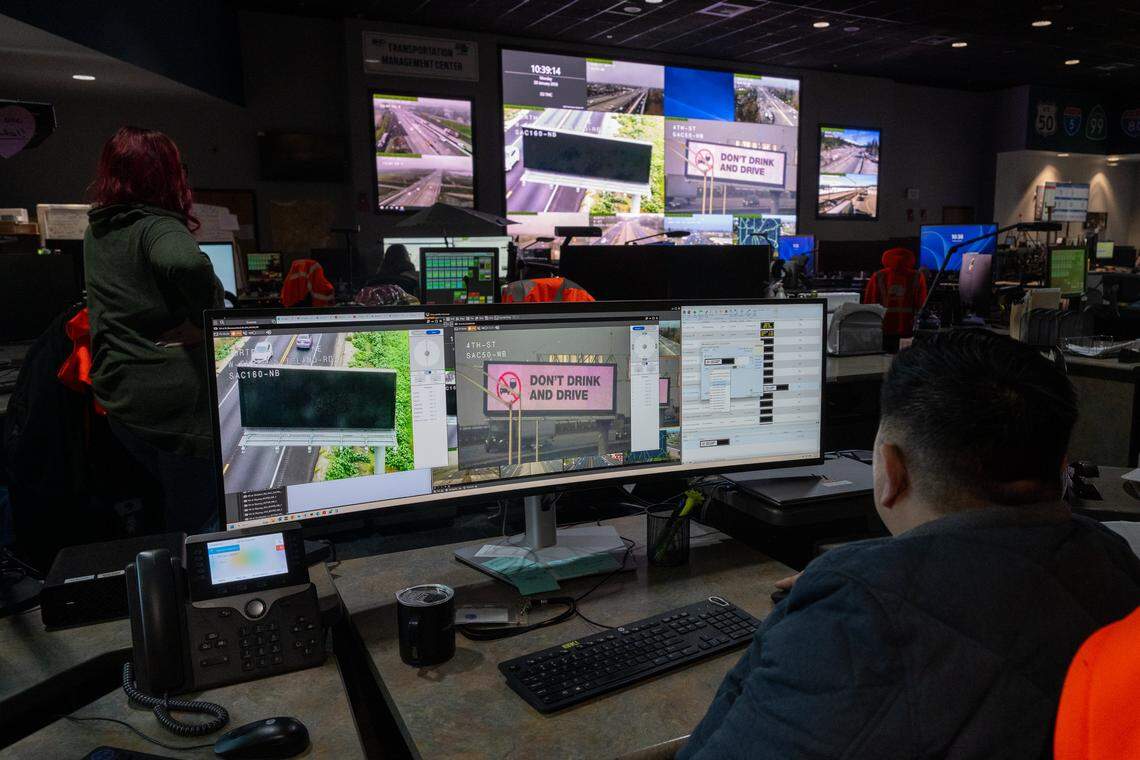
A traffic management center in Rancho Cordova monitors state highways in the 11-county Caltrans District 3 area.
The district spans an area covering Chico to Galt, and Davis to Lake Tahoe, said Luis Munoz, branch chief engineer at the center.
.JPG "SAC_0017_PK_20260126_CALTRANS (1).JPG")
Operators and dispatchers monitor 200 closed-circuit television cameras at the center, allowing them to send out maintenance crews or work with the California Highway Patrol to investigate reports of crashes or other problems.
“Every minute counts when there’s an incident,” Munoz said.
The center monitors major highways over the Sierra Nevada for chain controls and snow conditions, although a secondary center in Kingvale also operates in winter.
Workers also notify drivers of potential problems via the QuickMap app.
This story was originally published January 31, 2026 at 7:00 AM with the headline "When are traffic meters active on California highway onramps? How they work."