
231 shark attacks have occurred off California in 75 years. See them all on a map
When a Monterey County woman died in a shark attack off Pacific Grove in late December, it was the 17th such fatality in 75 years off the coast of California.
Most of those incidents involved white sharks, and though bites and deaths from sharks are statistically rare, the idea of the ocean’s apex predator rising from the depths remains among the greatest fears of even the most ardent ocean lovers.
The death of Erica Fox, 50, was the first since Oct. 1, 2023, when a swimmer was killed in an attack at Pt. Reyes.
Overall, it was one of at least 232 shark attacks in state waters recorded since 1950, according data from the California Department of Fish and Wildlife.
Those numbers show that, considering the vast number of people surfing, swimming, kayaking and diving in the ocean every day — encountering a shark is exceedingly uncommon, and being injured is even less likely.
“There are hundreds of thousands, if not millions of people using the ocean every year,” Cal State Long Beach Shark Lab director Dr. Chris Lowe said. “On average, there are three injury-related bites attributed to white sharks in California each year. It’s incredibly rare.”
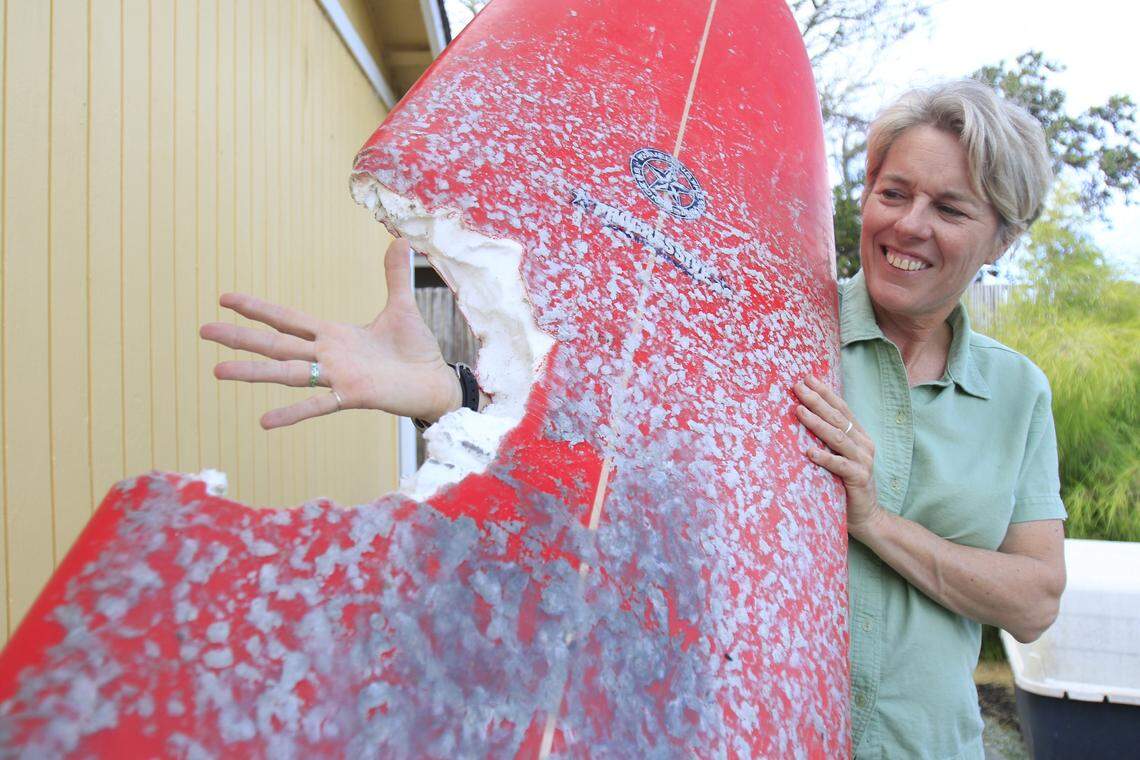
But attacks will continue to happen, and Fish and Wildlife’s detailed archive of data shows they can occur almost anywhere — and any time — along California’s 840-mile coastline, from the chilly waters off Eureka to the beaches of San Diego.
Woman goes missing in suspected shark attack
Fox, the co-founder of the Kelp Krawlers swimming group, was reported missing off of Lovers Point in Pacific Grove, California, on the afternoon of Dec. 21, according to initial reports from the city of Monterey and the U.S. Coast Guard.
At the time, the agencies said two witnesses reported that Fox — described as a dedicated triathlete, wife and daughter in her obituary — may have encountered a shark off the shore while swimming, but a shark attack had not yet been confirmed.
One report claimed to see what looked like a human body in the mouth of a shark.
About a week later on Dec. 27 on the other side of Monterey Bay, firefighters recovered Fox’s body from the ocean south of Davenport near Santa Cruz, Cal Fire said.
And on Thursday, the Santa Cruz County Sheriff’s Office announced that the cause of death was “sharp and blunt force injuries and submersion in water due to a shark attack.”

The location where Fox was attacked, Lovers Point, was the site of three other shark attacks from 1950 to 2025, one of which was also fatal, according to Fish and Wildlife.
The first recorded attack was on Dec. 7, 1952, at 2 p.m., when a white shark bit and killed a swimmer, according to Fish and Wildlife data.
The second didn’t occur until almost 70 years later, on June 22, 2022, at 10:30 a.m., when a white shark bit a swimmer on the surface of the ocean, causing a major injury.
Then, less than two months later, on Aug. 10, 2022, a white shark bit a different swimmer at 11:30 a.m., also causing a major injury, the agency’s data show.
Is the Red Triangle really the most dangerous place to surf?
Lovers Point is located in an area colloquially known as the Red Triangle, thanks to what many surfers believe is an elevated risk of shark encounters.
It stretches from Bodega Bay in Marin County to the Farallon Islands off San Francisco to Big Sur.
Despite the ominous name, data doesn’t support the lore that the zone is the most dangerous place to surf off the coast of California.
According to an analysis of the California Department of Fish and Wildlife’s data, about 44% of recorded shark incidents occurred in the Red Triangle, while about 13% happened north of the region and about 43% happened south.
In fact, the map of the 231 incidents shows them dispersed widely along the coast. Almost anywhere people access the ocean, incidents with sharks have occurred.
John Ugoretz, pelagic fisheries and ecosystem program manager for the state Department of Fish and Wildlife, said there aren’t enough shark attacks to determine what area is the most dangerous for swimmers.
“There’s really no single place that you can point to and say, ‘This is a more risky place,’” he said. “It’s just very random, and since the total numbers are so low, It’s really hard to point to a single place.”
Shark attacks appear to happen at random
Breaking down the entire data by year does show one interesting trend.
Up until the early 2000s, the annual numbers ranged from zero to six incidents.
Then, in 2004, eight attacks were reported.
Over the next 20 years, the annual numbers range from three to nine, and California hasn’t seen a year with no attacks since 2001.
The peak number of nine attacks occurred three times in the last 18 years, in 2007, 2017 and 2025.
While the increase isn’t statistically huge given the tiny number of attacks vs. the number of people in the ocean, a couple of factors may help to explain it.
First, the bump could have been influenced by improved data collection from Fish and Wildlife over time.
But also, the white shark population has grown over the last 20 years, after the State of California prohibited commercial fishing of white sharks in 1994, Lowe said.
Sharks can live up to 70 years and travel up to 10,000 miles per year, he said. With a food source of healthy seals and state and federal protection, the white shark population has significantly rebounded over the past two decades.
“Literally 100 years ago, those species were on the verge of extinction,” he said.
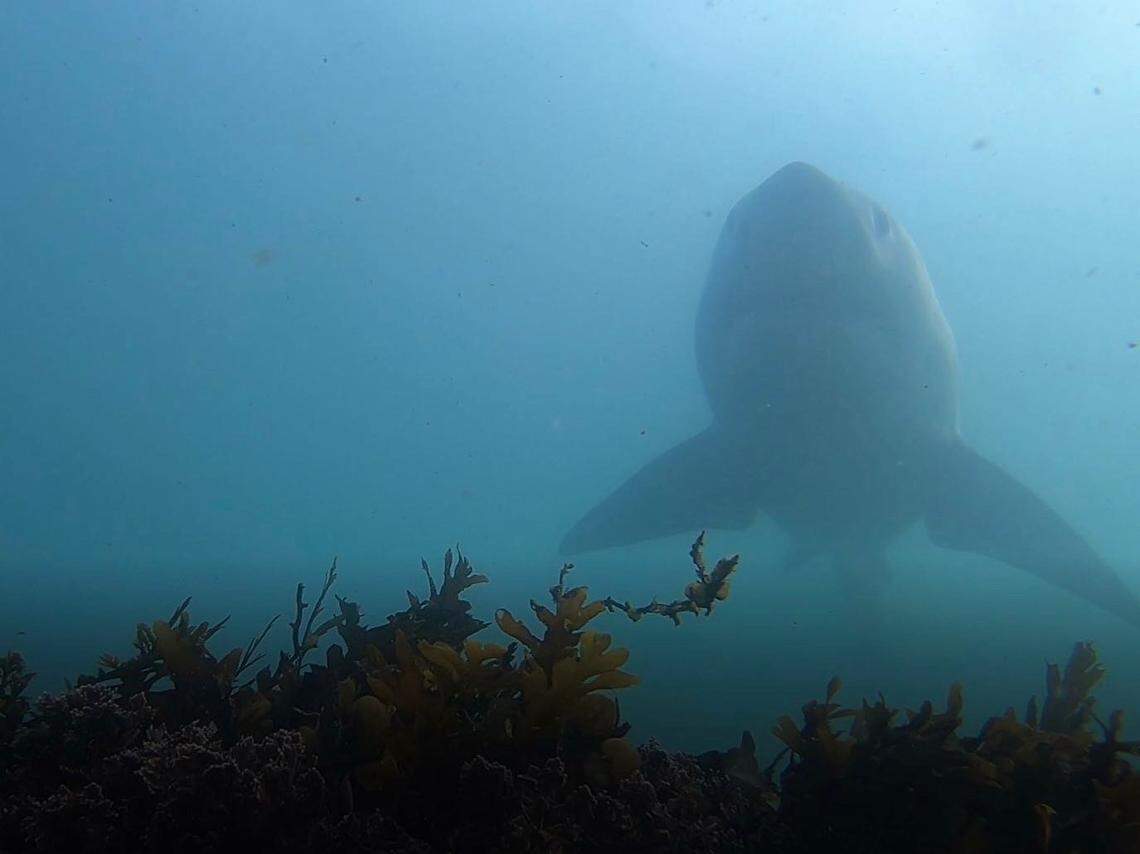
The prevalence of white sharks along the coast is also notable because they are by far the predominant species coming into contact with humans.
The majority of the 231 incidents — nearly 88% — involved white sharks, the data shows.
The other 30 involved a variety of other species: three hammerhead sharks, two blue sharks, two leopard sharks, two sevengill sharks, one salmon shark, one thresher shark and 19 sharks of unknown species.
Fatal shark attacks
When examining the fatal incidents, nearly all of the 17 cases involved white sharks.
Only one in the Fish and Wildlife data was listed as an unknown species of shark.
Following the latest deadly attack, San Luis Obispo and Monterey counties recorded the most in the last 75 years, with three deaths each.
But otherwise, the numbers are rather dispersed, ranging from San Diego County in the south to Mendocino County in the north.
Here’s a roundup of the fatalities:
- Monterey County: On Dec. 7, 1952, a white shark killed a swimmer at 2 p.m. at Lovers Point.
- San Luis Obispo County: On April 28, 1957, a white shark killed a swimmer at 1:30 p.m. in Morro Bay.
- San Francisco County: On May 7, 1959, a white shark killed a swimmer at 5:30 p.m. at Baker Beach.
- San Diego County: On June 14, 1959, a white shark killed a freediver at 5 p.m. at La Jolla Beach.
- Monterey County: On Dec. 19, 1981, a white shark killed a surfer at an unknown time in Spanish Bay.
- San Mateo County: On Sept. 15, 1984, a white shark killed a freediver at 8:30 a.m. at Pigeon Point.
- Los Angeles County: On Jan. 26, 1989, a white shark killed a kayaker at 10:15 a.m. at Malibu Beach.
- San Miguel Island: On Dec. 9, 1994, a white shark killed a hookah diver at 9 a.m. at Harris Point.
- San Luis Obispo County: On Aug. 19, 2003, a white shark killed a swimmer at 8:30 a.m. in Avila Beach.
- Mendocino County: On Aug. 15, 2004, a white shark killed a freediver at 4:30 p.m. at Kibesillah Rock.
- San Diego County: On April 25, 2008, a white shark killed a swimmer at 7 a.m. in Solana Beach.
- Santa Barbara County: On Oct. 22, 2010, a white shark killed a surfer at 9 a.m. at Surf Beach in Lompoc.
- Santa Barbara County: On Oct. 23, 2012, a white shark killed a surfer 11 a.m. at Surf Beach in Lompoc.
- Santa Cruz County: On May 9, 2020, a white shark killed a surfer at 1:30 p.m. at Manresa State Beach.
- San Luis Obispo County: On Dec. 24, 2021, a white shark killed a surfer at 10:40 a.m. at Morro Strand State Beach.
- Marin County: On Oct. 1, 2023, an unknown species of shark killed a swimmer at 10:15 a.m. at Point Reyes at Wildcat Beach
- Monterey County: On Dec. 21, 2025, an unknown species of shark killed a swimmer in the mornning at Lovers Point in Pacific Grove.
Shark attacks are ‘incredibly rare’ in California
Every time a shark attack occurs — and especially a fatal one — fears spike among ocean users, but the numbers show that shark attacks are rare in California, Cal State Long Beach Shark Lab director Dr. Chris Lowe said.
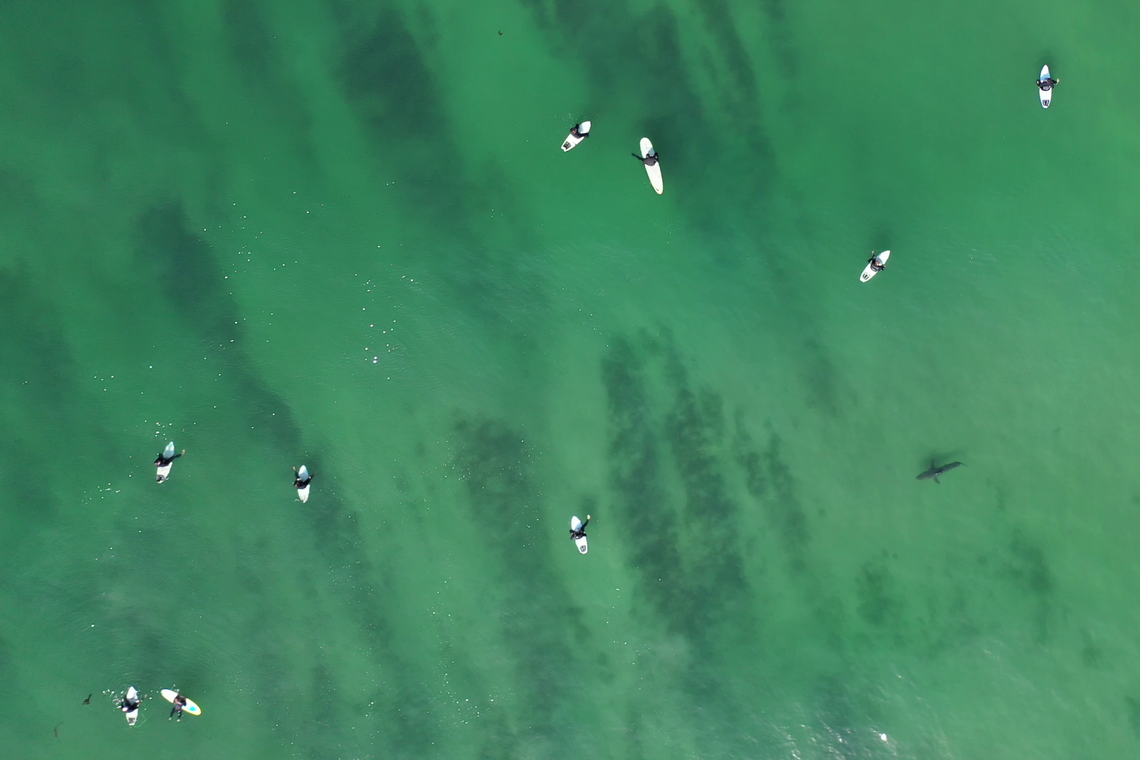
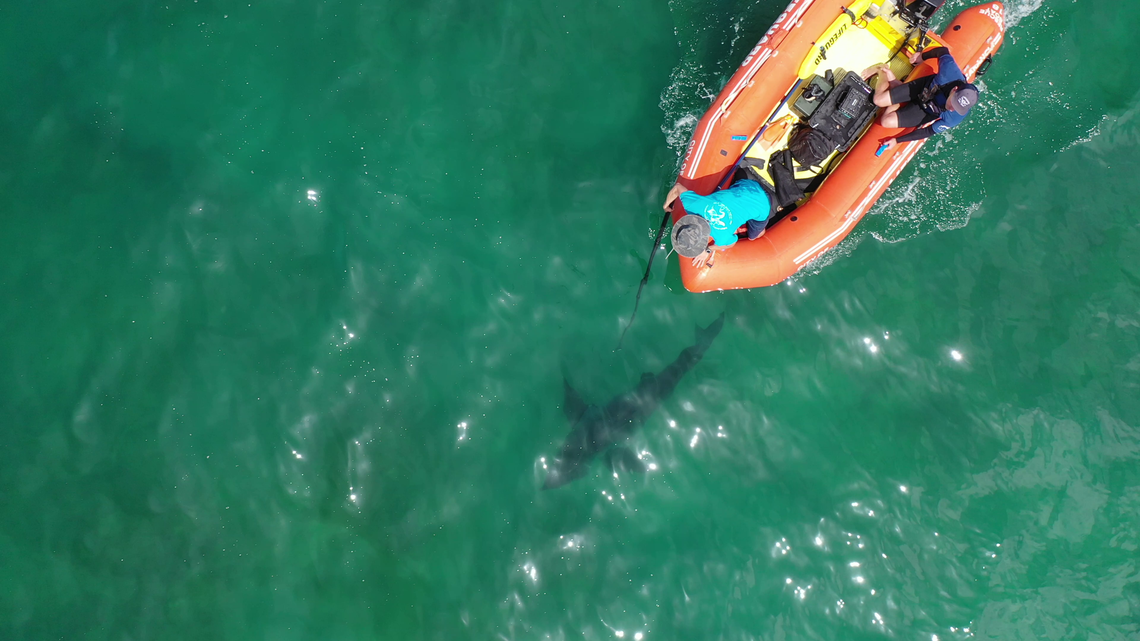
From 2019 to 2021, the Shark Lab conducted drone surveys of Southern California beaches. A shark swam within 60 feet of a person on 97% of the data collection days, Lowe said.
“He has hundreds of hours of footage of white sharks swimming right underneath or right by surfers and swimmers and paying them no attention at all,” Lowe said of the researcher.
The reason that sharks bite people is largely a mystery, he said.
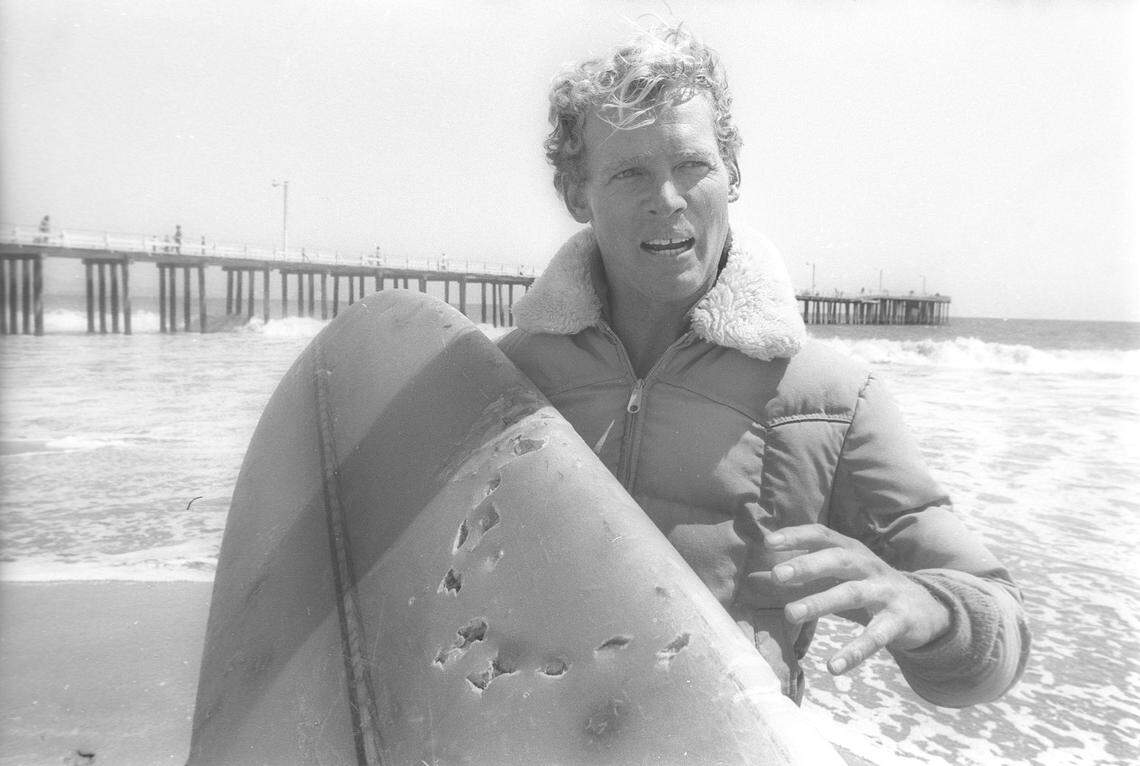
“We don’t really understand why sharks occasionally bite people unprovoked,” Lowe said.
Sharks primarily feed at the bottom of the ocean on sting rays and fish, but they do also swim on the surface of the water to warm up or feed on seals.
Only about 15% of people bitten by sharks see the shark coming, which makes research into the motivation of shark bites difficult, Lowe said.
“We have no idea what’s going through a shark’s head before it bites a person,” he said.
Researchers think there are two reasons a shark may bite a person: The shark mistakes a person for food, or the shark feels threatened by the person and bites in self-defense, he said.
How to keep your self safe in the ocean
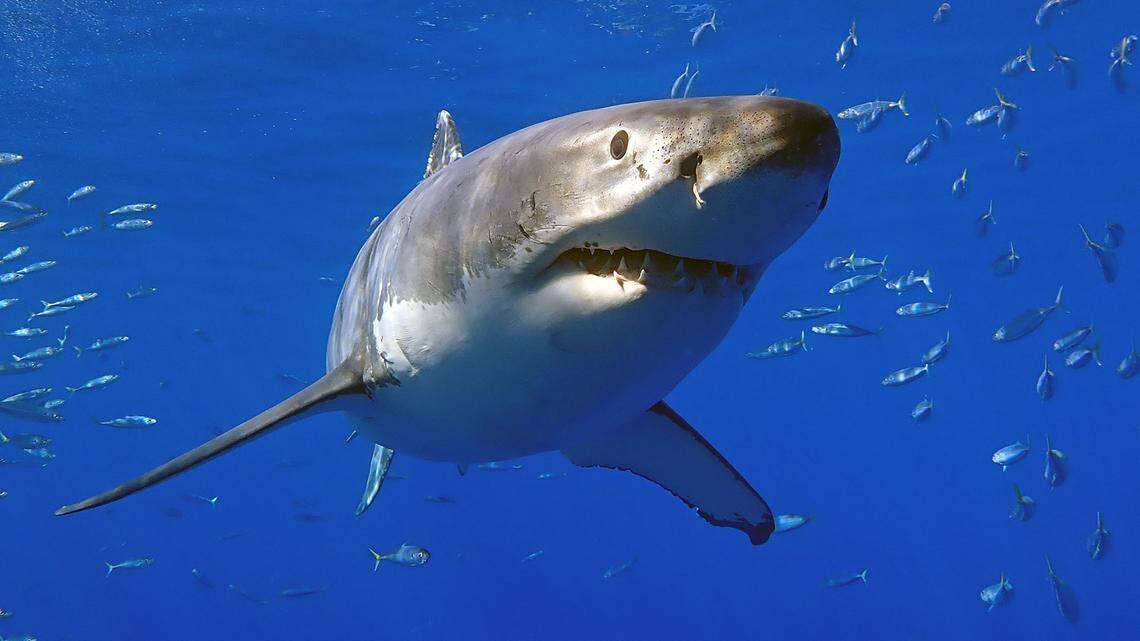
White sharks are most active at dawn, dusk and near elephant seal rookeries — the home of their favorite food. Sharks are also more likely to mistake surfers and swimmers as a seal when the water is murky, so swimming on clearer days may be safer, Lowe said.
He advised swimmers and surfers to paddle to shore if they see a dead whale, seal or other marine mammal — as those can attract sharks.
Lowe also recommended swimming and surfing in groups.
“Statistically, your chance of being bitten if you’re in a group are significantly lower than if you’re by yourself,” he said.
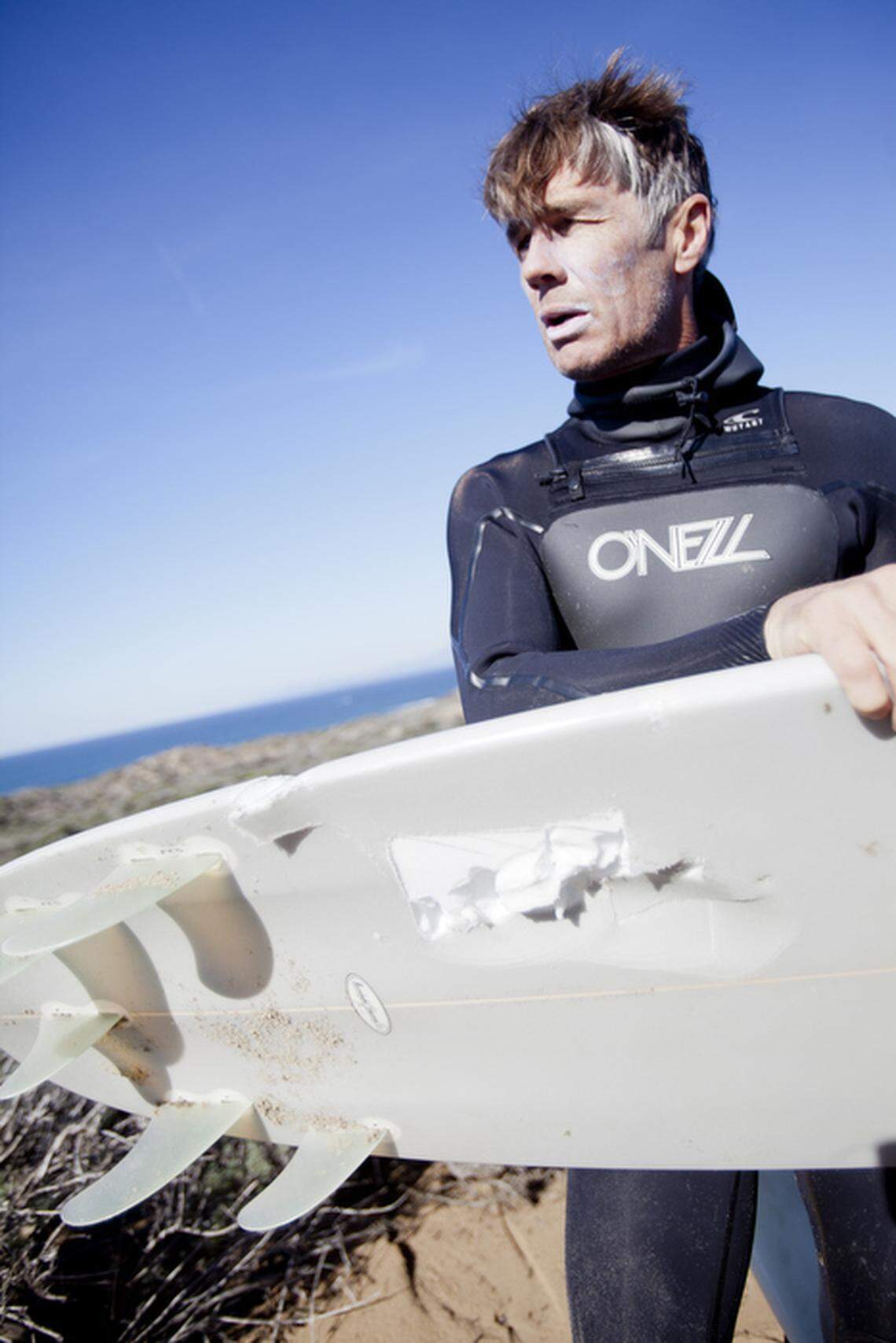
But still, the risk is never zero. Fox was swimming with a group of people when the shark attacked her.
Finally, he advised against interacting with any sea life in the ocean.
“If you’re surfing and a seal or sea lion climbs up on your board, it doesn’t necessarily mean it wants to bond with you,” he said. “It could mean that that animals knows there’s something big around, and it’s trying to find safety, and your surfboard is offering just that.”
In those cases, shoo the animal off the board and paddle to shore.
Most of the time, though, swimmers don’t need to worry about white sharks — as these giant fish aren’t usually interested in people.
“I like to tell people, look, if you spend any appreciable time in the water off the coast of California, I guarantee a white shark swam by you, and you did not know it,” Lowe said.
Kaytlyn Leslie and Sadie Dittenber contributed reporting to this article.
This story was originally published January 10, 2026 at 5:00 AM with the headline "231 shark attacks have occurred off California in 75 years. See them all on a map."
