Yosemite National Park saw more visitors this summer. Why that worries experts
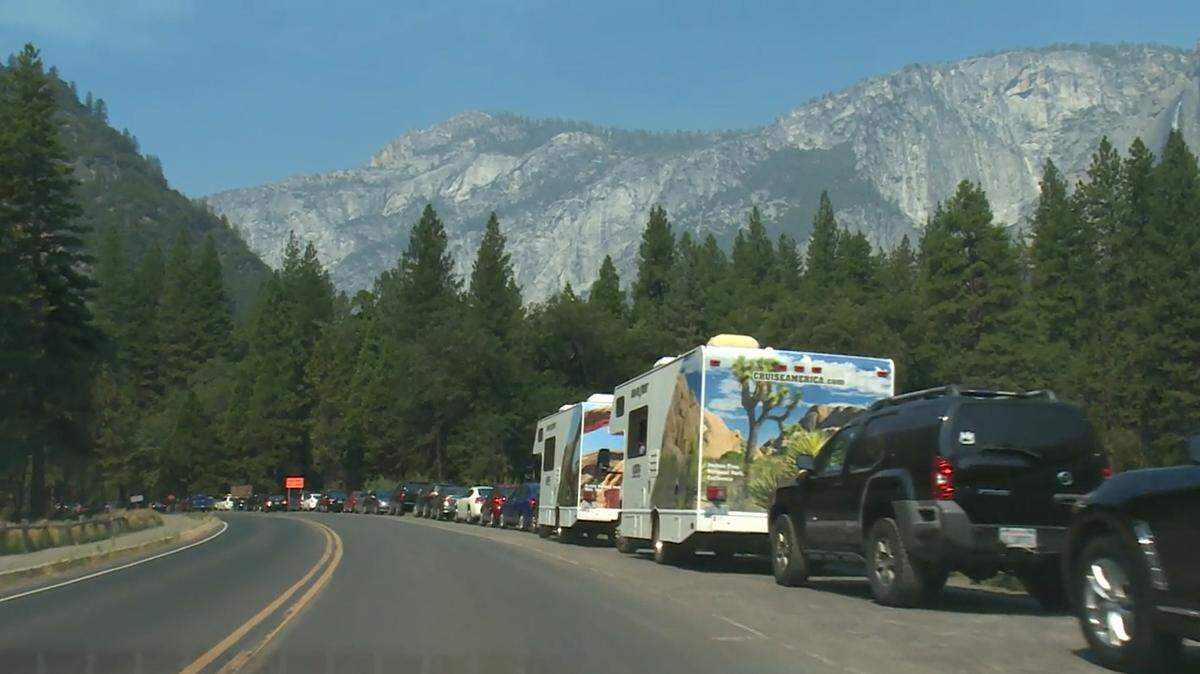
Hundreds of thousands more people visited California’s Yosemite National Park this summer than last, according to the National Park Service.
“Yosemite National Park closed out one of its busiest summer seasons in recent years this Labor Day holiday weekend,” the park said after the reservation system ended in September. “Visitation through August totaled 2,919,722 visits, an increase of seven percent compared to the same period in 2024 (2,727,496 visitors). With the exception of February when winter storms limited access, Yosemite’s 2025 monthly visitation numbers have outpaced 2024 numbers every month and the park is on track for one of the busiest years on record.”
Here’s how that breaks down month to month, according to the park service’s monthly public use data:
June visitors
June 2024: 588,251
June 2025: 607,410
Percent change: 3.26%
July visitors
July 2024: 596,711
July 2025: 628,400
Percent change: 5.31%
August visitors
August 2024: 568,429
August 2025: 609,312
Percent change: 7.19%
Total annual visits so far as of August 2024: 2,836,400
Total annual visits so far as of August 2025: 3,036,268
Visitation was high amid the park’s “scaled-back” reservation system that was announced less than a month before it went into effect on May 24, the San Francisco Chronicle reported.
After “experimenting with on-again, off-again reservations since 2020 in light of heavy traffic at popular waterfalls, mountain vistas and trailheads,” park officials had planned to require day-use reservations every day from 5 a.m. through 4 p.m. starting in the spring, the outlet reported.
But that plan was scrapped and replaced with one that required reservations only during the busiest time periods (between 6 a.m. to 2 p.m.) during the summer months, not year-round, officials with the National Park Conservation Association told the Fresno Bee in an email.
The reservation system is meant to spread the park’s more than 4 million visitors across set times to relieve congestion during the busy summer season, the Sacramento Bee previously reported.
While increased visitation may sound positive, some conservationists aren’t feeling so thrilled about it, the Fresno Bee found. Here’s why:
Long lines, overcrowding and ecological impacts
For one thing, overcrowding in Yosemite over the summer damaged sensitive ecological resources, conservationists say.
Especially after 2 p.m., when day-use reservations were no longer required — resulting in “a surge of people” driving into the park in the afternoon, according to John Buckley, executive director of the nonprofit organization Central Sierra Environmental Resource Center.
The center — which defends “water, wildlife, and wild places,” according to its website — has been involved in the planning for how to manage those visiting the park in vehicles for 30 years, and began monitoring use well before the busy summer season, Buckley told the Fresno Bee.
“We found day after day throughout the spring that parking areas from mid-morning to mid-afternoon were filled to capacity and often had signs up…restricting any access because there was no place to park,” he said.
Parking lots consistently overflowed in east Yosemite Valley, and areas such as Glacier Point and Tuolumne Meadows and many campgrounds also saw overcrowding on weekends, he said.
“We saw cars literally parked at the edge of traffic lanes waiting and hoping for somebody to leave so they could find a place to park,” he said.
They also saw cars parked in places that were definitely not meant to allow for cars, such as between trees and at the edge of meadows, he said. They also documented cars capable of 4-wheel drive parked in meadows and the occupants walking through the meadows, he said.
“The bottom line is there are too many people, too much crowding and congestion and too long of wait times at entrance stations, especially on weekends,” Buckley said. “It’s frustrating when the park had worked so hard to come up with a plan that was scrapped in favor of maximizing profits for businesses, rather than finding the balance between that and natural resource protection.”
The traffic and parking jams resulted in damage to at least one sensitive meadow ecosystem, according to Neal Desai, senior pacific regional director at the National Parks Conservation Association.
“It was a problematic summer,” he told the Fresno Bee, adding that because Yosemite is one of the state’s most popular national parks, it “should be providing an exceptional experience to visitors.”
Plus back-and-forth directives left the park with fewer workers to handle trash pickup and direct visitors on where to go — and increased safety risks, the Sacramento Bee previously reported.
“You’re asking them to go to a park, get stuck in traffic, have visitor services reduced because the staffing and funding isn’t there,” Desai said. “We’re worried about the future, about resources like meadow restoration. We think the trails shouldn’t be overcrowded and we believe strongly in access. We do it for so many things in society — for movie theaters, baseball games, Disneyland — and we can’t do it for a shared asset like Yosemite?”
Conservationists fear that the negative impacts will degrade the park’s natural resources in the long run, according to Desai.
“In addition to acute problems, longer term is staffing that isn’t there, people there can’t do wildlife research and all the important work that leads to restoration of meadows, species, water quality, and bringing native species back,” he said. “When people realize ‘Wow, I saw a condor at Pinnacles’ — that didn’t just happen on its own. That happened because of park workers doing their job.”
National Park Service officials did not respond to the Fresno Bee’s request for information.
In a statement, the park service said:
“This summer, we expanded access, offered new and improved facilities, experiences, and programs, all in testament to our dedicated park staff and partners,” the park’s acting superintendent Ray McPadden said in September. “Their extraordinary efforts allowed millions of Americans and visitors from across the globe to enjoy Yosemite and create lifelong memories. Yosemite is open year-round and with fall’s arrival, visitors can expect cooler conditions and fewer crowds while accessing all major areas of the park.”
It’s unclear at this point what reservation system will be used at Yosemite next summer.
How were businesses in outlying communities affected?
It’s unclear why the previous reservation was scrapped but some wonder if it was to maximize profits for the hotel industry and businesses in the park’s gateway communities.
Back in March, “Republican Rep. Tom McClintock, whose district includes the park, took credit for stalling the reservation system at a Tuolumne Business Council luncheon,” SFGATE previously reported.
Local news site myMotherLode.com was present at the meeting and reported that he’d said “the gateway communities depend on tourism and the reservation system (had) ‘absolutely pounded’ local lodging businesses” — so he was lobbying to eliminate it altogether.
The Fresno Bee reached out to McClintock for comment and was awaiting a response.
But high visitation at the park over the summer didn’t necessarily have the positive impact the gateway businesses so desperately need, Ken Yager told the Fresno Bee.
Yager owns the Yosemite Climbing Museum in Mariposa County. After a tough summer for businesses, he said he would have guessed park visitation was down this year.
Even the amount of trash cleaned up for the annual Yosemite Facelift on National Public Lands Day was significantly less than in previous years, he said.
Last year he said volunteers cleaned up 19,000 pounds of trash. This year’s 13,000 pounds was “the least amount I’ve picked up in 22 years,” he said.
He suspects that might be because of “less and less parking areas and things like that” — meaning visitors who can’t find parking might not even be able to leave their cars to actually enjoy all the park has to offer.
Visitors also aren’t driving through the communities and patronizing local businesses the way they used to, he said.
“For us in the gateway communities, business is down for all people,” he said. “I’ve been living in the Yosemite area since 1976, so I’ve seen a lot over the years. I do know the outlying communities are having a difficult time.”
He credits the state of the economy for why people are more hesitant to spend money and plan vacations. And the current federal government shutdown only adds to federal workers’ — many of whom live within the gateway communities — financial insecurity, he said.
“Because their incomes are questionable for a while, they’re not wanting to spend extra money right now,” he said. “That’s going to hurt the local businesses too.”
Yager said he’ll keep fighting for everyone to have access to public land.
“I came up here with just a couple hundred dollars as a 17-year-old to climb El Cap, and I was able to make it work,” he said. “It should belong to everyone from all walks of life, regardless of class or geographic location or age group.”
This story was originally published October 9, 2025 at 5:00 AM with the headline "Yosemite National Park saw more visitors this summer. Why that worries experts."