
How Sacramento-area schools find ways to engage hundreds of families who don’t speak English
Krista Bitonti’s Dyer-Kelly Elementary students gathered around her on a classroom rug holding an assortment of illustrated flashcards: “I have a purple bird.” “I have a gray elephant.” “I have a pink heart.”
She asks the students to read them. One takes a stab at the phrasing on a card:
“I have a pencil yellow,” the student said.
“In English, the color goes first,” Bitonti responded.
That grammatical lapse – to switch the adjective and noun – was a common occurrence in her session.
He tried again. Following her instructions, he flipped the phrasing.
“Afaree,” Bitonti responded — “very good” in Farsi.
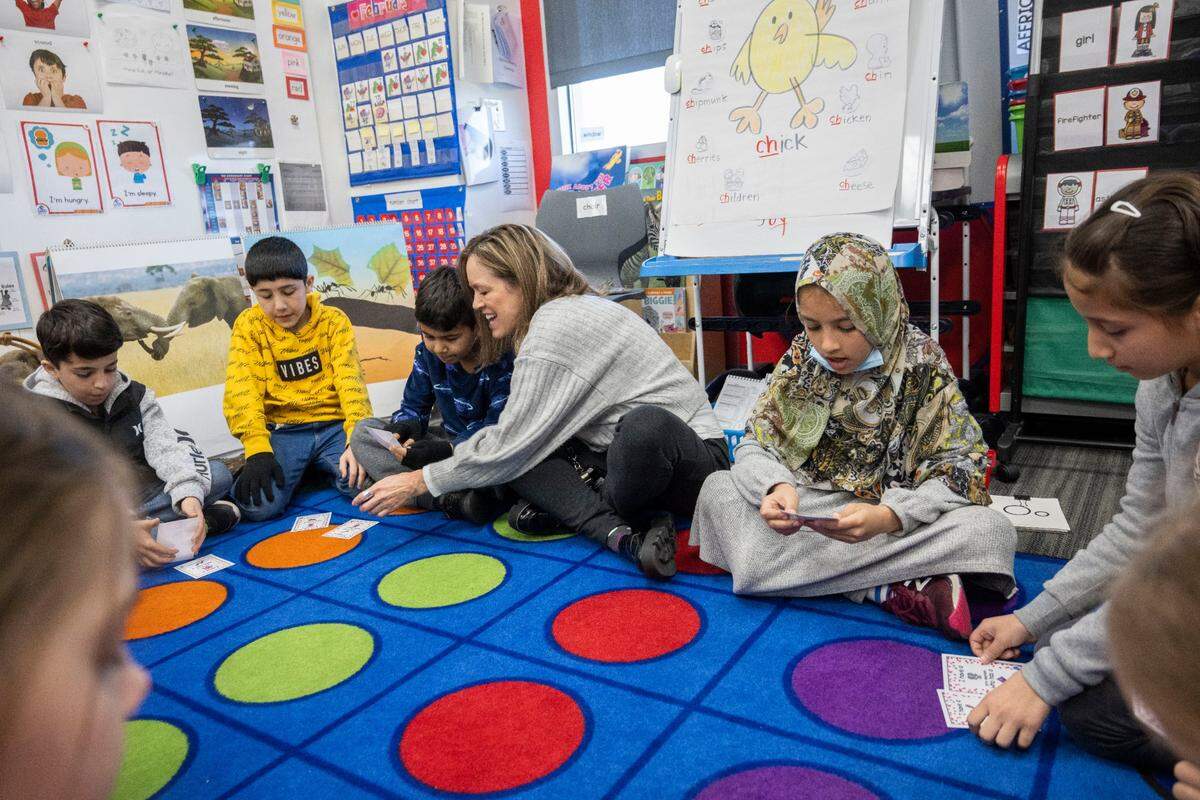
The student was part of a class at the Arden Arcade school to help children learn English, a San Juan Unified School District initiative to pair the immigrants’ education to help them in their new home. They engage in the school’s curriculum; they learn the language to do so.
“It helps reduce feelings of isolation and improves our refugee students’ overall school experience,” said Dyer-Kelly Principal Jamal Hicks.
For Bitoni’s session, third- and fifth-graders leave their language arts classes. Instead, they attend Bitonti’s 40-minute English language development classes.
The program recognizes the diversity and needs of the schools’ populations. Of Dyer-Kelly Elementary’s 700 students, 514 students are English language learners, and 257 students are refugees. At Starr King K-8 School in Carmichael, 462 students are English language leaders. The school serves 260 students who came as refugees, the largest concentration of refugee students in the district.
The vast majority of English language learners at both schools are from Afghanistan, making Farsi and Dari popular home languages, followed by Pashto, Arabic, Spanish and Russian. Many of their families fled war, calamity and poverty, and moved halfway around the world to Sacramento, a popular hub for refugees that has long served new families with an abundance of resources.
San Juan Unified is no different.
Myriad programs provide language access, with bilingual instructional assistants and the Newcomer Support Team, which is comprised of 17 “cultural brokers” who support refugee students and English language learners, not only in their classes, but in adjusting to their new life here.
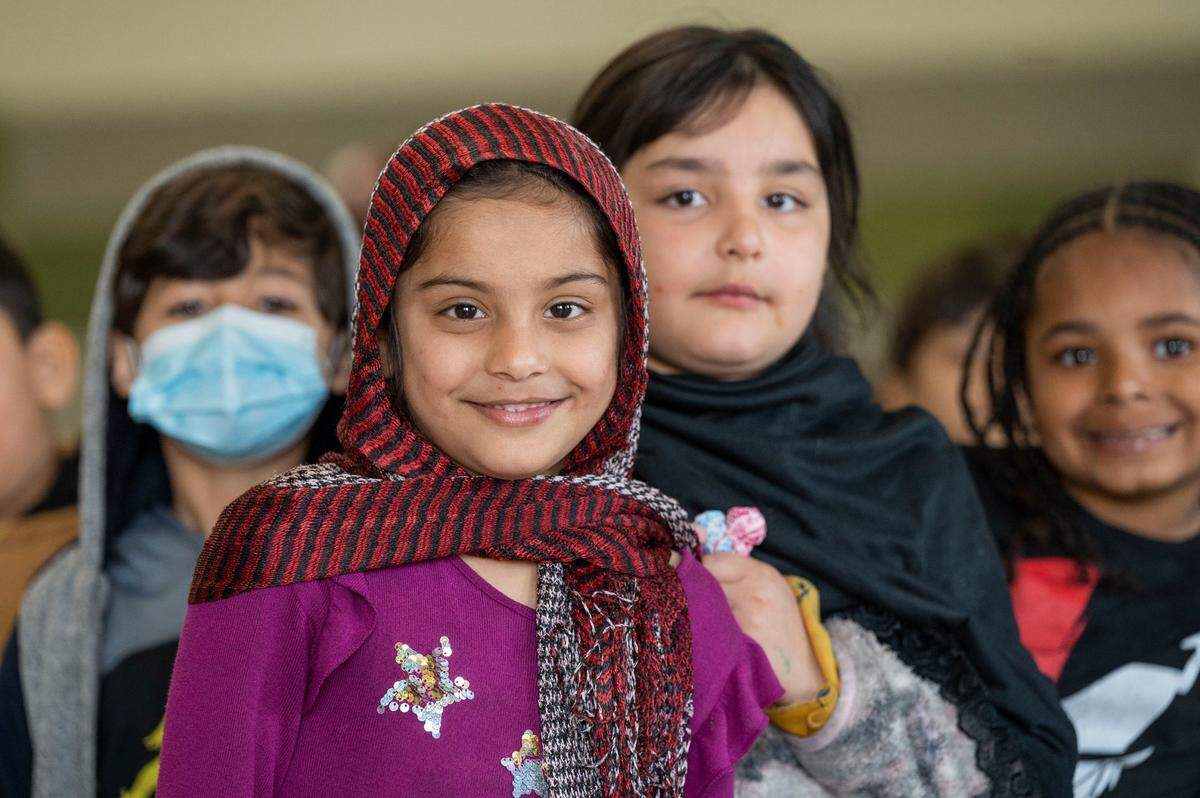
School officials have found the social and emotional support just as crucial for San Juan families, many of whom had never planned to move to the U.S. or learn English to begin with. Teachers and aides are attuned to the social-emotional needs of students who fled war and oppression, and whose parents struggle with depression as a result.
The language program is a lifeline for students, and the learning can go both ways.
“These kids have been through a lot, and they are willing to take risks and chances, and learn new languages and make new friends,” Bitonti said. “As adults we can learn so much from that.”
A different wave of immigrants
Unlike students who arrived in the U.S. years ago and attended San Juan schools, many of the ELL students speak no English at all.
The initial wave of Afghan families to the Sacramento area included thousands of children whose parents obtained Special Immigrant Visas by working for NGOs or aiding American military forces in Afghanistan.
“They had prior knowledge of the U.S.,” said Mohammad Radmanesh, a supervisor of the district’s refugee and newcomer program. “And many of them researched the U.S. before they came.”
The recent wave of Afghan students never studied English or thought that one day, their families would board a plane and flee to the U.S.
But that’s what happened when the Taliban took leadership in Aug. 2021, causing thousands of Afghan families to rush to Kabul airport in a chaotic attempt to board planes and leave the country.
Dozens of San Juan Unified students remained trapped, and several months passed before San Juan Unified and Sacramento City Unified were able to account for all of their students.
“A lot of these students witnessed their government collapse,” Radmanesh said. “Many of their families became separated, and some fled to the airport.”
Hicks said the mental health counseling is particularly important for their Afghan refugee student population, “because they have experienced significant trauma and upheaval in their lives.”
‘I meet my families where they are at’
Consequently, dozens of students are not only new to San Juan Unified, but new to the U.S. within the past six months.
And they’re still adjusting.
San Juan officials work to ensure that staff is effectively trained on cultural competence. Their teachers know many students will be fasting Ramadan in March, and school principals know that their students may ask for a quiet room for their midday prayers.
Those key components are one of the reasons Starr King Principal Gelika Harrison has a community resource supervisor.
Mina Sediqi works to bridge the gap between families and the school.
“Some families don’t have email addresses, or they need a lot of help with translations,” Sediqi said.
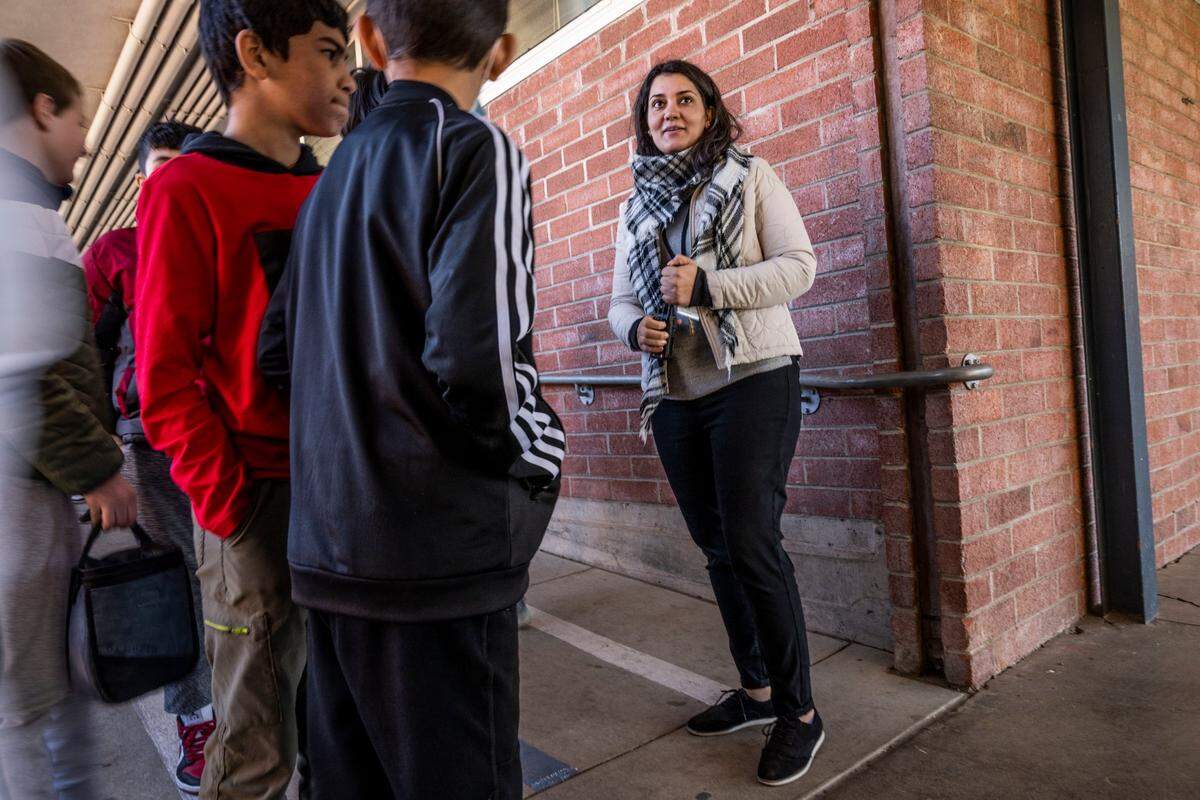
But she said transportation remains the largest barrier. Many families only have one car, and use it to travel to two or three jobs, so children at Starr King walk to school.
Schools looked different in Afghanistan, said Radmanesh.
“Parents put a lot of trust in the schools, or classes that resembled schools, and relied on them to educate their children, with very little engagement,” he said.
So Harrison had a plan.
“I meet my families where they are at.”
She identified where many of her refugee families lived, and planned activities at the Las Palmas Apartments on Marconi.
“We needed to go out to them,” Harrison said. “I had never seen so many mothers. They served us tea, and asked me to pass it along to all of my staff.”
Harrison hopes to plan more off-campus activities once she identifies additional apartment complexes where new families and refugee families live.
“We have families who had prominent status in their country,” said Anisa Amani, a third-grade teacher at Dyer-Kelly. “They were doctors, engineers, or worked with the military. Then they come here and drive Uber, also a noble profession, but the kids really feel it. They may not put it into words, but they know the stress.”
Amani applied for a $20,000 James B. McClatchy grant, and used the awarded funds to bring Afghan mental health professionals to speak with families about their challenges. More than 300 people attended over a span of two nights–filling the school library.
“It was important for families to know to, ‘give yourself some grace,’” Amani said. “It’s OK to mourn the life you lost.”
But some students also mourned loved ones.
Mohammed Balika, a seventh grader at Starr King originally from Syria shared that his uncle and three cousins died after their home collapsed on them in Turkey’s earthquake on Feb. 6.
His aunt and baby cousin survived, and plan to return to war-torn Idlib.
“I did not see them for 10 years,” Balika said. “They died and my grandfather died without me seeing them again.”
He left Syria when he was a toddler, and moved to Jordan for 10 years, and was separated from much of his family.
Radmanesh said many students in the district have families in various countries, and some struggle to reunite.
Administrators know that such trauma affects children’s learning.
Several of the Starr King middle school students said that they excelled in and enjoyed math the most. Math, often perceived to be a universal language in schools, challenged some. But teachers and administrators work with students to achieve progress.
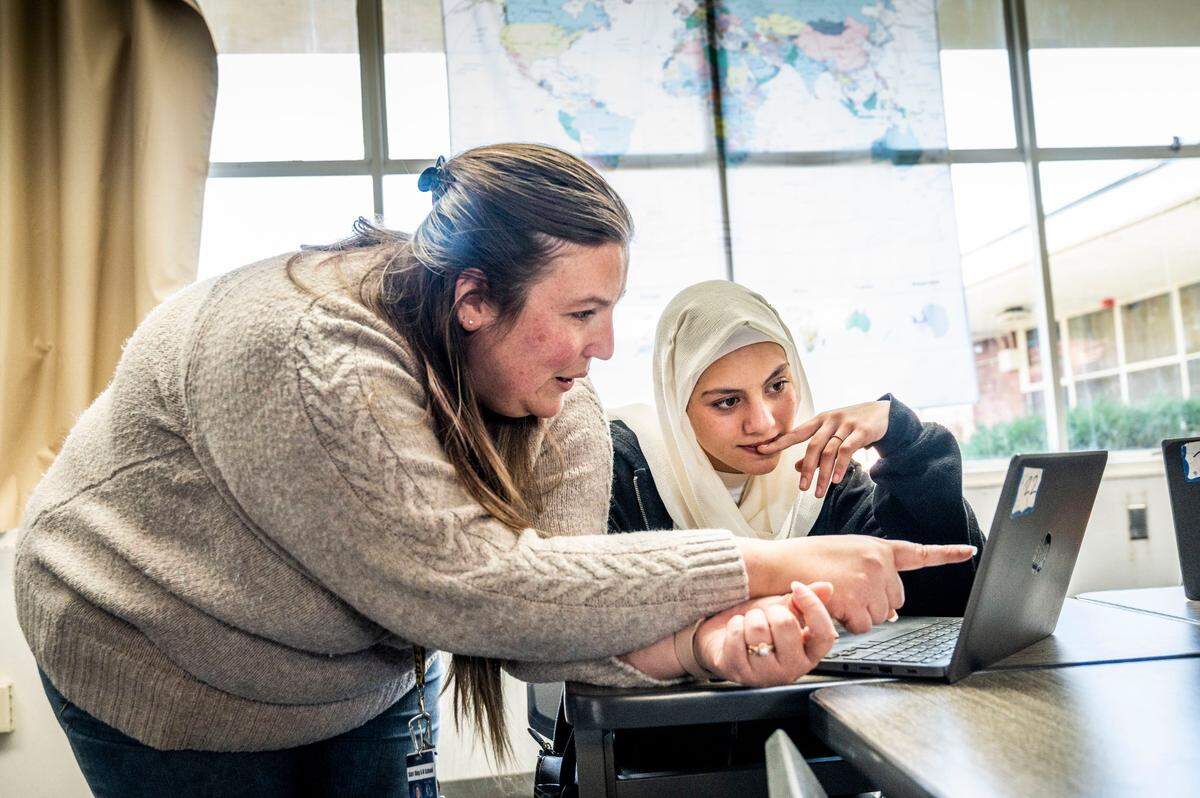
Starr King Principal Harrison said focusing on progress, not test scores, is the key.
Larry Ferlazzo, a Sacramento City Unified ELL and English teacher who runs a popular education blog, said that immigrant students often have a strong growth mindset given their worldly experience.
“Look at new immigrant students through the lens of the assets they bring and not through their supposed deficits,” Ferlazzo said.
‘I did tear up, I did’
Schools have become active in family engagement opportunities.
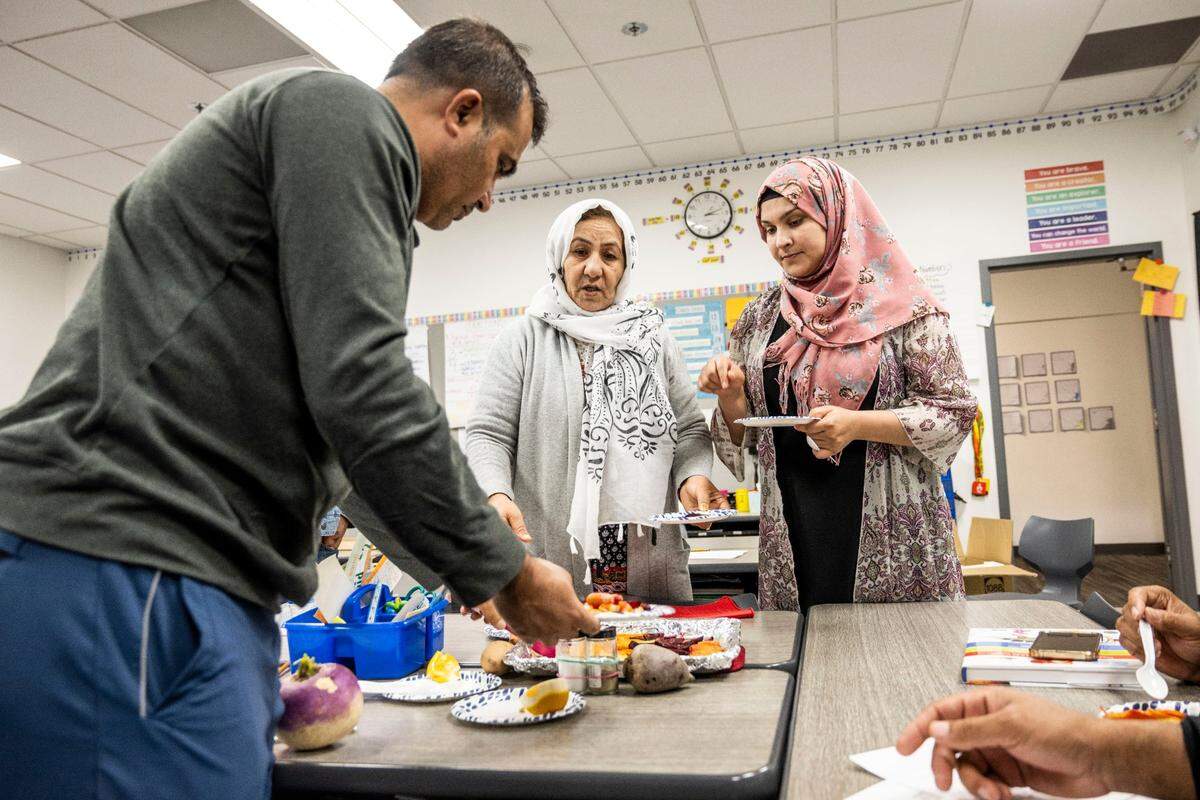
In partnership with the district’s Family and Community Engagement team, Dyer-Kelly hosts cooking classes taught in Farsi and Dari, and it provides child care to help large families with young children.
“Our students and families gain a greater appreciation for the diverse cultures represented in our community,” said Hicks “This provides an opportunity for families to bond and learn about the different cultures represented at our school.”
At Dyer-Kelly, flyers for tryouts for the new theater production are posted around the halls.
At Thursday’s auditions, newcomer students paced themselves as they recited lines, vying for roles like Annie and Miss Hannigan.
Many of the students who attended auditions were English language learners that also acted in “Frozen,” the school’s last production.
Theater productions at Dyer-Kelly give students the opportunity to learn language, connect with their peers, build a stronger sense of community, and improve their reading, said Dyer-Kelly teacher Hallie Lozano, who helped produce the play.
“Our program is a creative outlet for newcomers to express their feelings and experiences and can foster empathy,” Hicks said.
Bitonti said many English learning students often find expressing themselves a challenge.
“Feeling heard and being able to articulate their feelings is really important. They may not have the translations for that. They often rely on each other for a lot of translations.”
But English language learners spend hours perfecting their lines — a feat that can be daunting for English-speaking students on campus.
Prince Hanz, the Disney movie’s main antagonist, was played by Alex Hernandez, a third-grader from Mexico.
“He is the one who made my heart so full,” Lozano said. “He learned all of his lines, and his mom helped him so much. He had everything written down and even had a cheat sheet on the stage. He was trying so hard.”
About one-third of the “Frozen” cast were newcomer students, Lozano said. And she made sure that students of color knew all roles were open to them.
Lozano said students came to auditions expecting to only be placed in roles that mirrored their race and identity.
“I heard some of the kids say, ‘You can’t be Elsa, she has blonde hair,” Lozano said. “And I said no, that’s not how it works, everybody gets an opportunity. I would deliberately choose who would otherwise not have the opportunity. Many of these students have that chance outside of school, but not our newcomers.”
“I wasn’t crying,” Hicks said of his reaction to seeing students of color perform in the play. “ OK, I did tear up, I did.”
This story was originally published February 26, 2023 at 5:00 AM with the headline "How Sacramento-area schools find ways to engage hundreds of families who don’t speak English."