Could Central Coast get 3 new reservoirs to generate power by pumping water between lakes?
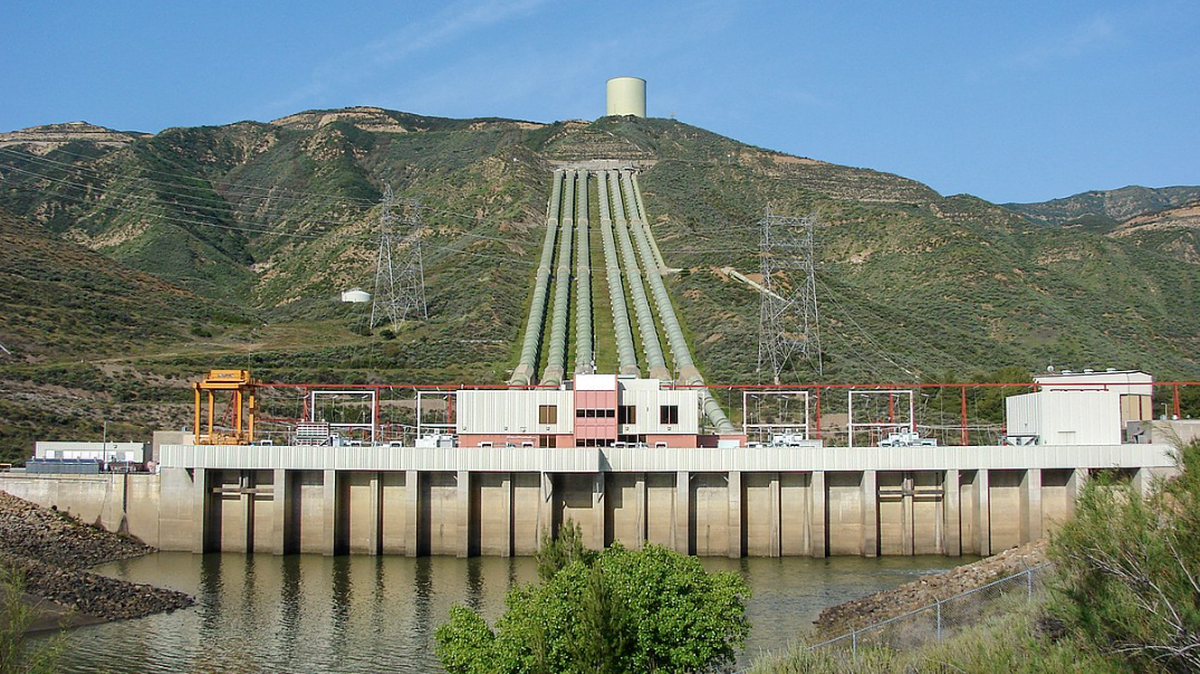
As the prospect of a floating offshore wind energy development off San Luis Obispo County’s coast gets ever closer, energy storage developers are taking a good look at their prospects in the region.
One company has proposals for pumped storage projects that involve moving water between reservoirs to generate electricity — which would call for three new reservoirs to be built along the Central Coast.
Walnut, California-based Premium Energy Holdings LLC sent four preliminary permit applications to the Federal Energy Regulatory Commission (FERC) at the end of March for the projects. If granted, a preliminary permit would give the company permission to plan and conduct studies for four hydroelectric projects.
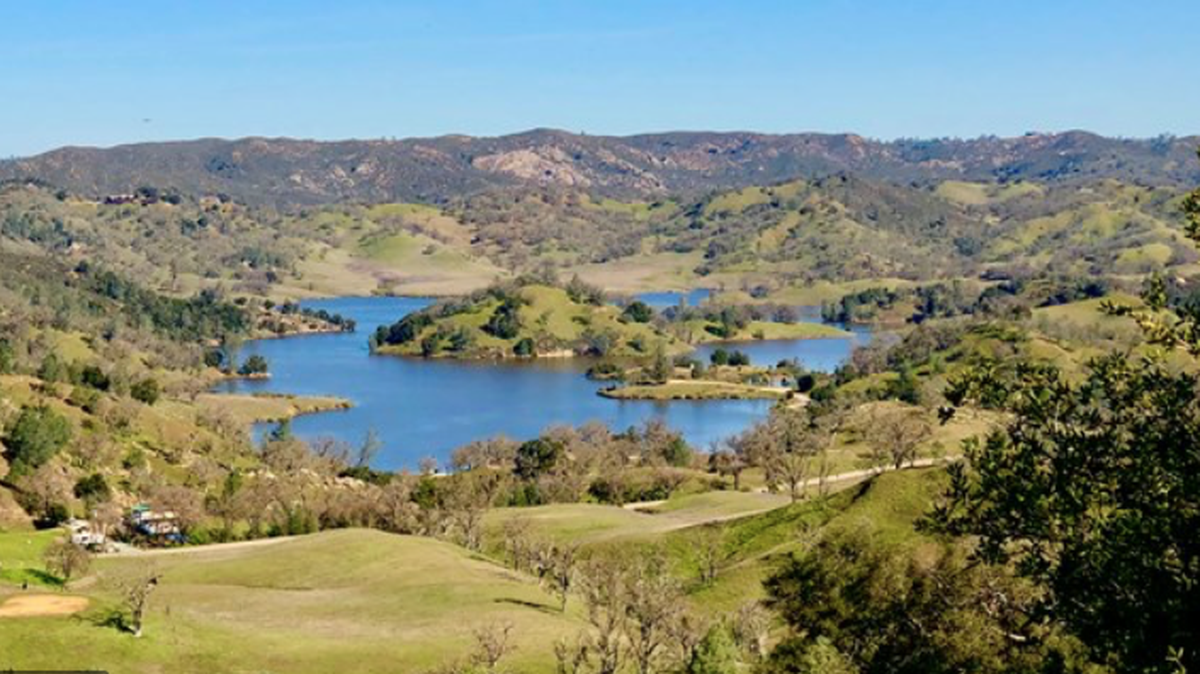
Victor Rojas, who owns Premium Energy Holdings, said he wants to look at the feasibility of using Lake Nacimiento, Santa Margarita Lake, Lopez Lake and Whale Rock Reservoir in San Luis Obispo County and Twitchell Reservoir in Santa Barbara County for the energy storage projects.
To do so, he’s proposed building three new reservoirs connected by tunnels to Lake Nacimiento, Whale Rock Reservoir and Twitchell Reservoir. Santa Margarita and Lopez lakes would be connected together by a tunnel.
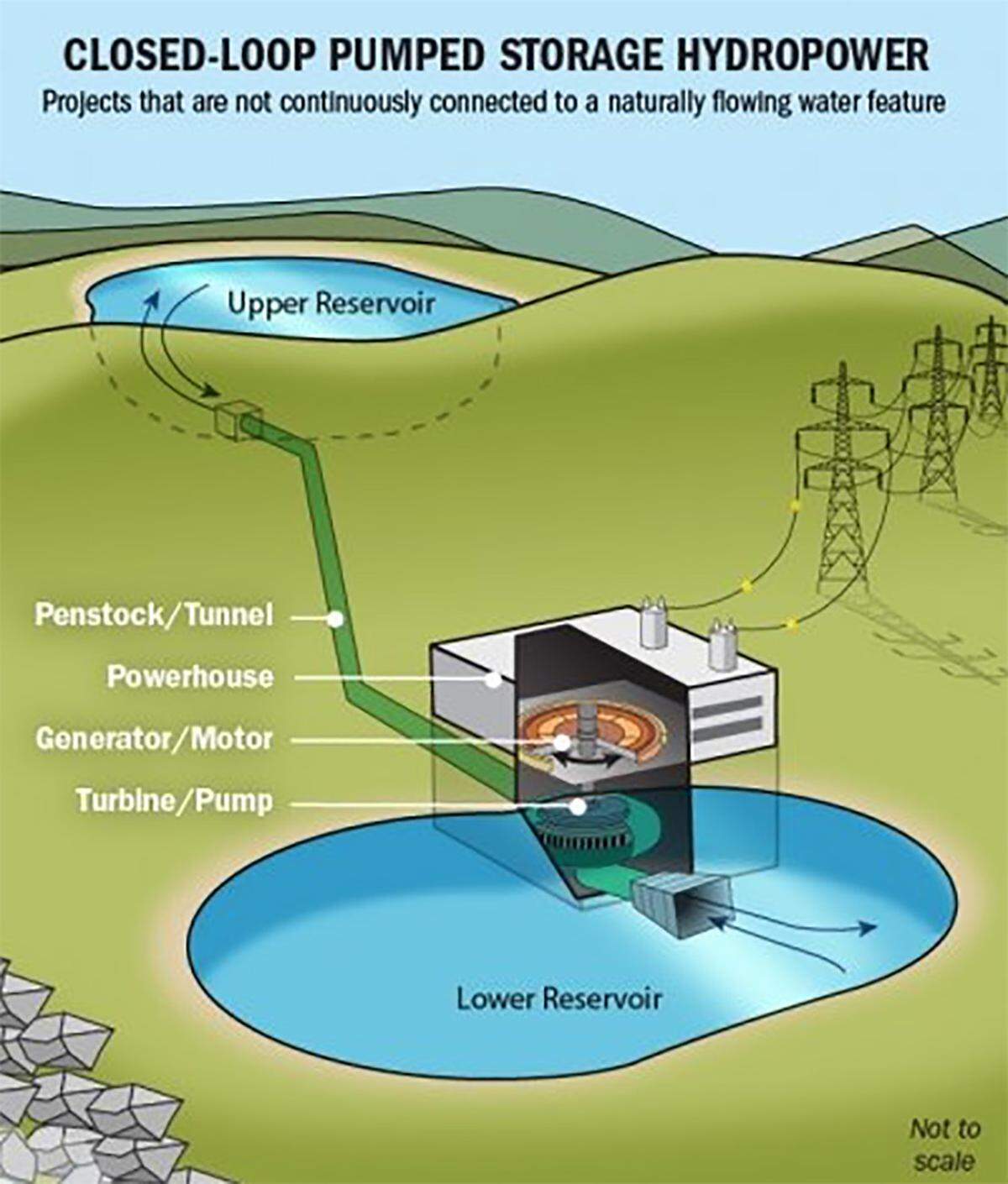
How does pumped storage work?
Pumped-storage hydroelectric is among many forms of energy storage under consideration as California looks to provide clean, renewable-sourced power when solar and wind installations aren’t generating electricity.
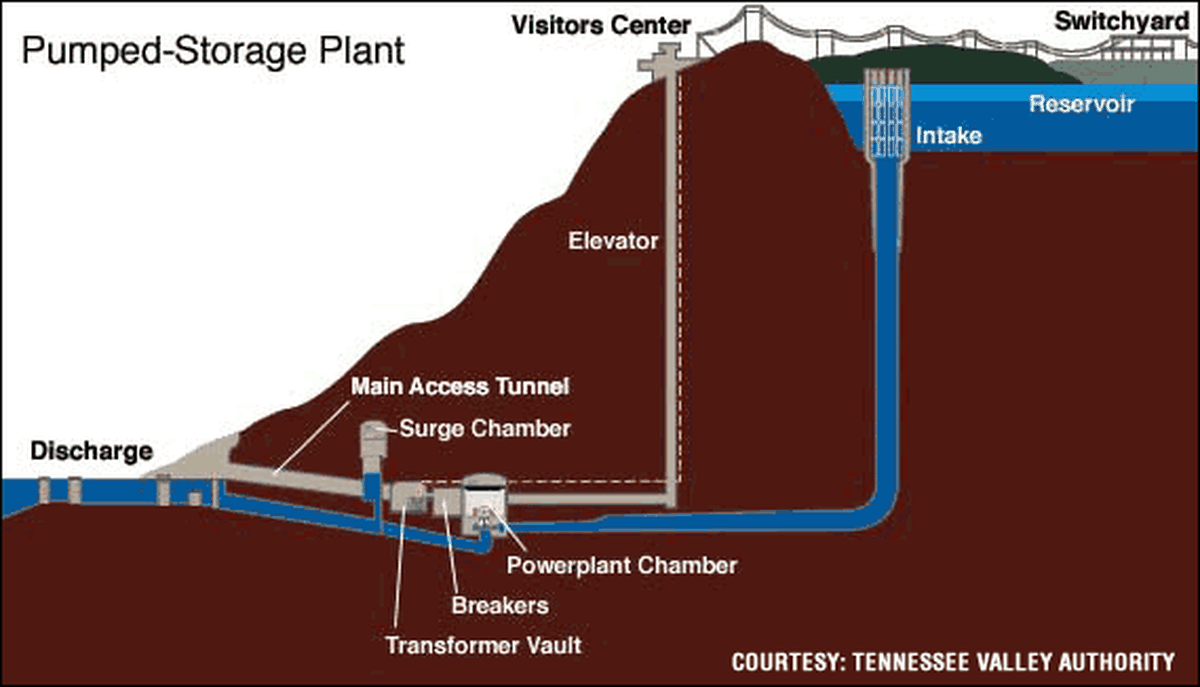
The technology works by pumping water from a lower reservoir to an upper reservoir while energy supply from solar and wind power is high, then letting water flow back down — as much as 1,600 feet — to the lower reservoir to generate electricity while the supply is low.
For example, as offshore wind is blowing and generating electricity, water would be pumped from Lopez Lake at 560-foot elevation uphill to Santa Margarita Lake at 1,300-foot elevation.
When the winds die down and the demand for electricity goes up, the water would be released back down to Lopez Lake and used to generate electricity by spinning turbines within the tunnels.
A “penstock” or pressurized tunnel would be required to connect the two reservoirs to cross the area’s mountain ranges.
Although new to the Central Coast, pumped storage certainly isn’t a novel technology.
The U.S. Office of Energy Efficiency and Renewable Energy says pumped storage hydropower contributes to roughly 93% of grid storage in the United States and it is growing nearly as fast as all other storage technologies combined.
The FERC has authorized a total of 24 pumped storage projects that are now in operation, with a total installed capacity of more than 16.5 gigawatts, according to the agency. Most of those projects were authorized more than 30 years ago.
California has the most pumped storage capacity in the U.S., with 3.9 gigawatts, or 17% of the national total, according to FERC.
One of the most famous is at Castaic Lake, north of Los Angeles, which is operated by the Los Angeles Department of Water and Power and has the installed capacity to generate about 1,500 megawatts of electricity.
And PG&E uses a pumped storage facility to maximize energy from the Diablo Canyon nuclear power plant. The Helms Pumped Storage Plant, built in 1984, uses two reservoirs in the Sierra Mountains 50 miles east of Fresno to generate 1,212 megawatts of electricity.
Rojas’ permit applications propose building new reservoirs above Lake Nacimiento, Whale Rock Reservoir and Twitchell Reservoir to act as the upper reservoirs.
The projects could generate from 600 to 1,500 megawatts of electricity over eight to 48 hours, according to the permit applications.
Tunnels between the reservoirs could be many miles long — up to about seven miles for the Whale Rock Reservoir proposal, according to the permit application.
Rojas noted that the project proposals are still exactly that: proposals. There’s a lot of work to do before he even starts sending permit applications to the county and state, he said.
“This is just a phase at the start of exploring, investigating the feasibility of the projects,” he said.
The applications to FERC note that Rojas would need about four years and $5 million to plan and research the energy storage projects.
Premium Energy is working with an Indian government-owned consultancy service provider, Water and Power Consultancy Services Limited, also known as WAPCOS, on the projects. The firm has experience with similar pumped storage projects in South Asia, Rojas said.
Besides these proposed Central Coast pumped storage projects, Rojas previously filed for projects at Lake Isabella in the southern Sierra Nevada and Walker and Pyramid lakes in Nevada.
What hurdles must the proposal clear?
Building a pumped storage facility on the Central Coast will come down to key aspects such as economic feasibility, environmental impacts and stakeholder feedback, Rojas said.
Upper and lower reservoirs located far away from each other could cause the price of construction and obtaining right-of-ways to skyrocket. Private land owners would need to cooperate, as would public agencies.
California’s continuing drought also could throw a wrench in the plans, Rojas said.
If there’s not enough water to build new reservoirs or to pump uphill to store, then there’s no project, he explained.
“During this process, we’re supposed to reach out to all of you, the stakeholders, and if there are any concerns even before the FERC decides to issue the permit, we may withdraw,” Rojas said.
That certainly wouldn’t be ideal, he added.
Storing energy from the proposed offshore wind energy project, which could generate up to 3,000 megawatts, as well as other renewable sources such as onshore wind and solar projects, is necessary because the energy is not consistently being generated and can’t provide electricity for more than a few hours at utility scale.
The 600-megawatt battery plant set to be constructed at the former Morro Bay Power Plant site by Vistra Corp. wouldn’t be big enough to handle the incoming offshore wind energy.
Neither would the proposed — and heavily contested — 400-megawatt compressed air energy storage project by Hydrostor off Highway 1 near Los Osos. The California Coastal Commission has indicated that the Chorro Valley, where the Hydrostor plant is proposed, is “designated as being unsuitable for thermal power plants.”
By contrast, Rojas said he hopes his tried-and-true method of energy storage will be seen as feasible and necessary for the Central Coast.
“I think this is the solution for the transition to renewable energy sources,” Rojas said of his proposed pumped storage project.
John Lindt is the editor of news website Sierra2theSea.net.
This story was originally published June 3, 2022 at 5:00 AM with the headline "Could Central Coast get 3 new reservoirs to generate power by pumping water between lakes?."