
The Camp Fire took their homes. But they had more to lose in the rebuilding process
The Camp Fire had just destroyed Skeeter Schuette’s home. She was desperate, alone and living in her battered Ford pickup.
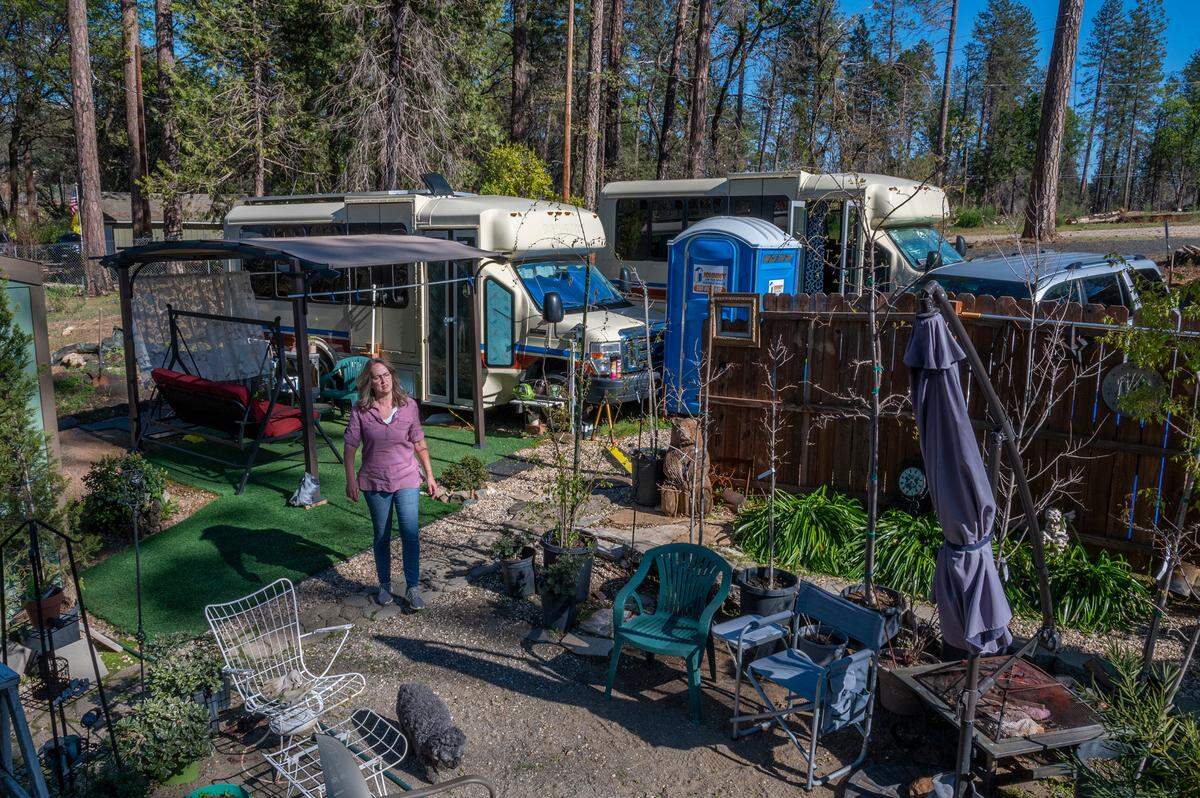
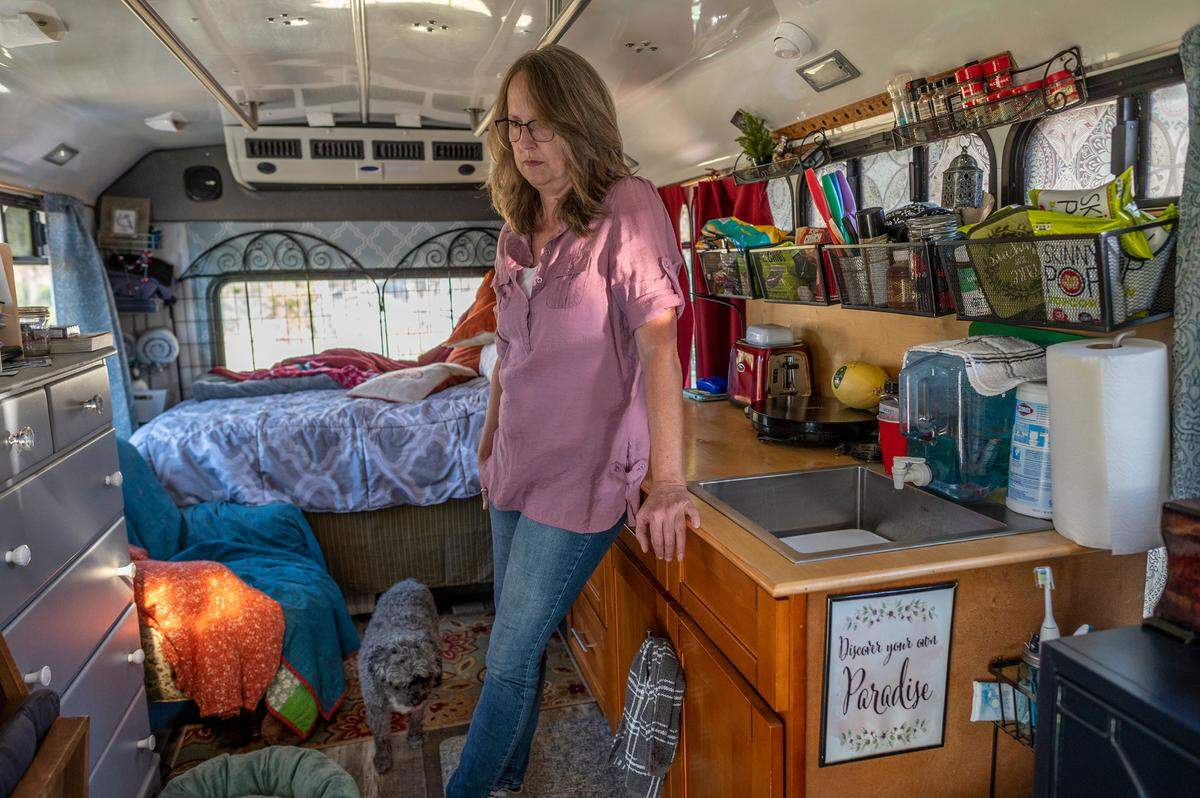
An Oakland charity called Badrap gave her a used paratransit bus. She parked it in her yard on Fickett Lane and installed a twin bed. Later she rented a port-a-potty.
Schuette still needed to rebuild. After the breakup of her marriage, she had just $150,000 left from her insurance settlement — still more money than she had ever seen in her life. Partially disabled by a brain condition, she was overwhelmed by the prospect of a construction project. Contractors were scarce in a town where 12,000 homes had been razed by fire.
Just before New Year’s Eve, though, she heard about a remarkable company.
Cubic Quarters LLC could obtain a line of steel-frame homes, prefabricated in China, and ship them to survivors’ properties. Assembly would be a snap.
The price — a steal at $152,000 — fit her modest budget. She’d be home by Christmas, a year away.
And if she signed up quickly and made a $2,500 down payment, she would get a bonus: a 55-inch TV.
“Everything sounded wonderful,” Schuette said.
Three years and $139,000 later, Schuette is still living in that paratransit bus and using that port-a-potty.
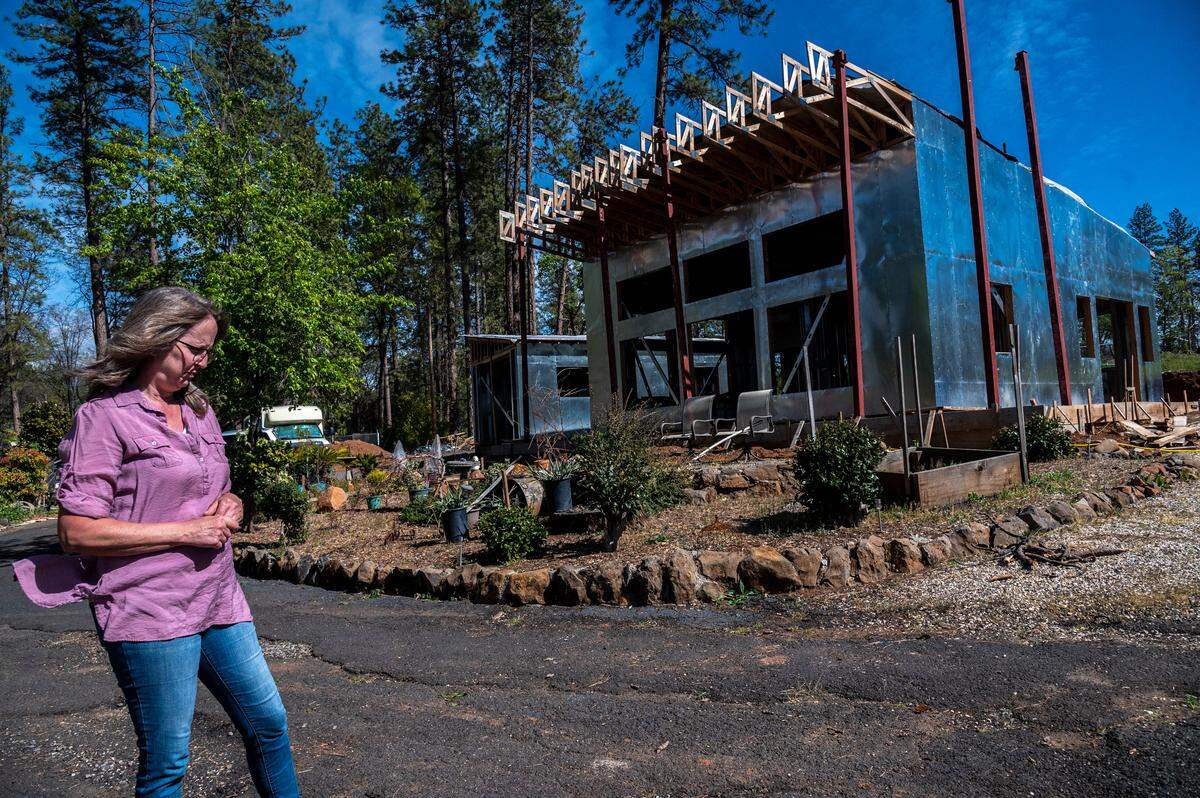
Her actual home — the one promised by Cubic Quarters — is far from done.
The house and detached garage are a forlorn collection of steel beams, roof trusses and cement foundations. The plywood sheets on the roof are starting to rot. Schuette, 57, is struggling to find a new builder.
“It’s hard to find a contractor to take over a drama, a mess,” she said. “I’m tired, really tired.”
Around 1,500 homes and apartments have been rebuilt since the Camp Fire blitzed through Paradise on Nov. 8, 2018, in the deadliest and most destructive wildfire in California history. Most have been rebuilt with little fuss.
But a Sacramento Bee investigation has found that for some survivors, the rebuilding process has turned them into victims all over again.
Two homebuilders, Cubic Quarters and Aurora Ridge Homes Inc., have taken in more than $1 million from Paradise residents — in many cases, the bulk of their insurance settlements. The companies didn’t finish any of the homes they were hired to build, although a contractor who stepped in for Aurora Ridge has completed three projects.
Their customers’ stories suggest that California sometimes fails to protect its wildfire survivors from further harm — a glaring problem as climate change fuels an era of mega-fires.
Just about every year, a California community burns down, leaving hundreds if not thousands of people homeless. A wave of rebuilding follows. Meanwhile, a ferocious statewide housing shortage has created a scarcity of experienced contractors — all of whom are scrambling for supplies and workers.
Survivors — desperate to rebuild, clutching insurance payouts that dwarf their life savings — are vulnerable.

State regulators are struggling to keep up.
Policing builders falls to the Contractors State License Board, whose workload makes it difficult to catch wrongdoers before they cause problems.
The board has a staff of 90 investigators in a state with 300,000 licensed contractors — one investigator for 3,333 contractors. When rebuilding in Paradise was ramping up, 20 percent of the investigators were temporarily assigned to help health officials with “contact tracing,” finding the source of COVID-19 infections.
Cubic Quarters and Aurora Ridge were operated by individuals with a litany of legal woes. The man behind Aurora Ridge was finishing a prison term for tax evasion when the Camp Fire ignited. Though the Cubic Quarters’ owner has not faced criminal charges, she was hit years earlier with nearly $1 million in court judgments and tax liens.
What’s more, the principals of both companies don’t hold California contractors’ licenses. They found licensed contractors to work for them. However, California law says only a licensed contractor is allowed to enter into a building or rebuilding contract with a property owner, said Joyia Emard, spokeswoman for the state board.
Aurora Ridge has already lost its license and its principals are facing new disciplinary action that could prevent them working as contractors ever again. In addition, the company is being investigated by the Butte County district attorney’s office and the California Department of Justice.
Cubic Quarters also is being investigated by the Butte district attorney and the Contractors State License Board.
Regardless of the outcome of these investigations, customers have little hope of recovering their money, said Jennifer Ellingson, a Chico attorney representing Schuette and several other property owners.
“When you’re living in a trailer without power or water, and all of your money having been taken by a ‘contractor,’ how are you going to pay for an attorney to sue?” she said. “And how are you going to collect anything if you do get a judgment?
“Our system is failing our people.”

Contractor’s record looked clean. It wasn’t
Linnie Wallin had just left for work as a smoke plume was rising from the canyon on the outskirts of town. Wallin didn’t think anything of it. Smoke and fire aren’t unusual in the heavily-forested area around Paradise, known to locals as The Ridge.
This time was different. Wallin’s wife Heather called from the school where she worked. Children were being evacuated.
“She sounded very frantic,” he said. “She said, ‘Linnie, I need you to come up the hill and grab the dogs.’ ”
The decision to save their dogs, Athena and Sam, nearly proved fatal. Their neighborhood was overrun with flames, the roads gridlocked. The Wallins had to abandon their cars. They escaped by flagging down a fellow evacuee and hopping in his pickup’s bed with the dogs. They’ve been living in rentals ever since.
Eventually they found Aurora Ridge.
Incorporated in Yuba City a few months after the fire, the company moved to Paradise in the fall of 2019.
“By the time we left the office we felt as if we had new friends on The Ridge,” Linnie Wallin wrote in a complaint filed with the state months later.
Wallin had done some homework. He said he called the Contractors State License Board, which provides information on a contractor’s licensing status to the public.
“The name of the company was clean; all the licenses were clean,” Wallin said.
But its owners’ records told a more troublesome story.
Federal officials say Jay Soderling and his brother, Leif, pleaded guilty in 1987 to a pair of felony charges in connection with the collapse of Golden Pacific Savings and Loan, which they’d founded near Santa Rosa just three years earlier.
Jay Soderling spent a year in prison, and the state contractors board revoked his three contractor’s licenses. His application for a new license was rejected in 2006 because he “did not meet the criteria for rehabilitation,” the board said.
In December 2015, Soderling and his wife Jessica were convicted on conspiracy and tax evasion charges in federal court in San Francisco.
Jessica got three years’ probation. Jay got a three-year prison term, despite his lawyer’s plea for a lighter sentence based on Soderling’s desire to use his “real estate expertise to make the IRS whole.”
Jay Soderling was released from prison in December 2018, a month after the Camp Fire. But he was hardly free. He and his wife owed the IRS nearly $499,000.
Wildfire, contractor shortage left town vulnerable
Paradise faced a staggering rebuilding task: 12,000 homes gone and a crippling shortage of contractors in the area. Its residents, poorer than the average Californian, were vulnerable to opportunistic builders.
“To find a contractor here, if you want to rebuild, you’re probably going to have to wait a year,” said Mayor Steve Crowder. “What’s happening is these guys are promising you’ll be in your home in six months.
“People are just throwing money at them.”
About 1,300 homes have been rebuilt — just 10% of what was lost but a boom nonetheless, a construction frenzy that’s kept Paradise officials scrambling.
“I have 700 active permits right now,” said Tony Lindsey, Paradise’s community development director.
Lindsey and his staff review blueprints, enforce the building code and issue permits. What they don’t do is police the business credentials of contractors.
That responsibility lies with the Contractors State License Board — an agency that must regulate 300,000 builders, roofers, electricians, plumbers and others.
The agency gets almost no funding from the Legislature. The bulk of its $78 million budget comes from fines and licensing fees, said spokeswoman Joyia Emard.
Its staff of 400 includes 90 investigators — more than a dozen of whom were pulled away for 18 months as Paradise rebuilt during the COVID-19 pandemic to work on the state’s “contract tracing” program, Emard said.
The agency’s own statistics suggest that its investigators might be struggling to keep up with their workload.
A report issued in late March said the agency had 4,390 complaints pending. Given current staffing levels, the “optimum maximum” caseload is 3,804 complaints, the report said.
The state board can impose fines, order refunds and refer cases to prosecutors. Its main weapon is the authority to suspend or cancel licenses. With contracting such a lucrative business, the threat of losing one’s license seems to keep most builders in line.
“Contractors who want to stay in business usually comply,” said Jessie Flores, the deputy chief of enforcement.
Complaints haven’t been rampant in Paradise. In the two years before the fire, the state was getting 10.3 complaints a month from Butte County homeowners. Since then, complaints are coming in at a rate of 12.9 a month.
Nonetheless, Lindsey said town officials recently heard of “an uptick in complaints” and asked the state board for help. In March the board began dispatching an investigator to Paradise two days a month. The investigator meets with property owners at the Paradise Building Resiliency Center and inspects job sites. Lindsey said the investigator’s visits draw “a steady flow of customers.”
Flores said the state wants its investigator in Paradise “as many hours as needed” but he might not stay long.
“There’s going to be another disaster,” he said. “And we’re going to move on.”
The Bee shared its findings with state Assemblyman James Gallagher, who represents the Paradise area and is Republican Assembly leader. He said he might introduce legislation to increase staffing at the state board, to educate wildfire survivors and beef up the investigative staff. In the meantime, he said it’s imperative to use the laws already on the books to “bring those people to justice.”
“Victimizing fire victims,” he said, “there is a special place in hell for people who do that.”
Prosecutions don’t guarantee repayment
In his 34 years as Butte County’s district attorney, Mike Ramsey, has taken on some big cases — such as getting PG&E Corp. to plead guilty to 84 counts of felony manslaughter in 2020 for the Camp Fire.
At the hearing that day, each victim’s name was read aloud and their pictures were projected on the wall. PG&E’s chief executive at the time, Bill Johnson, stood up and solemnly replied, “Guilty, your honor,” as each count was read.
Now Ramsey’s team is itching to punish unscrupulous building contractors.
“We want nothing more,” said Jason Wines, Ramsey’s lead investigator, “than a great showcase that we can really bring to people’s attention.” Wines lost his home in the fire.
So far, high-profile cases have proven elusive. The DA has accused five builders of working without a license. Only one case, Kipp Ford, has drawn much attention, and that’s because he allegedly fled the courthouse in late March during a break in a pre-trial hearing. Ford was arrested three weeks later in Herriman, Utah, where he was found hiding in a storage cabinet in his girlfriend’s garage.
Prosecuting someone for contracting without a license is fairly straightforward, Ramsey said. But going after someone accused of taking a customer’s money and not doing the work is murkier. A builder can provide all sorts of excuses — labor shortages, supply-chain issues.
To prosecute, “we have to show an intent to defraud,” Ramsey said.
Ramsey confirmed that his staff is investigating Cubic Quarters and Aurora Ridge, plus “some other cases.” He said the criminal record of Aurora Ridge’s owners “certainly makes our inquiry more fruitful in trying to find an intent to defraud.” But prosecutors might not be allowed to tell jurors about their past, he said.
And guilty verdicts would hardly guarantee that Camp Fire victims would be made whole.
Take the case of Chiaramonte Construction & Plumbing, a Tulare contractor that arrived in Santa Rosa after the Tubbs Fire destroyed thousands of homes in 2017.
Sonoma County prosecutors charged the owners, Salvador and Pamela Chiaramonte, and their daughter Amy Perry, on charges of defrauding 13 Tubbs survivors out of a combined $1 million.
The Chiaramontes, though, had filed for bankruptcy a few months before being charged — and emerged from bankruptcy without paying a dime to customers or anyone else. Court officials said they had no assets available.
“It really leaves the many individuals ... without any financial recourse for what happened to them,” said Rich Freeman, a Santa Rosa lawyer representing some of the Chiaramontes’ customers.
The defendants have pleaded innocent and are awaiting trial.
State calls Paradise builder a ‘prohibited person’
Cubic Quarters wasn’t licensed. Aurora Ridge was — but its owners weren’t. Both companies worked with licensed contractors. But according to California law, only a licensed contractor is allowed to enter into a building or rebuilding contract with a property owner, said Emard, the state board’s spokeswoman.
At Aurora Ridge, Jay Soderling was a “prohibited person,” barred from getting a new license, because of his earlier legal problems, according to the state board. His wife Jessica, also unlicensed, was once fined $11,000 by the agency for operating a contracting firm illegally. She didn’t pay the fine, Emard said.
Despite their status, there were homes to be built in Paradise, and the Soderlings owed money to the IRS. Shortly after getting out of prison, Jay Soderling met Franz Prossegger, a contractor who’d built homes in California but was living in Utah.
A mutual friend told Prossegger that Soderling had been in trouble with the law. That didn’t trouble Prossegger; he figured it meant Soderling would be extra careful to play it straight.
Prossegger signed Aurora Ridge’s original license application, filed with the state board in August 2019. The application, obtained by The Bee under a Public Records Act request, listed him as president, secretary and treasurer.
The Soderlings weren’t listed anywhere.
Prossegger said he ran into problems almost immediately. He had trouble getting paid and accessing the building sites to inspect work. When he finally visited Paradise, in January 2020, he was shocked. The homes he saw were barely underway.
Soon after, he visited Wells Fargo Bank and was troubled by transactions he saw in the company’s account. He told Jay Soderling he might call the police.
He then filed paperwork removing his name from Aurora Ridge’s license. But he didn’t warn customers or anyone else about his suspicions because he feared retaliation.
His replacement arrived about a month later, a licensed contractor from Lake County named John Harris. He was given the title of vice president.
Harris said he had known that Soderling had a prison record but didn’t know he was unlicensed. He added that he was kept in the dark about Aurora Ridge’s operations.
“They kept me away from the business end of it,” he said.
The people actively running the business, despite being unlicensed, were Jay and Jessica Soderling, according to a complaint the state board filed later. The board said Jessica was handling permits, insurance and other managerial duties. Court records show that Jay signed for a line of credit with a supplier.
Jessica Soderling hung up on a Bee reporter seeking comment for this story and didn’t respond to followup voicemail messages. Jay Soderling didn’t return a phone message, and Aurora Ridge’s phone number has been disconnected. No one responded to an email Jay Soderling used in a court document after Aurora Ridge was sued by a supplier.
In January 2021, Harris filed papers with the state board to cancel Aurora Ridge’s license. The state canceled the license the next day. In an interview, Harris said Jay Soderling fired him over a pay dispute.
Cheap prefab homes from China
The day after the Camp Fire, as teams searched Paradise for human remains, Tricia Cohen saw an opportunity. She found a Facebook post from a disaster relief group and posted a link in the comments section to Cubic Quarters’ website.
A month later, she found a news story on Facebook about the fire and posted the same link. She added a comment: “We want to help rebuild and offer less than wholesale to fire victims!”
Cubic Quarters’ website is gone, but an internet archive shows that Cohen’s company claimed it was building homes all over the world. “We have vast capabilities to produce all kinds of structures and will not limit you to our designs, we welcome YOURS,” the site said..
Cohen’s plan seemed ingenious: prefab homes from China, assembled cheaply.
It was familiar territory for Cohen. Years earlier, she persuaded investors to lend money to businesses that would import linens, gloves and other goods from China. Judges in Nevada, Washington state and Florida ordered Cohen to repay her investors a combined $736,111 in rulings issued from 2006 to 2008. Investors told The Bee they weren’t able to collect.
Cohen didn’t respond to phone messages or emails from The Bee.
Cubic Quarters wasn’t exactly local. The address listed on its incorporation papers is a UPS store in Orange County. Cohen had a Paradise native helping her drum up business.
Amy Morris, the daughter of a well-known Paradise dentist, became an eager spokeswoman.
“These are not just container homes but all steel construction completely customizable with all top of the line materials,” Morris wrote in a February 2019 post on a Facebook page devoted recovery efforts. “These structures surpass all code requirements.” She included a link to Cubic Quarters’ website and added: “Please contact Tricia...she is amazing!” Morris didn’t respond to a reporter’s phone messages.
On Dec. 5, 2018, Camp Fire survivors were allowed back into Paradise to inspect their properties.
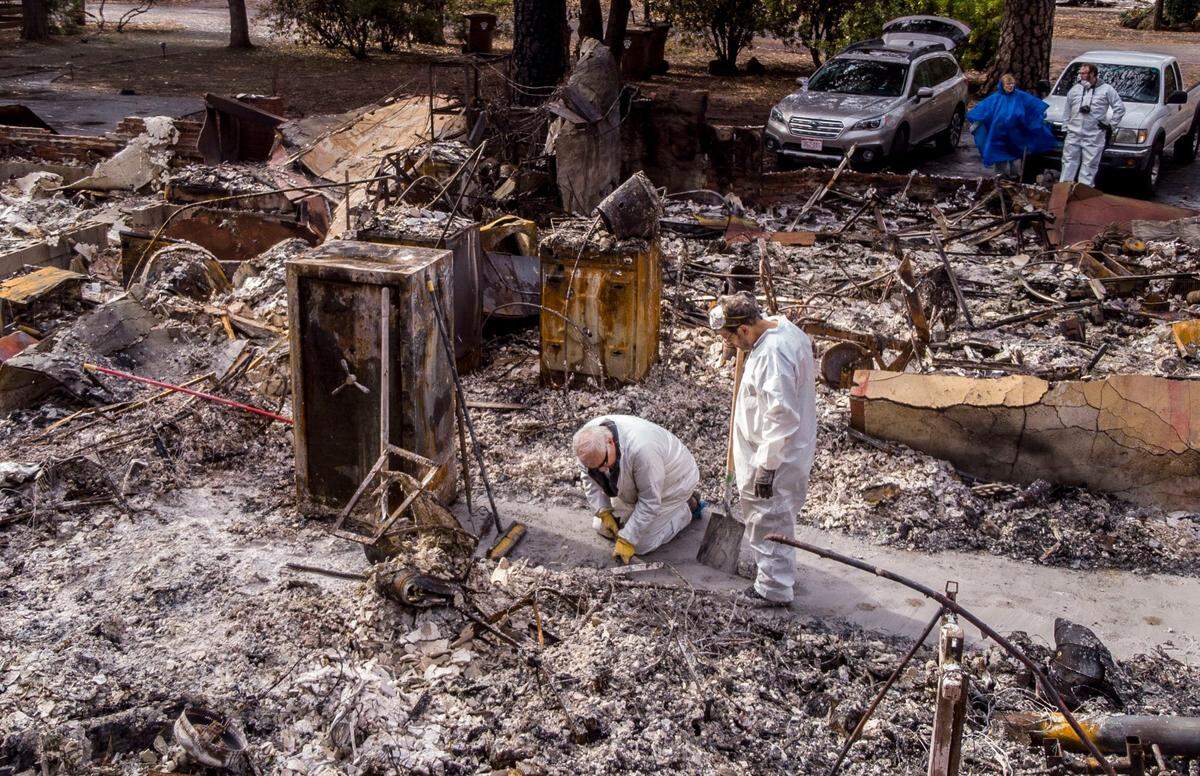
Clad in a white hazmat suit handed out by town officials, Skeeter Schuette tiptoed through the ruins. The house was soot and debris. The little studio where she crafted stained glass was reduced to giant blobs of melted glass.
“It was devastating, to walk through and see your life in rubble,” she said. “It was very, very surreal.”
Soon after, she Googled “container home” and found Cubic Quarters. She contacted the company in late December, and Cohen called back right away, on New Year’s Eve.
The pitch was alluring — a new home made of fire-resilient materials. “She could do this great pricing, because she was an importer,” Schuette recalled. She signed up March 23, 2019 — her son’s birthday.
A builder holds a party in Paradise
Later that spring, Morris’ mother, Jeannine Mackay, hosted a party for Cubic Quarters.
On display were “all these samples of countertops, cabinetry finishes,” Schuette said.
The real attraction, though, was Tricia Cohen.
“I tried a couple of times to approach her, to introduce myself,” Schuette said. “But she was swamped. Everyone wanted to meet the woman who was going to build their home.”
Mackay couldn’t be reached for comment.
Cohen still needed a licensed contractor. A Chico builder named Mike Merkley considered signing on, but concluded that Cohen’s plan left too many unanswered questions.
Among the mysteries: Cohen’s pledge to bring in Chinese workers to help with assembly in Paradise.
“I asked her if these workers were going to be legal,” he said. “Were they going to have green cards? We couldn’t get answers on any of this. It was always, ‘We’re working it out.’”
Eventually, Cohen connected with Lamberto “Beto” Uriostegui, owner of Innovative Builders, a licensed contractor from Olivehurst.
Uriostegui said he was attracted by Cohen’s promise that the job would be simple. He’d pour concrete foundations and supervise laborers Cohen hired to assemble the prefabricated homes. He later discovered, though, he’d be in charge of rebuilding seven homes from the ground up.
Among them was a new home for Ashley and Rex Watts.
The Wattses lost their home in Paradise and decided to rebuild in Chico instead. They learned about Cubic Quarters through Amy Morris, whom they knew from the Church of Latter Day Saints in Paradise.
“They were promising a house for a certain amount of money that was a lot cheaper than everywhere else,” Ashley Watts said. “And a lot faster. They said, ‘Oh, we’ll want you to be in your home by Christmas. That year.’”
In May 2020, the couple paid the company $6,500 for engineering, drafting and design work, according to an invoice on Cubic Quarters’ stationery. A crew from Uriostegui’s company poured a concrete foundation, installed plumbing and erected steel framing. They would later write in a complaint to the district attorney that they sent a series of payments to Cubic Quarters eventually totaling $496,000.
The work was about half done when Uriostegui called Rex Watts last September with bad news.
“Tricia,” Ashley Watts said, “was out of money.”
‘A living nightmare’ for Paradise couple
Six months after signing a contract with Aurora Ridge, Linnie and Heather Wallin had shelled out $228,000 for their new home in Paradise, a little more than half the contract price. As far as they could tell, Aurora Ridge was making solid progress.
“When we (saw) that the house was framed up with the roof sheeting, we figured the house was about halfway done,” Linnie Wallin said. “And $200,000 was about halfway there, so we thought we were on track.”
In early 2021, however, they heard that Aurora Ridge’s license with the state had been canceled.
The Wallins contacted Ellingson, the Chico lawyer, and filed a complaint with the state board. Since then they’ve spent tens of thousands of dollars attempting to finish their home, doing the work themselves.
“Thank God, we’re getting close,” Wallin said. “It’s been kind of a living nightmare, to be honest with you.”
Ellingson advised against bothering with a lawsuit.
“Getting anything out of them basically is not going to happen,” Wallin said. “So my wife and I decided just to eat it at this point and tried to build the house with the money we have left, and just move forward from all this.”
Margaret Corron stuck with Aurora Ridge longer than the Wallins did — a costly decision.
Corron said she paid the company $140,000 to rebuild her daughters’ home, chewing up the insurance payout. Then she took out a loan — and sent Aurora Ridge another $79,000 last December, her final payment.
She’s been told it will cost another $200,000 to finish the house, and she isn’t sure if she’s going to proceed. Unless she can somehow get her money back from Aurora, she might have to sell the property.
“I was excited to get the house going. I wish I had paid more attention. I wish I had seen how that money was being spent,” she said. “What did the cement cost? What did the roofing cost? What did the framing cost? Where was all this money?”
Public records hint at Aurora Ridge’s financial struggles. In 2020 it borrowed $97,500 under the Paycheck Protection Program, established by Congress to help companies affected by COVID-19 (Like most PPP loans, this one was forgiven).
Now the company is being investigated by the district attorney, the Attorney General’s Office and the state contactors board.
In an administrative complaint filed in March, a board investigator said that because they were personally unlicensed, the Soderlings had no business operating Aurora Ridge. He also said they failed to pay bills, performed “substandard work” and left a job unfinished after collecting $235,000 from an unnamed customer.
The investigator has asked the board to permanently ban all three Soderlings from contracting — Jay, Jessica and their son Colton, who became CEO last year — and suspend or revoke the licenses held by Prossegger and Harris, the contractors who worked at Aurora Ridge.
Lindsey, the town’s community development director, said Aurora Ridge didn’t complete any homes it started. But last spring Aurora Ridge began working with a licensed contractor from Chico named Chad Hawes, who has completed three of Aurora Ridge’s projects, according to Lindsey.
Aurora Ridge tried to add Hawes’ name to its license, but was disallowed by the state board because Aurora Ridge’s own license was no longer valid. In an interview, Hawes said he stopped working with Aurora Ridge because he felt the Soderlings “weren’t willing to show me their books.” He also became uncomfortable with the couple after hearing about their tax problems.
Last December, Aurora Ridge moved its office to Hamilton City, according to documents filed with the Secretary of State’s Office. In February, Jessica Soderling filed papers with the secretary of state incorporating a new business, Bedrock Homes and Land Inc., at the same address. When a Bee reporter visited the Hamilton City location recently, the property was surrounded by a chain-link fence and the building appeared vacant, although there was construction equipment parked outside.
All that’s left of Aurora Ridge in Paradise is its logo outside its former office, next to a Better Business Bureau label and a “Ridge Rising” sticker from the Paradise Chamber of Commerce.
California lawmakers acted — but too late
It’s not as if California officials were oblivious to the potential for contractors to fleece wildfire victims. In 2020, state Sen. Mike McGuire introduced legislation to keep customers from making overly generous down payments. McGuire said dozens of his constituents, their homes destroyed in the 2017 wine country fires, paid large sums to contractors who did shoddy work or didn’t finish.
The bill expanded a 1979 law that prohibited contractors from taking down payments exceeding $1,000 or 10% of the cost, whichever was less — but only on home-improvement projects. With Gov. Gavin Newsom’s signature on the legislation, the cap on down payments also covers homes completely destroyed in major disasters. The law also increases penalties on contractors convicted of bilking disaster victims.
It took effect in January 2021 — too late for Cubic Quarters customers.
Sharon O’Hara said she made an initial payment of $5,500 to Cubic Quarters in April 2019, well above the maximum that’s now allowed.
O’Hara said she signed up eagerly with Cubic Quarters.
“You’ve lost everything,” O’Hara said. “You get on the phone with Tricia and she just seals the deal.”
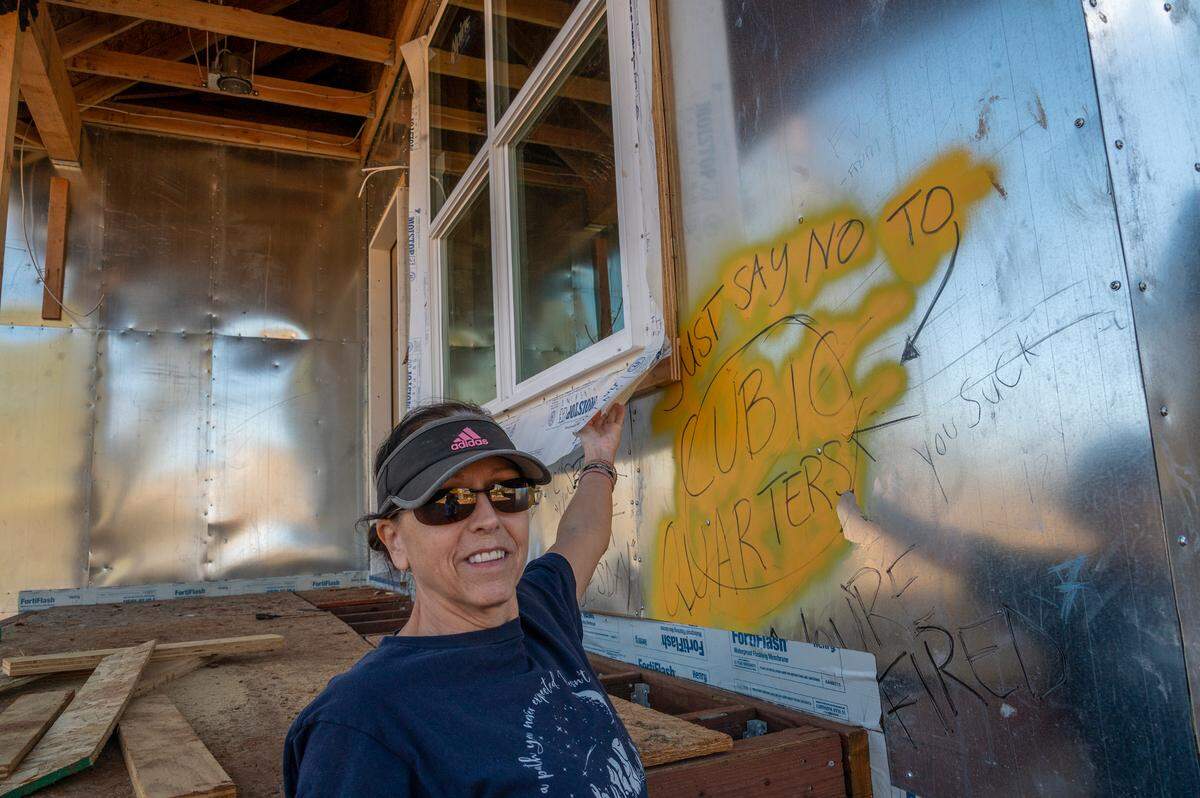
After paying Cubic Quarters a total of $195,000, O’Hara is struggling to finish a home that has metal siding, a roof and not much more.
“I almost quit a couple times and she would always say the right thing: ‘Oh, the engineer, he’s really busy,’ ” O’Hara recalled. “‘The ground was saturated from all the rain. Oh, the plumber had an emergency. His family was sick.’ It’s like she went on Google and found excuses.”
O’Hara said she fired Cubic Quarters last August, and hired another contractor to complete the job. That’s set her back another $100,000 so far.
O’Hara has made her feelings about Cohen’s company public. Across the front of her unfinished home, she’s scrawled a message: “JUST SAY NO TO CUBIC QUARTERS.”
Sandra Doolittle tells a similar story.
She gave Cubic Quarters a $6,500 down payment in 2019. By last spring she’d paid a total of $205,000, but was becoming fed up with the slow progress on her house.
In May 2021, Cohen asked for another $42,000. Doolittle refused. Cohen then asked for $36,000 instead. Doolittle refused.
“I knew this was going nowhere,” Doolittle said.
She said she fired Cubic Quarters last summer, and said she complained to the state board and the Butte district attorney’s office. Her home consists of a foundation, the framing and a roof, but little else.
“She lied to us, every one of us,” said Doolittle, 66, who lives in a trailer on her son’s property. “Every single one of us had our hopes dashed over and over.”
On April 25, O’Hara, Schuette, Doolittle and a fourth Cubic Quarters customer Steven Ferchaud drove to Roseville to file a complaint with the FBI. Each of them also spoke recently with the district attorney’s office staff.
They saw progress. Then their builder was gone
For a while, Cubic Quarters’ customers had reason to hope. Uriostegui’s company was working on their homes.
That came to a halt late last summer. On Sept. 8, Cohen sent out an email saying Uriostegui was no longer with the company due to lack of productivity and other issues.
In a rambling followup email, riddled with grammatical errors, Cohen listed other reasons why their homes weren’t finished.
“COVID-19 happened in the middle of these builds as well as rain smoke winter shortages delays in getting dirt delays in getting cement,” she wrote. What’s more, tariffs imposed on Chinese goods by then-President Donald Trump made “importing each item astronomically high and impossible to import.”
Cohen nonetheless made a pledge: “At the end of the day I will be here as long as you want me to work on this.”
Uriostegui said he’s a victim, too — owed $240,000 by Cohen and now facing an investigation by the state board. In a written statement to the board, he said Cubic Quarters used his contractor’s license number without his permission.
“Everybody’s looking at me as the general contractor who screwed the homeowners,” Uriostegui told The Bee. “My life has been flipped upside down.”
In an attempt to recover his money, he placed liens on six customers’ properties — leaving them stunned.
“I already paid Tricia Cohen,” Doolittle said. “Really, you’re going after me to pay twice?”
Liens can create problems for property owners with their lenders, suppliers and contractors. The lien on Doolittle’s property meant delays in wrapping up a loan she needs to finish her house. Her lawyer got the lien removed in mid-April, after $2,000 in legal fees.
Cubic Quarters customer Ferchaud said he isn’t sure whether Cohen or Uriostegui is at fault. All he knows is that his house is nowhere near completed.
“Tricia has over $200,000 of my money and all I have for it is a foundation,” said Ferchaud, who’s living in a rented room in Chico. “All I need is a house. It doesn’t need to be a big fancy one.
“It’s disheartening. You just feel lost .... I don’t know what to do next.”
Wildfire survivor still waiting to go home
Last fall, after learning that Uriostegui’s company was off the job, Schuette sent Cohen an email rippling with raw emotion.
“I am not going to survive like this much longer, physically or mentally,” she wrote. “So if you think I am being unreasonable, demanding, or doubtful thats too bad. I need to stand up for myself. This has gone on way too long!
“I have watched over 1000 houses be built and families go home! Hundreds more in process. They figured it out! If you cannot do this I need to know now and need money returned so I can try to move forward.”
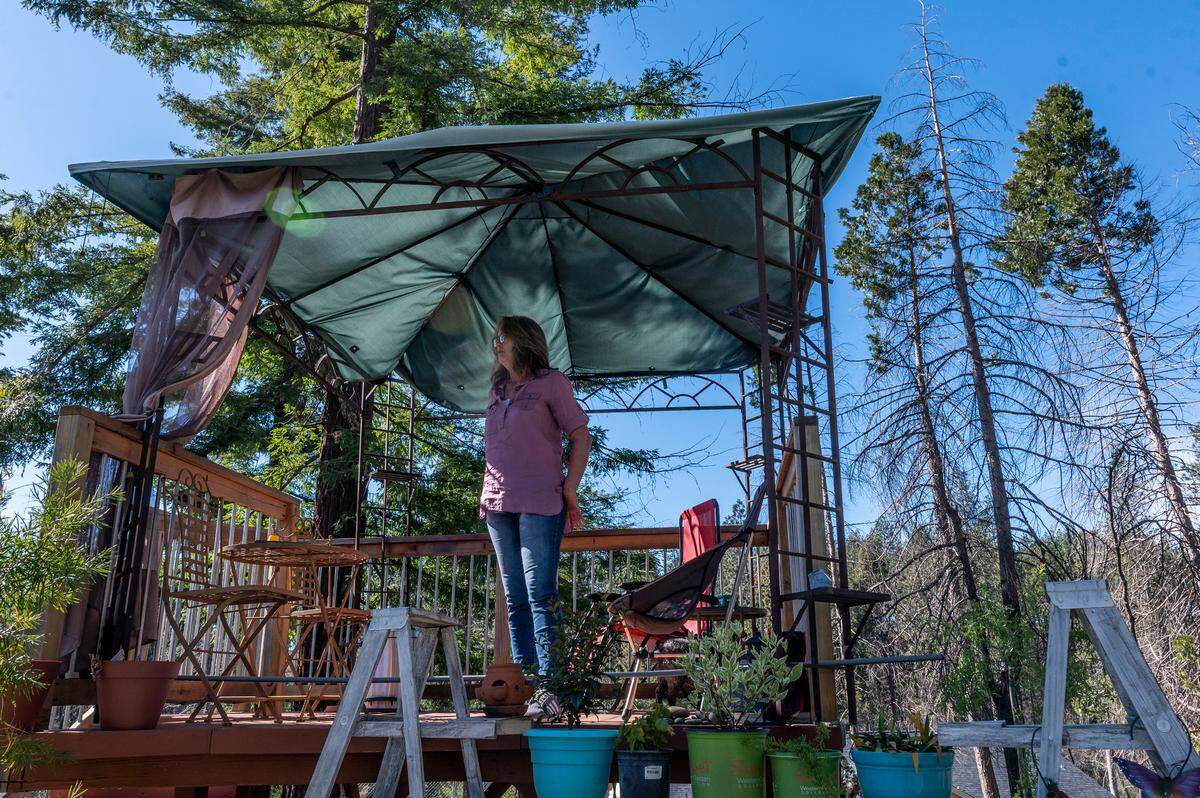
Cohen responded, more than once, with a mix of sympathy and defensiveness. “I am treating you with dignity (and) respect and working non stop to get your house completed overcoming every obstacle,” she wrote.
Cohen did find a contractor to erect steel columns in Schuette’s house recently. She also sent Schuette $6,900 to partially reimburse her for windows
Her living conditions have improved slightly in recent months. The nonprofit donated a second bus, which she’s equipped with a portable shower.
But she’s still without a real home. The first bus, which she shares with her terrier, Ethel, and her cat, Lucy, has a fan but “it still gets 100 degrees in the summertime.” She washes dishes in a cold-water outdoor sink. She still rents a port-a-potty.
And she’s still waiting on that big-screen TV.
BEHIND THE STORY
MOREWhy did we report this story?
Practically every year, a massive wildfire destroys one of California’s forested communities, leaving hundreds if not thousands of people homeless. When the smoke clears, the rebuilding phase can be a time of financial vulnerability for desperate wildfire victims, many of whom are holding insurance payouts larger than their life savings. The stories Camp Fire victims tell of handing over hundreds of thousands of dollars to problematic builders who failed to complete their homes serve as cautionary tales.
Where did the idea come from?
In November, Sacramento Bee reporter Ryan Sabalow got an email with an alarming subject line: “Camp Fire Survivors — Victims Again.”
It came from Chico lawyer Jennifer Ellingson, who had been working with Camp Fire survivors in Paradise. The survivors claimed builders had taken huge sums of money from them but had failed to rebuild their homes. Some of them had already begun telling Redding-based TV station KRCR about their frustrations.
Ellingson’s email triggered a five-month Bee investigation into the people behind two of those companies, Aurora Ridge Homes and Cubic Quarters. The investigation revealed that the people behind these companies had a history of business dealings where money went missing or wasn’t repaid and the courts got involved.
How did we report it?
Sabalow and reporter Dale Kasler conducted dozens of interviews, reviewed hundreds of pages of court documents and other public records, did some social media sleuthing and enlisted the help of a retired FBI agent.
Uncovering the lengthy criminal history of Jay Soderling, the founder of Aurora Ridge Homes, was a relatively simple matter. Kasler read decades-old news accounts from his trials and reviewed hundreds of pages of criminal court records and transcripts of congressional hearings about his role in the 1980s savings and loan crisis. Documents also showed that Soderling and his wife Jessica, who worked with her husband at Aurora Ridge, had been convicted on tax charges in 2015.
It was trickier to learn more about Tricia Cohen, the owner of Cubic Quarters. As far as The Bee could learn, Cohen has never been charged with a crime. “Patricia Cohen” also is a common name that made using background check search programs or searching social media a challenge. Most of her customers in Paradise never actually met her in person, and it’s unclear where she actually lives.
But her customers in Paradise shared with The Bee emails and phone numbers that she’d been using to contact them. Using that information, Jim Ellis, a retired FBI agent and certified fraud examiner from Texas whom Sabalow interviewed, was able to run a background check that provided a comprehensive list of her and her ex-husband’s history of court judgments. They totaled at least $736,111 in judgments issued between 2006 and 2008. The records also revealed that in 2007, the IRS put a $190,905 tax lien on the Cohens’ homes in Florida and Nevada.
Sabalow began pulling court records from the judgments awarded against Cohen in Washington state, Nevada and Florida.
Who did we speak to?
The Bee used court documents to track down three of Cohen’s former investors.
In interviews, they told The Bee that a woman they knew as Patty Cohen and her former husband, Michael, took their investments in deals involving shipments of Chinese products and never returned their money.
The failed business deals were remarkably similar to the pitch the woman calling herself Tricia Cohen was making to fire survivors years later in Paradise. She claimed to have a line of prefabricated homes made in China that would arrive in shipping containers.
Finally, to confirm it was the same Patricia Cohen behind the various failed business deals, The Bee received photos pulled from Cohen’s social media accounts before they were set to private or deleted. A Camp Fire survivor who met her in Paradise confirmed to The Bee the woman in the picture was indeed Cohen. So did two of her former business partners from years earlier — the ones who obtained court judgments.
The Cohens and Jay Solderling didn’t return messages from The Bee. Jessica Soderling hung up the phone when contacted for this story.
This story was originally published April 28, 2022 at 5:00 AM with the headline "The Camp Fire took their homes. But they had more to lose in the rebuilding process."