
COVID omicron surge could mean trouble for California Democrats in midterm election
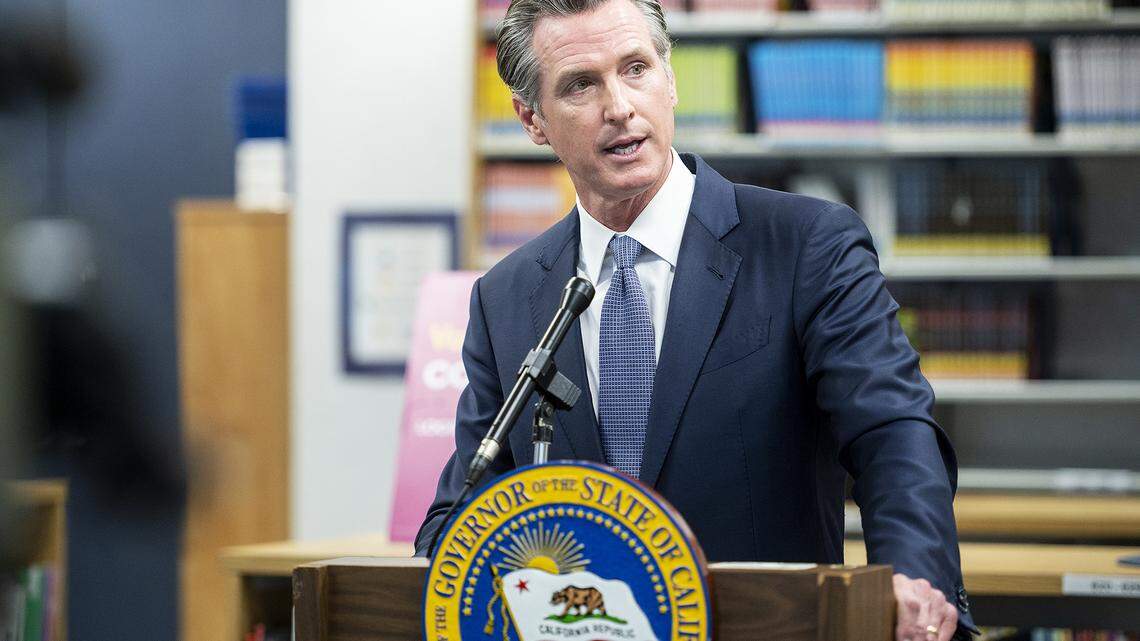
Gov. Gavin Newsom’s management of the COVID-19 crisis was a big reason he easily won last year’s recall effort. But political times have changed, the path to November success has become unpredictable, and incumbents –mostly Democrats – are at increasing risk of being victims of voter anger.
When Newsom won the recall election in September, “vaccinations were up, boosters had been announced, Omicron had not yet appeared and kids were back in school. It looked like we might be reaching the end of the pandemic,” said Rose Kapolczynski, a California Democratic consultant.
Now, though, positivity rates have soared, reaching an all-time high Friday. Hospitals are becoming overwhelmed and there’s new talk of lockdowns. The latest COVID-19 surge is triggering new, unanswerable political questions.
Will voters blame the Democrats in power for the ongoing pandemic? Will people get disgusted with all incumbents and just not vote? Or will life return to “normal” in the fall and voters will reward those incumbents?
“We don’t really know what COVID-19 will be like as an issue by the summer and the fall,” said Kyle Kondik, managing director of Sabato’s Crystal Ball, which handicaps California races.
Both parties insist they’ll be fine politically and are honing clear messages.
Republicans see opportunity. “People are upset. Parents are still upset their schools were closed for a year. They’re upset they’re still fumbling the test distribution,” said Tom Ross, Sacramento-based political director at New Majority, a California conservative group.
Democrats express confidence that the public will understand officials are doing all they can.
“Voters will not blame Democrats for the pandemic continuing here in the United States when it is also continuing in so many other countries,” said Hilary McLean, a Sacramento-based Democratic strategist.
She also saw the ongoing push to get people vaccinated and illustrated how the “policies Democratic leaders have championed are proving to keep most people from getting seriously ill.”
COVID-19 and election success
The failed effort to recall Newsom gave Democrats some hope that they can benefit from COVID-19 policies.
Newsom won the September recall election by about 23 percentage points. Network exit polls found that COVID-19 was the biggest issue facing the state, mentioned that way by 31% of voters. Those voters opposed the recall by a 4 to 1 margin.
Nearly half of all voters said Newsom’s COVID-19 policies were “about right.”
The message was more mixed in 2020, before the COVID-19 vaccine was available. President Joe Biden won California by more than 29 percentage points, but Republicans had a net gain of four congressional seats in the state.
There was also a mixed message from minority voters. In 2020, 23% of Latino voters and 15% of Black voters in California backed President Donald Trump, according to network exit polls. The Latino percentage was virtually unchanged from 2016, while the Black vote for Trump that year was 9%.
Matt Barreto, president of BSP Research in Los Angeles, which studies Latino voting trends, attributed the Latino vote for Trump to a desire to get the economy moving again, which Trump aggressively promised to do.
Barreto warned against reading too much into the 2020 showing. “I don’t see a permanent shift. I don’t see any shift to more conservative ideology,” he said.
Many Black voters are looking to Washington not only for help with the virus, but with voting rights, said Oakland-based Aimee Allison, president of She The People, a political network of women of color.
While it’s unlikely lots of Black voters will turn away from the Democrats, she’s concerned about turnout. The debate over voting rights, Allison said, will be closely watched.
Angry midterm voters?
When voters are fed up with how their leaders are managing a crisis, they vote against incumbents.
“If you go to the polls angry you’re going to take it out on whoever’s on the ballot,” said Kapolczynski.
McLean thought Democrats would prevail.
“Democrats clearly do take the crisis seriously,” she said, with efforts to keep schools open, mask requirements and testing and vaccination initiatives.
“Steps like these give families a sense of control over their lives and schedules,” she said.
Ross, the conservative consultant, saw a big opening. “Think about who brought the vaccine to market. It was Trump. What people have heard from Newsom in the past 18 months is that he’s promised the moon…at some point everything they’ve done is empty promises,” he said.
Democrats have the most to defend. Sen. Alex Padilla, D-Calif., is seeking his first full elected term and is regarded as likely to win. Republicans currently hold 11 of the state’s House seats. Democrats have 42, and the state is losing one seat this year.
“One thing we can say is the election is going to be a referendum on those who are in political power and in office, and how they handle the latest phase,” said Mark Baldassare, president and chief executive officer at the Public Policy Institute of California.
“Everybody now is waking up to the fact that this phase is like none other in terms of the scope,” he said.
This story was originally published January 10, 2022 at 5:00 AM with the headline "COVID omicron surge could mean trouble for California Democrats in midterm election."
.jpg)