
Will President Biden restore high-speed rail funds that Trump took away from California?
A new spending plan for high-speed rail construction in the Fresno region anticipates an increase of about $1.3 billion in the price to complete pieces now being built in Madera, Fresno, Kings, Tulare and Kern counties, and expresses hope by state rail leaders of increased federal support from a new presidential administration and Democrat-controlled Congress for a broader statewide project..
The California High-Speed Rail Authority will meet virtually Tuesday to consider an update to its business plan, which reflects a cost of $13.8 billion to complete a 119-mile line from north of Madera to north of Bakersfield. That’s up from about $12.4 billion that was forecast previously.
The authority’s meeting will begin at 11 a.m. and available for viewing live on the agency’s website: hsr.ca.gov.
The new cost estimate to extend that route by about 52 miles – north to downtown Merced and south into the city of Bakersfield – into a 171-mile initial operating section is between $21 billion and $23 billion.
But completion of the work in the Valley, which under federal stimulus grant agreements was to happen by the end of 2022, is increasingly unlikely. At least part of the blame is being placed on the coronavirus pandemic, the effects of which began to be felt almost a year ago in the state.
“The High-Speed Rail Authority has not been spared nor is it alone in being impacted by COVID-19,” authority CEO Brian Kelly writes in a letter introducing the revised business plan. “Although we are not yet an operating passenger service, the pandemic has affected virtually every aspect of our organization and program.”
That, Kelly said, includes delaying adoption of the business plan by almost a year, the quarantine of almost 250 workers on the project, a reduction in funds from the state’s greenhouse gas reduction program, delays in court proceedings for eminent domain to acquire land, and allowing more time for public comments on required environmental reviews.
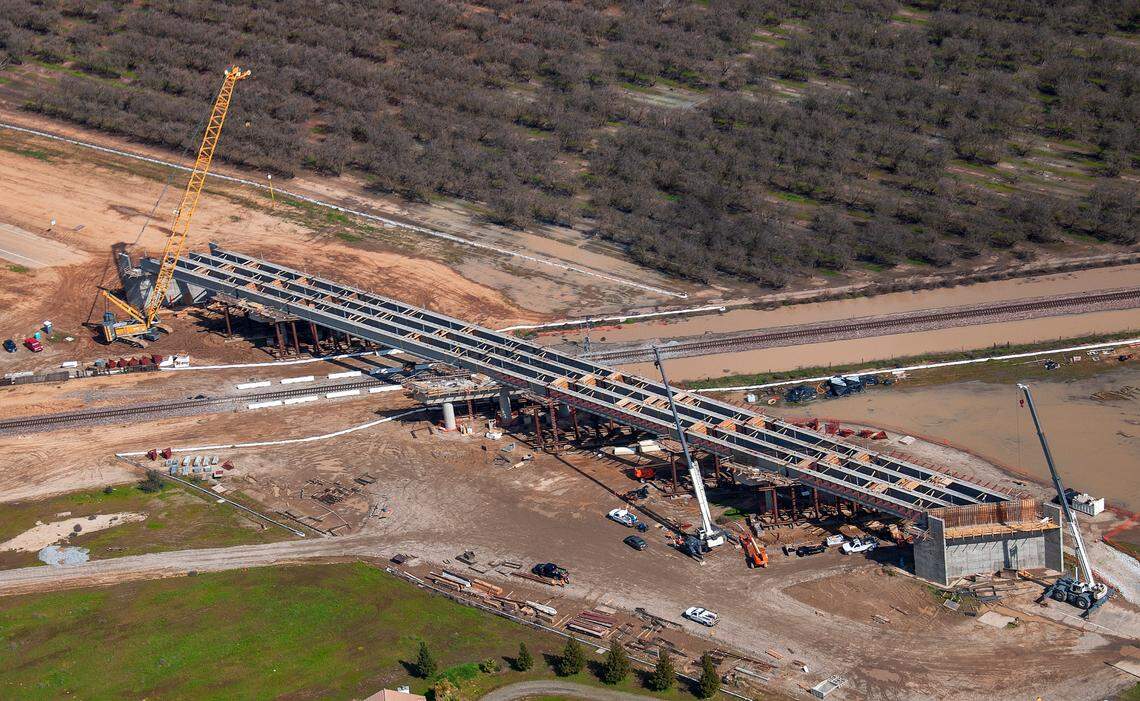
Other aspects of the delay, however, remain due in part to the same kinds of problems that have plagued the project since the first construction contract was awarded for segments of the route through the Valley almost eight years ago, in mid-2013. Those include a stubbornly slow rate of progress acquiring the land needed for the railroad right of way, finalizing agreements with adjacent railroads, utilities and local governments, construction errors, and other factors.
Of more than 2,000 land parcels identified as needed for construction of the route, fewer than 1,800 have been secured, interim Central Valley Regional Director Garth Fernandez told The Bee.
Concerns over the rising costs, and uncertainty over where money would come from for a complete San Francisco-to-Los Angeles system, prompted Gov. Gavin Newsom to call in 2019 for a severe scaling back of plans to focus on finishing what’s been started in the Valley.
Money remains a concern
The availability of money to build an interim system in the Valley, before expanding and connecting to the Bay Area and Los Angeles, remains a key question for the project. The business plan anticipates that there is enough money coming in from cap-and-trade funds – part of the state’s greenhouse gas-reduction program – to cover the cost of completing an operational Merced-to-Bakersfield line.
But in 2020, the coronavirus pandemic was blamed for the loss of about $288 million in revenue from cap-and-trade auctions at which companies bid on carbon credits to offset their own emissions of greenhouse gases. “We hope to recover that in future sales,” Fernandez said.
Additionally, one key source of money dating to the Obama administration was a 2010 allocation of almost $1 billion in federal rail improvement funds for California’s high-speed rail efforts. In 2019, the Federal Railroad Administration under President Donald Trump terminated grant agreements for that money and “de-obligated” the funds from the program. The administration also threatened to seek repayment of another $2 billion in federal stimulus funds already largely spent by the state.
The revised spending plan reflects a reality related to the available financial resources for construction. That includes paring back on what will be put out for construction bids this summer for track and related systems on the Merced-Bakersfield route. Instead of building two tracks that will be necessary to operate trains in both northbound and southbound directions, bids will be sought for only one track.
“Most of the infrastructure will be built for two tracks,” Fernandez said. But, “the track itself is going to be one track, and maybe the electrification is going to be one.” One track is all that’s needed for testing the rail system and train sets once they are purchased, expected in 2025. Adding a second track to allow for operational use of the route by 2029, Fernandez said, is not expected to be a significant increase in cost.
The new estimate of about $22.2 billion includes about $387 million that’s earmarked for purchase of trains that will be tested, and ultimately carry passengers, on the Valley segment – often described as the “backbone” of a larger statewide system of electrified trains capable of traveling at up to 220 mph between San Francisco and Los Angeles.
Renewed federal support?
The rail agency hopes that the President Joe Biden administration will restore the $929 million in 2010 rail funds that were canceled under Trump. Additionally, the rail authority is hopeful of getting some relief from the FRA grant requirements for completion of the Valley construction by December 2022.
“There is a lot of opportunity. We have a renewed partnership with the FRA that is working well,” Fernandez said. There is optimism that a Democratic president and a Democrat-controlled Congress offer the potential for increased federal investment in high-speed rail.
He added that the state rail authority has invited Biden’s new secretary of transportation, Pete Buttigieg, to California to see the project work in the Valley.
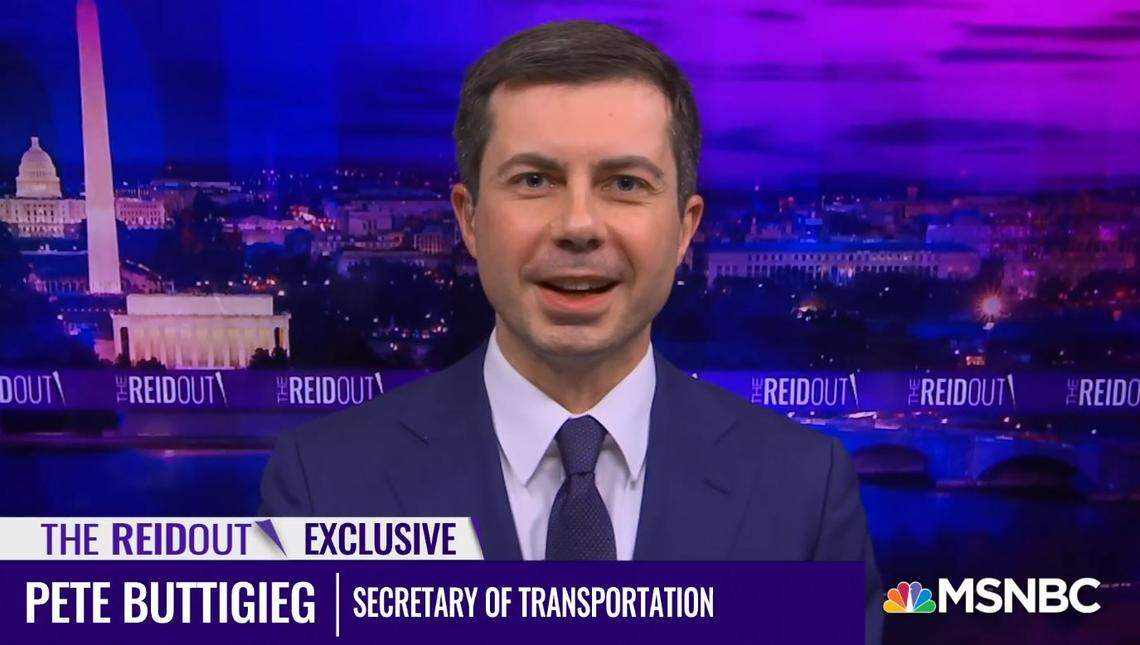
On Thursday, Buttigieg expressed support for high-speed rail on a national level, but did not specifically mention California’s project. Appearing on MSNBC’s “The Reidout” with host Joy Reid, Buttigieg said, “I want the U.S. to be leading the world when it comes to access to high-speed rail.”
Buttigieg, the former mayor of South Bend, Indiana, who was among a field of Democrats seeking the presidential nomination last year, said that Biden is “a big believer in passenger rail.”
“We’ve been asked to settle for less in this country, and I just don’t know why people in other countries ought to have better train service and more investment in high-speed train service than Americans do,” Buttigieg said.
He added that he believes there is an opportunity for the U.S. to stake a claim to leadership in high-speed rail development, “especially with the bipartisan appetite for real investments that we have before us this year.”
More structured decisions
One aspect of the new business plan, according to Kelly, is a process called “Stage Gate,” an emphasis on more structured decision-making in moving forward on new construction steps. Each new “stage” of work will be controlled by “gates” that set prerequisites before moving forward.
“This approach will help us better understand, manage and mitigate risks before starting future construction contracts,” Kelly said.
It’s a process intended to avoid a repeat of what marked the sections now under construction in Fresno and the Valley: the premature awarding of construction contracts before sufficient design work had been done; before right-of-way had been acquired; before fully identifying expensive utility relocation needs; and before executing needed agreements with adjacent freight railroad companies, irrigation districts, utility companies and city and county government agencies.
With its focus on decision milestones, Fernandez said Stage Gate – which reflects some of the same sentiments expressed by rail authority leaders in 2018 – represents a system “all coming from lessons learned from our early projects that we put out for construction.”
This story was originally published February 7, 2021 at 5:00 AM with the headline "Will President Biden restore high-speed rail funds that Trump took away from California?."
