
Learn the stories behind clever Modesto-area business names. How do local brands stand out?
Business names are often the first impression for consumers. Whether driving your car on McHenry Avenue or searching for goods and services on your phone, you’re destined to see one that grabs your attention.
A memorable name can define a brand’s identity and resonate with customers. Here are some Modesto businesses with stories behind their names.
Never Boring
David Boring has been in the brand naming business for several decades, serving businesses, government, and community groups. “A name is what people can remember,” Boring told The Bee recently. “We all are that way.”
The name of his own company, Never Boring, is a clear play off of his surname. Since marketing can never be boring, putting “never” in front of it fits.
In late 1982, when Boring was thinking about names for his business, he remembered being teased by classmates growing up because of his name. Over time, he developed comebacks, and this ended up helping him come up with Never Boring.
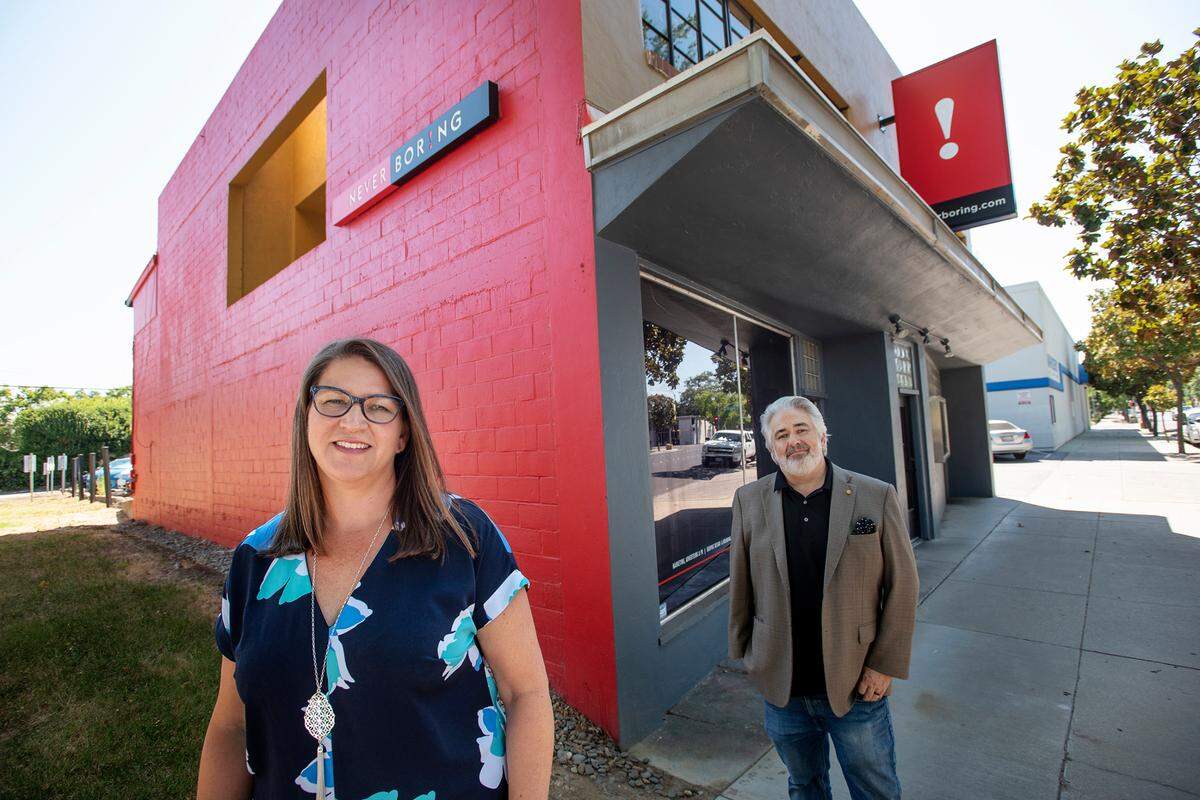
Boring said he always listened to his father’s advice, except for one thing. When he asked if it was a good idea to name his marketing agency Never Boring, his father questioned why he’d put a negative word at the beginning of his business name.
“You know, Dad, I usually agree with you, but I’m going to take a chance on this one,” said Boring. “It was a fun little discussion because I would always take my dad’s advice on a hard thing.”
Sticking to his gut in branding allowed Boring to build a successful business spanning four decades.
But now, the Never Boring “journey” is coming to a close, he wrote on his website. “We are ending our production work early in the month of August. Only a few projects remain. The corporation officially closes on December 31st, 2024.”
Wonky Felt
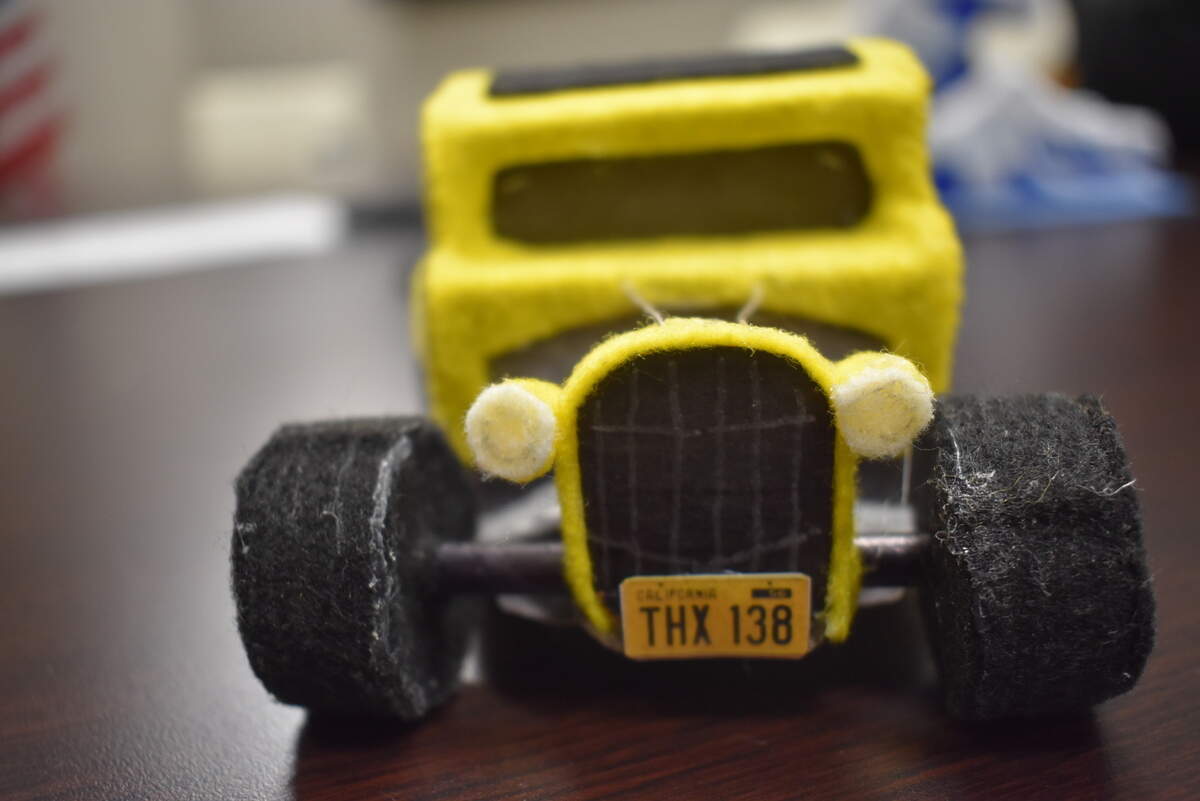
“I came up with the Wonky Felt name to acknowledge and celebrate being imperfect,” said Sara Lytle-Pinhey, owner of the tiny art installment that was launched in Modesto’s city hall. The imperfectness was inspired by the rushed process of rotating out art displays and quickly assembling felt pieces “that often turned out a little wonky,” she said.
The fabric of the Wonky Felt universe was born from a hole in the carpet in her Tenth Street Place office space in downtown Modesto. After a remodeling project, desks were moved around, forming a 6-inch divot in the carpet. This became the stage for her felt creations.
“As an artist, I work mostly with felt as my favorite medium, so I wanted to make sure that was part of the name,” she said. “I didn’t consider any alternative names, as that one just fit so well.”
“The name has become synonymous with my own, as people often call me wonky felt,” she said. “Which I’m fine with.”
Laughing Crow Collectibles
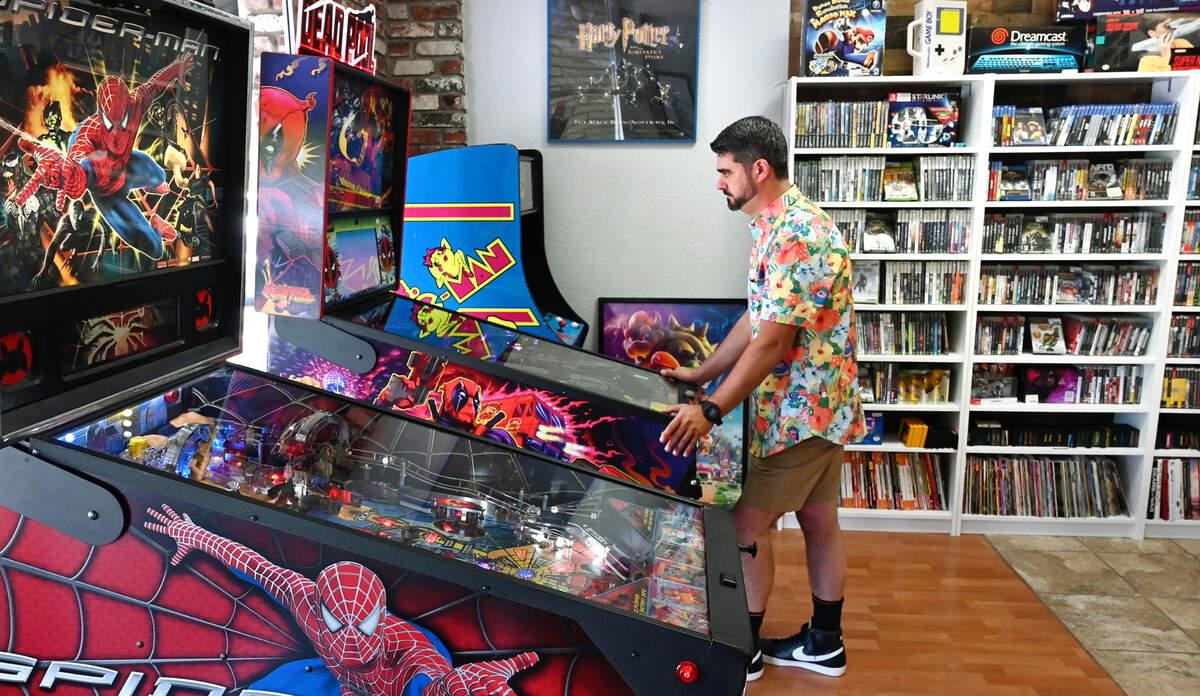
The video game store in Roseburg Square provides customers with retro, hard-to-get video games and collectibles from owner Jerod Pimental’s collection. Pimental had always been fascinated by the names of old British pubs, characterizing an animal, like “The Boar’s Head,” “The Dancing Fox,” or “The Duck’s Foot.”
One of Pimental’s hopes for the future is to open a “bar-cade” where people can play classic video games while enjoying craft beer. While thinking of names for his future establishment and current collectible shop, Pimental thought of Laughing Crow.
“Crows were like my favorite bird,” he said. “And I was like, ‘Oh, I really liked that name.’”
He added “Collectibles” to the end of the name so people would know what his business was. “It was just a brainstorm one day that we had, and I thought it had a cool ring to it,” he said. “And that was it.”
Meeple Valley Board Game Cafe
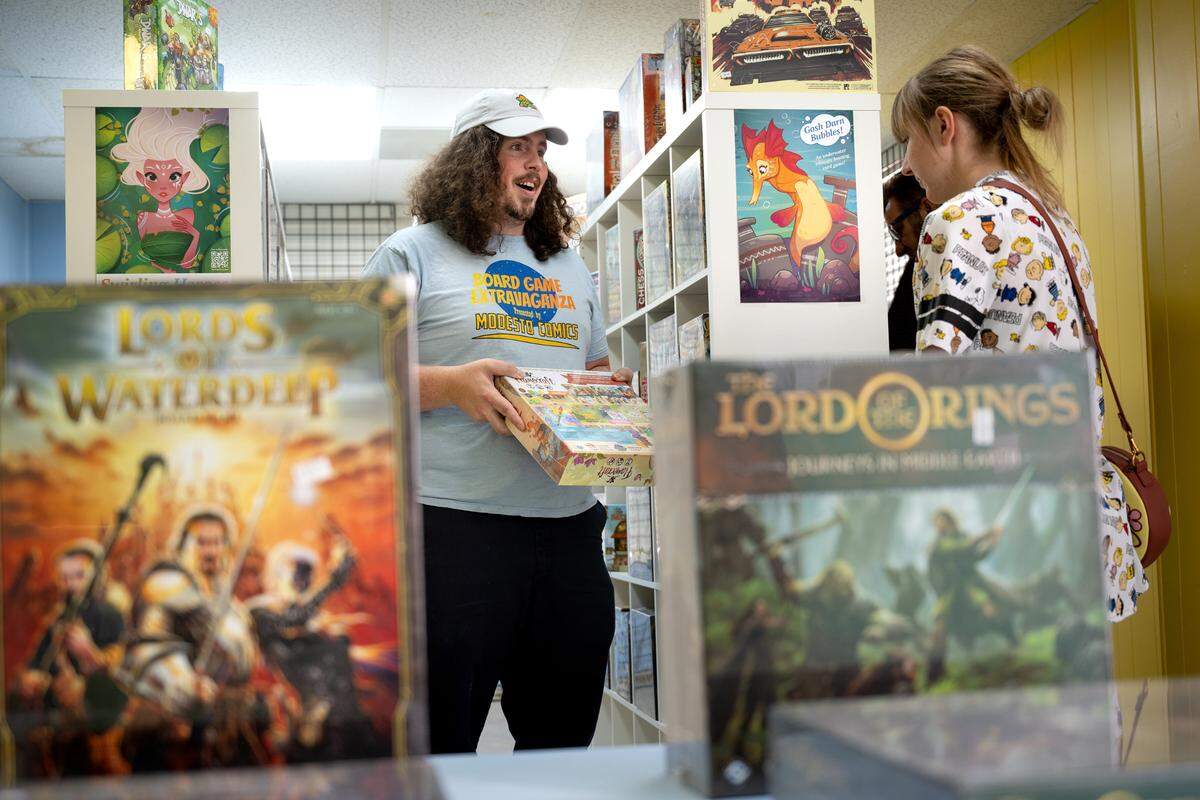
The hobby store and cafe off McHenry Avenue offers drinks, snacks, and around 200 board games to visitors. “Meeple comes from this little person-shaped figure, and the first appearance of it is from a board game called Carcassonne,” owner Rob Van Tuinen said. “Somebody during playtesting went to say ‘my people,’ and just said ‘meeple,’ and it’s become this huge staple of board gaming.”
Over 40 board games worldwide have the word meeple in their title. Hans im Glück, the company that founded Meeples, trademarked the anthropomorphized game piece in the European Union in 2019 and sent out cease-and-desist letters to gaming companies that used Meeples.
The trademark has no effect in the United States, keeping Van Tuinen’s business safe. “Sometimes people reach out, and they’re like, ‘Dude, are you aware of this?’ and I’m like, ‘Yes, I’m aware, I knew the first time it came up,’” he said.
The second half of his business’s name, Valley, comes simply from being located in the Central Valley.
Melodiq
“Melodiq (pronounced melodic) is a metaphor for what a brand is,” said Clark Beggs, founder of the marketing firm in downtown Modesto. “It’s a riff on author Marty Neumeier’s definition of what a brand is: A brand is a person’s gut feeling about a product, service, or organization.”
Beggs took the author’s definition of a brand, design, and innovation and simplified it to “a brand is what people remember about you.”
He compares it to the melody of a song. “The melody is what people remember about a song,” he said. “The metaphor is apt for me because in a past life I was a songwriter and there are many commonalities between design and music.”
Sublime Pop
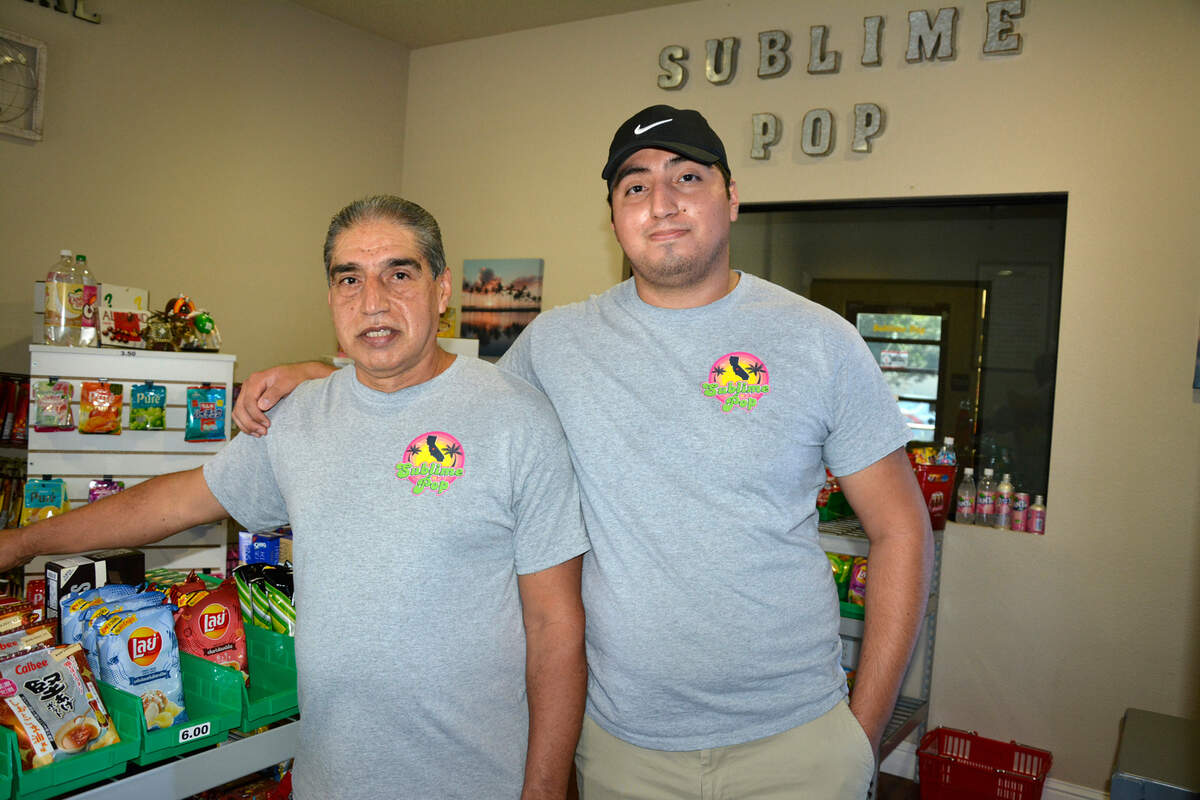
The small Turlock exotic snack shop and large distribution business Sublime Pop got its name from co-owner Ricardo Montanez. The father-and-son team started out servicing other snack industry vendors, such as the Tiktok-viral Exotic Pop.
“It was my dad that made up the name,” said Ernesto Montanez. “We were working on it and he threw out the name at random.” There isn’t a specific meaning behind the name; Montanez just felt it went with the brand.
“We’ve always been pretty simple people,” he said.
The Modesto Nuts and past incarnations
The Nuts weren’t always the Nuts. In 1872, the Modesto Red Caps were formed. They played both amateur and professional opponents throughout their nearly 75-year absence from MLB affiliation. According to a recent Bee article, the Modesto Red Caps gave themselves their nickname based on their chosen uniform: a red cap, red shirt and white pantaloons. This name was shortened to the Modesto Reds in the 1890s.
In 1946, the Reds joined the California League and became affiliated with the St. Louis Browns of the MLB.
In 1962, when the Modesto team became an affiliate of the Houston Colt .45s, the team name was changed to the Modesto Colts. After the end of their affiliation with Houston, they went back to being the Reds.
From 1975 to 2004, they were the Modesto Athletics, or A’s. When the Oakland Athletics moved on from Modesto and went to Stockton for an affiliate, the Colorado Rockies took over. Since the team had been named after the previous organization, the Rockies let the fans and community of Modesto vote on new names for the team.
Some options included the Dusters, the Strike, the Steel, and the Derailers. Many train-related names were in contention because Modesto was built off the Central Pacific Railroad in the late 1800s.
The Nuts ended up winning the most votes from fans due to the Modesto area producing some of the Valley’s biggest exports: almonds, walnuts and pistachios.
Penny University
Auni Beggs and Laurel Rehkopf have been serving coffee at the Modesto Farmers Market under the name “Penny University.” It comes from the first coffeehouses in London in the 17th century.
“For the cost of a penny, customers had access to coffee, newspapers, and conversations with good company,” it states on their website. “The cost only being one cent brought together people from different social classes and economic backgrounds.”
The business’s coffee sells for much more than a cent, but Beggs and Rehkopf aim to provide Modestans with the same benefits of good conversation, company and caffeine.
Their brick-and-mortar location in downtown Modesto is slated to open in late August.
The Modesto Bee
The Modesto Bee was founded in 1884 as the Daily Evening News. It was published daily under various names until the McClatchy family purchased it in 1924. At the time, the McClatchy family already owned The Sacramento Bee and The Fresno Bee. The McClatchy family merged the newspaper with the Modesto News-Herald, adopting that name.
In 1933, it changed its name to the Modesto Bee and News-Herald, which was shortened to The Modesto Bee in 1975.
Why is it called The Bee?
In 1857, when James McClatchy founded The Sacramento Bee (then The Daily Bee), an editorial on the first day of publication said, “The name of The Bee has been adopted as being different from that of any other paper in the state and as also being emblematic of the industry which is to prevail in its every department.”
McClatchy’s vision was to run the paper as busy as a bee.
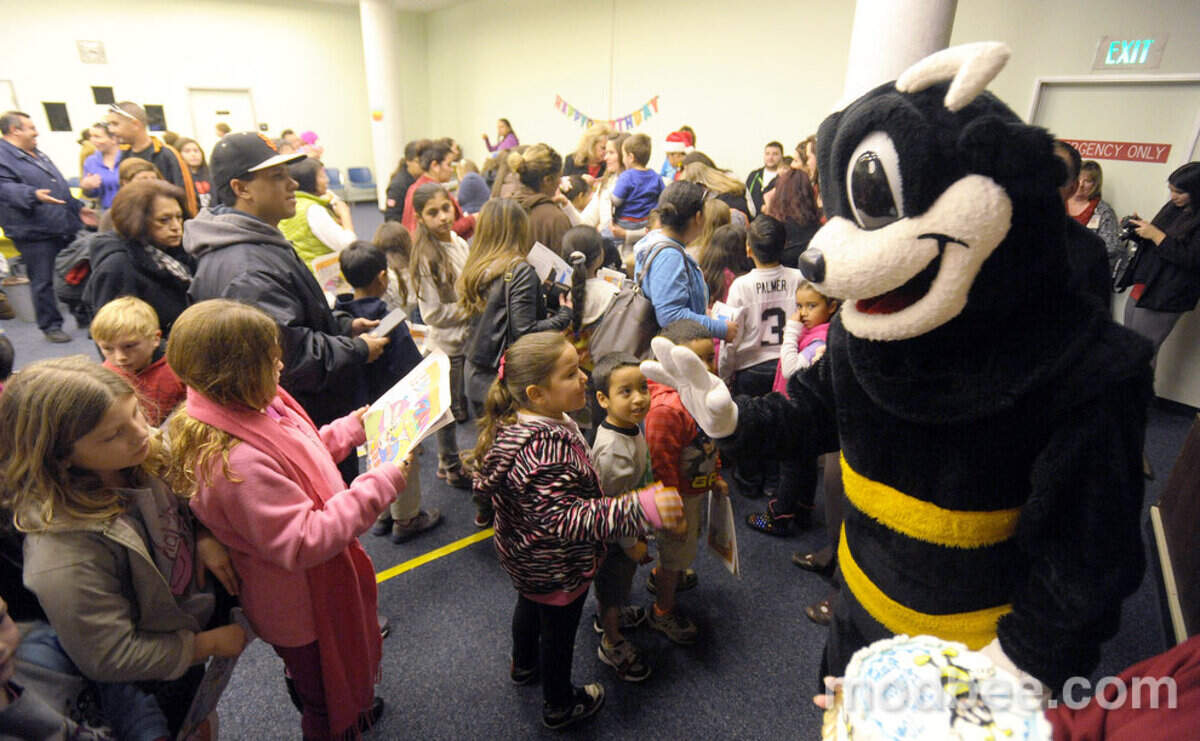
Walt Disney created Scoopy Bee, the mascot of the three Bees, in 1943. Eleanor McClatchy, president of the company for over 40 years, asked Disney to “lend personality and a familiar identity to all the products” of the company. Disney, who was not known to accept outside commercial work, agreed to create Scoopy and Gaby (Scoopy’s twin, who was used on radio station promotional material) as long as Eleanor donated $1,500 to the Army Relief Fund.
Scoopy remains on the mastheads of The Bees today.
This story was originally published August 15, 2024 at 6:00 AM.