The health of Central Valley orchards owes a lot to Hughson bee business. Here’s why
As spring approaches, trees begin to bloom, and the iconic almond blossoms adorn the farmland throughout the Central Valley. People come from miles around to take photos in pinkish-white orchards and drive through flowery roads.
It is something valley residents take pride in, and something achieved only by hard-working bees and bee people.
The Beekmans are among those people. As owners and operators of Beekman’s Bee Feed, Matt and Sarah continue to foster the health and advancement of bees and bee products with their commercial beekeeping business.
It started with Matt’s family. “My grandfather started keeping bees in the 1920s, so we’ve been here for over 100 years now,” he said.
As a third-generation beekeeper, Matt at first was not sure he would go into the family business. He would return home to help with it while studying at UC Berkeley.
Cal is where he met Sarah Kelly. “I grew up in a Northern Ireland pub family. Did I ever think I would be sitting in California talking about beekeeping? No,” she said.
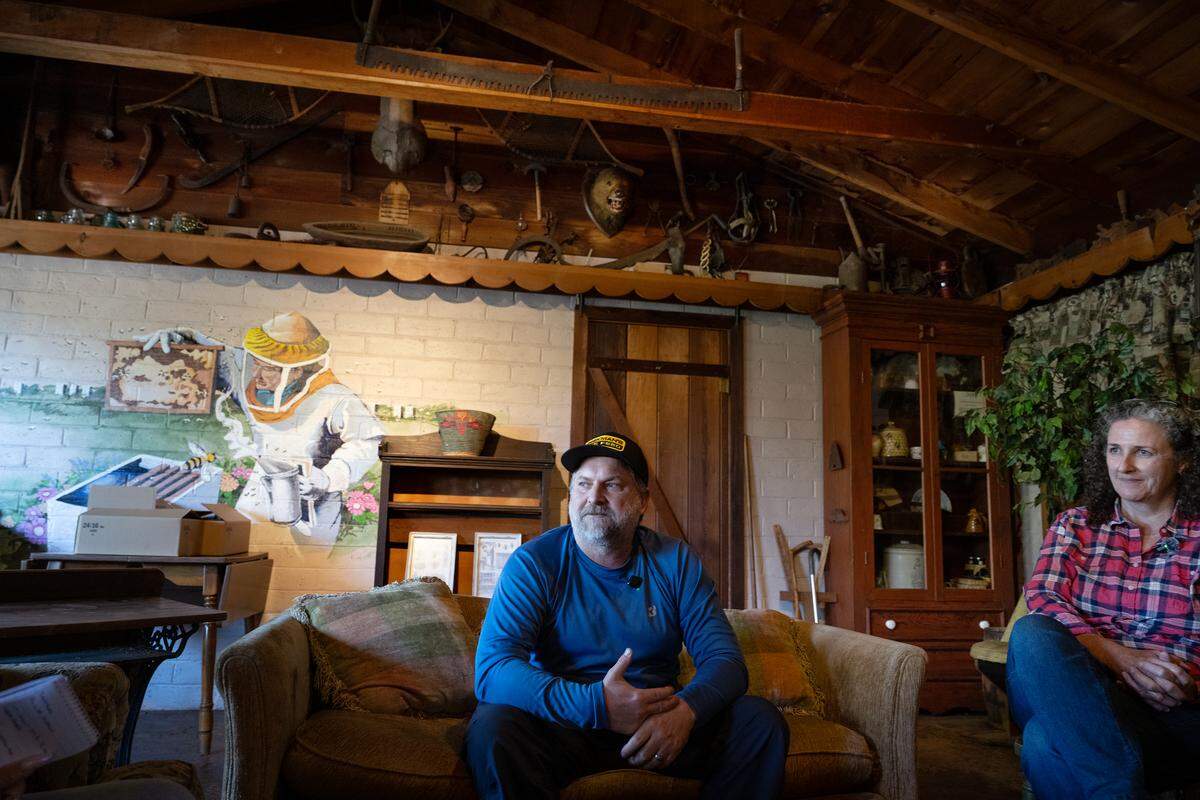
They married right after college, and both worked in the corporate world for a while, Matt in international trade and Sarah in tech, working in patent litigation. “There’s always been a strong pull to come back and be with the bees,” he said, so around 25 years ago, the couple moved from the Bay Area back to Matt’s native Hughson to take over the family business.
Matt recalled their honey and bee product sales in the early days of the business. “People still tell me stories of coming here and buying honey in a five‑pound glass jar and then putting the money in another little glass jar. It was a complete honor system, and they did that for decades.”
Matt and Sarah have expanded the business into the go-to place for commercial beekeepers. They produce and sell bee feed, raise queen bees, broker relationships between beekeepers and farmers, produce honey to sell wholesale, and supply bees for pollination to valley growers and beyond.
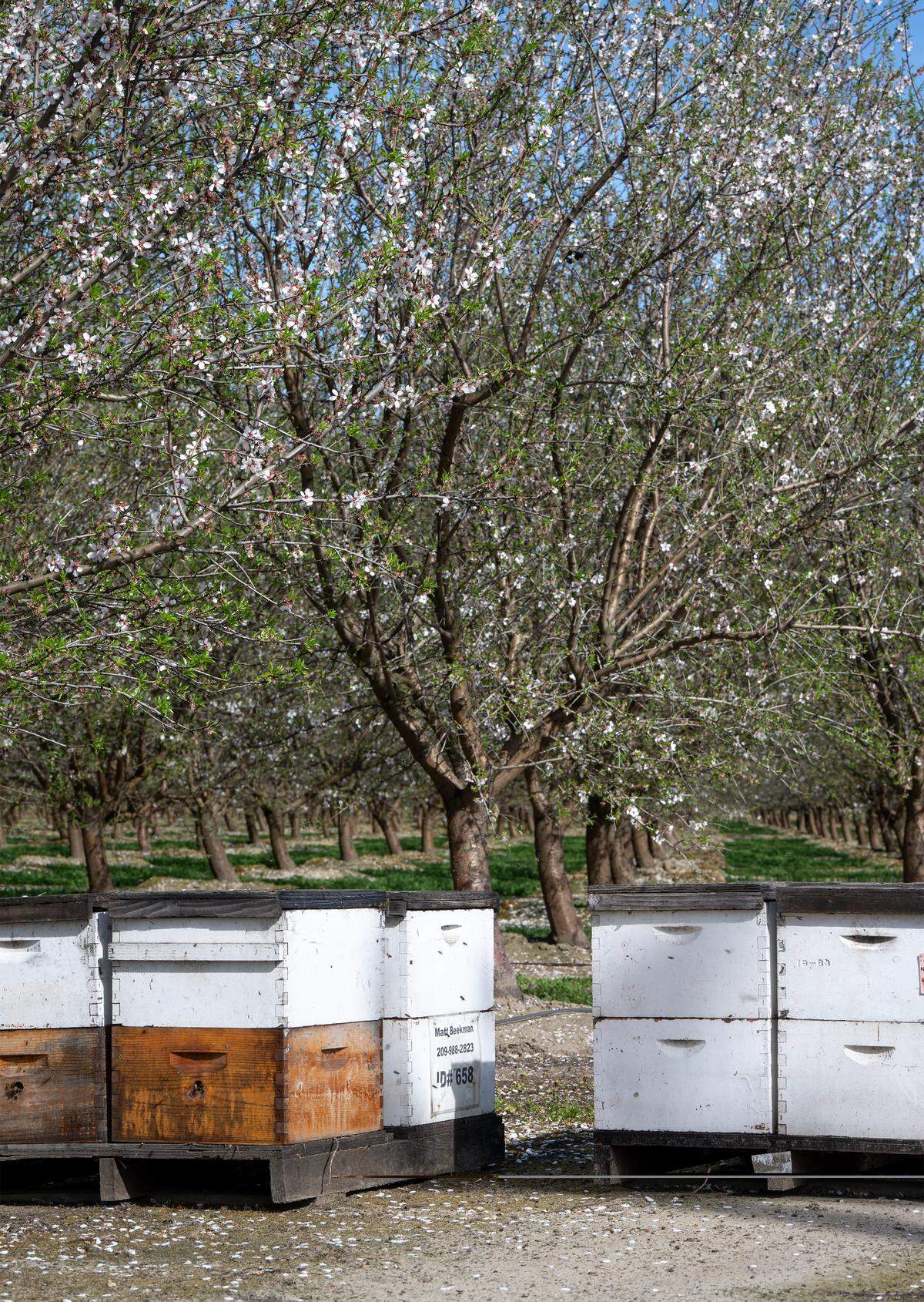
Bees are critical to pollinate almonds, citrus, blueberries, melons, cherries and many other crops. Sarah said Matt likes to walk the orchard to determine the appropriate size and the placement of the hives, which usually is where they get the best morning sun.
He waits until pruning and dormant sprays are complete and then brings the hives in at night. As the sun rises, the bees get to work. Feeding on nectar and pollen, the bees fly from flower to flower, depositing the pollen that sticks to their hairy legs and bodies.
“This is … the single largest pollination event in the world. Right now, we’re looking at about 1.5 million planted acres of almonds within the Central Valley,” said Matt.
The total pollination need is hard to determine, he said, “because you have different orchards at different ages, that require different quantities of bees, different varieties. But easily, you’re looking at probably 2 million colonies, conservatively, for almost all the commercial beehives in the United States.”
Food that’s fit for a queen
Even with acres of orchards, beekeepers must often supplement food for the bees to ensure their nutritional needs are met. “This year, I have taken a lead on the bee feed company and automating a lot of it, and meeting all the beekeepers that have been coming in,” Sarah said.
During almond season, their feed business supplies hundreds of commercial beekeepers with protein patties made of brewers yeast and soy flour (“a similar amino acid profile to pollen,” said Matt) and sugar syrups to supplement nectar. “We have keepers who stopped by to pick up feed from us, from New York, from Georgia, Texas, from all over the place,” he said.
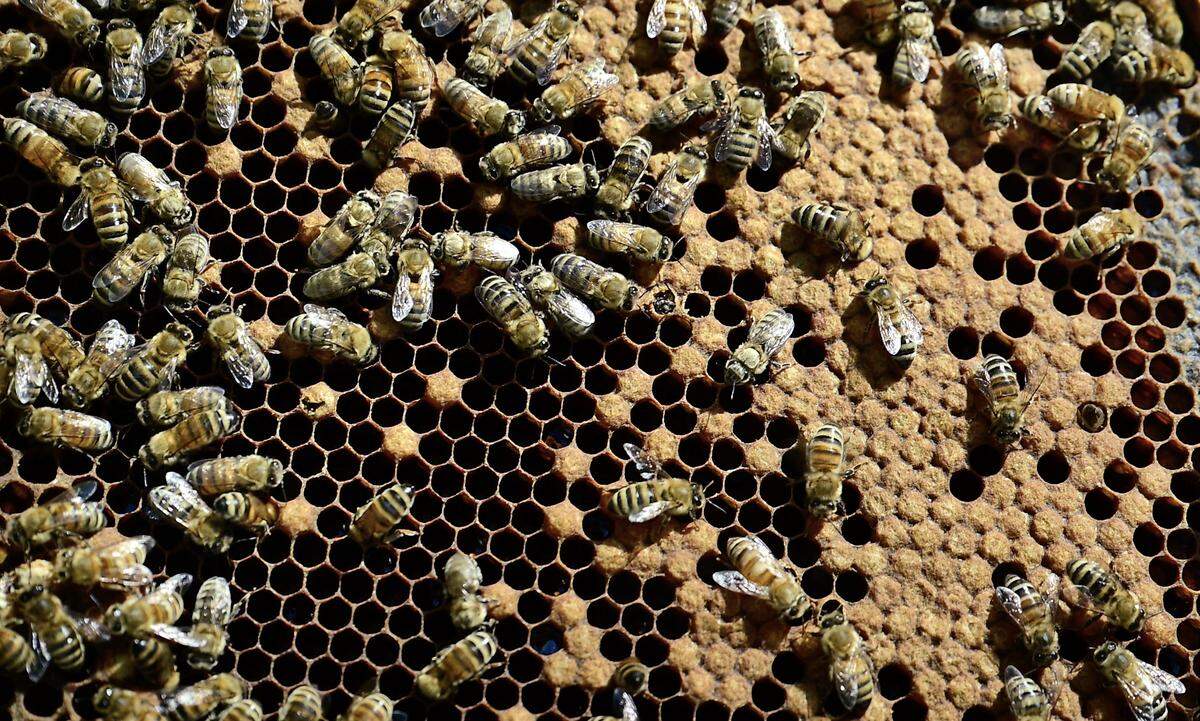
Perhaps one of the most interesting aspects of their business is raising queen bees. A queen starts life the same as all other bee eggs, but what makes her into a queen is how much royal jelly she is fed. Worker bees produce from their hypopharyngeal glands this liquid protein to nourish her.
The Beekmans facilitate this process by grafting young larvae into queenless colonies and managing how she is raised, timing her introduction and pheromone acclimation to ensure success.
Sarah takes the lead in grafting. “It’s a very delicate process, and she’s amazing at it,” said Matt. The strength of their bee colonies really starts here. “That queen will have 50% of the impact on the genetics. Think of it like blending wine or something like that, where you’re taking all these different characteristics. The reason I raise my own queens is that they’re bred specific to our operation. “We want to have really good honey production, but we also want to have large colonies for almond pollination,” he said.
Most queens live for about five years, but the Beekmans “requeen,” or kill the queen, every year to ensure colonies thrive and stay productive as older queens lay far fewer eggs.
The Beekmans have expanded their wholesale honey business into North Dakota. Every year, their bees travel 1,700 miles on semitrucks to produce honey from late June to mid-August before returning to California.
Matt said there is no down season for them, and his expertise in the industry has made him a leading voice in the apiary community, advocating for the health and protection of bees.
He was recently appointed chair of the California Apiary Board and serves on the executive committee of the California State Beekeepers Association and the board of directors for Project Apis m, which “is dedicated to supporting honey bee health and pollination security through practical, science-based solutions,” according to the website.
In the last two years, beekeepers across the country reported an average loss of 62% of their colonies, sounding an alarm that the industry was not sustainable amid rising production costs and falling honey prices.
A recent story in the Turlock Journal reported on continued colony loss over the last year. Threats to colonies include loss of habitat, nutritional stress, and pests.
“The worst [pest] for beekeepers worldwide right now is Varroa mites,” said Matt. These mites can kill an entire colony by attacking and feeding on the bees.
Ensuring the health of bees is key to our food security, he said. “One out of every three bites of food that we eat is derived from insect pollination, for which European honey bees are the primary pollinator. Food security is national security,” he said.
His passion for the protection and advancement of bees is perhaps linked to the most basic part of raising bees: a true love of honey. “I just love making honey, it’s magic. Honey is unlike any other food item,” he said. “Bees fly thousands of miles to make a pound of honey. It just really captures the essence of an area on that day.”
Looking ahead, the Beekmans continue to advocate for their industry and support their fellow beekeepers. They hope their business will continue to grow and perhaps continue on into the fourth generation if one of their three children decides to keep it going.
“It’s important for us that our kids have their own experiences and see if that’s something that they’re interested in, for them to bring something to the table,” said Sarah. “Beekeepers are just hardworking, resilient, positive people. … It’s a very collaborative, very supportive community, and it’s really rewarding to us.”
This story was originally published March 10, 2026 at 6:02 AM.