
Lawyer claims a health risk in food waste at Gilton site
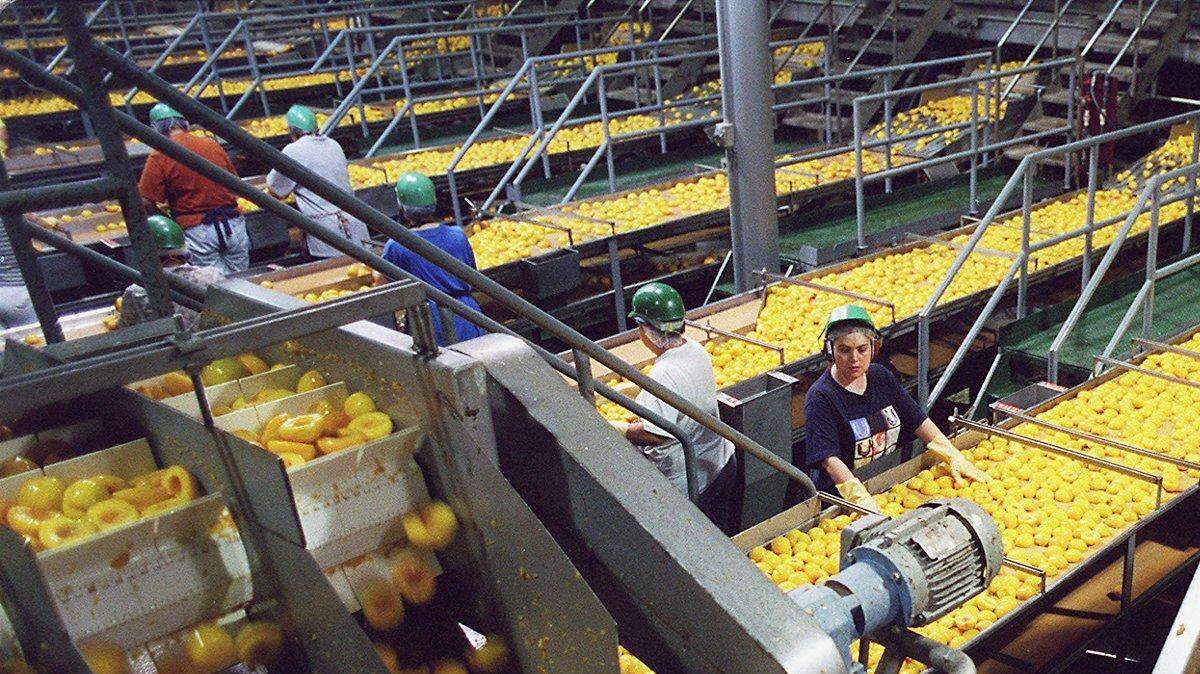
A Ripon lawyer is contending that Gilton Solid Waste Management's handling of food processing byproducts at a transfer station near Modesto poses health risks and should be regulated under a recent county ordinance governing food processing waste.
County officials and Richard Gilton disagree.
Caught in the middle is an annual accumulation of about 140,000 tons of food processing leftovers: tomato peels, peach pits and leaves culled from the canning process.
Gilton Solid Waste Management takes food processing waste material, generated inside Stanislaus County and outside, and makes it into commercial animal feed at its McClure Road transfer station near Modesto.
The county's ordinance on food processing waste was approved in February as an effort to protect its own program to use processing waste as fertilizer on farmland. That pro- gram, under way for 25 years, diverts about 52,000 tons of waste a year for use on farmland and as animal feed.
The program saves processors the millions of dollars it would cost to haul the material to specialized landfills in other counties. County officials fear that loss of the program could cause processors to close or move out of the county.
The Central Valley Regional Water Quality Control Board became concerned about the county program five years ago. Water board officials were worried that acids and salts from the processing waste could filter down and contaminate the groundwater table.
The ordinance was designed to allay the fears of the water board, and requires a permit to put food processing waste on land, feed it to animals, dehydrate it or compost it. The waste material is to be analyzed for chemical content, pH levels and volatile solids, and soil samples from the fields are to be analyzed.
In a letter to Sonya Harrigfeld, county Department of Environmental Resources director, Ripon attorney Tom Terpstra says the Gilton operation should fall under that ordinance. Terpstra cites the amount of material Gilton is handling, and questions whether it all is being used for the manufacture of animal feed.
He suggested that some of it is going into a composting operation at the site or other methods of disposal. Even if all of it is going into making animal feed, Terpstra argues, it should fall under the ordinance's definition of direct feeding to animals.
Terpstra also cites "extreme odors and air pollution" emanating from the Gilton operation on McClure Road, attributing it to the food processing waste. He cites studies linking health problems to composting operations.
Terpstra said Wednesday that he could not identify the clients he is representing in writing the letter. "My client, or group of clients, are concerned about the impacts of that facility," he said.
Harrigfeld said her department is preparing a response to Terpstra's letter, but she added that she doesn't think the Gilton operation falls under the new ordinance.
The Gilton operation manufactures animal feed to sell commercially, she said, a use that fits the industrial zoning of the site. She likened it to the A.L. Gilbert Co. manufacturing feed in Oakdale. Gilton has a license from the California Department of Food and Agriculture to manufacture animal feed, she said.
The waste is not being applied to the ground, or directly fed to animals, Harrigfeld said.
The odor problems are a separate issue, Harrigfeld said, and have drawn complaints from neighboring businesses. The odors are coming from a separate composting operation at the Gilton site, she said.
Gilton, who had not seen Terpstra's letter as of Wednesday afternoon, said all of the food processing waste goes into the animal feed program. His company had tracked the county ordinance and had asked officials if it would have to comply, and was told it wouldn't, he said.
"We done a lot of 'i' dotting and 't' crossing several years ago, and we met all the criteria for the things we wanted to do," Gilton said. "I went through an EIR (environmental impact report, under the California Environmental Quality Act) to establish this procedure," he said of the food processing byproducts operation.
Lawyer calls for oversight
"I'm in business. I've got customers to satisfy. I'm in competition with other people, and I have to stay competitive," Gilton said. "I have to stay in compliance. That's the key to this industry. If I'm not in compliance, I'm out of business."
Terpstra said the county should visit the site and investigate, rather than taking the word of the operator.
Supervisors seemed a bit perplexed by the situation.
"They are probably doing everything all right. You try to use everything these days, even almond hulls are fed to cattle," said Supervisor Jim DeMartini.
"I don't see a problem. They don't compost it, they don't do land applications. There's nothing really wrong with the stuff, tomato peels and leaves from the plants. For cattle, it's fine," he added.
Supervisor Bill O'Brien said he understood that because Gilton is regulated by the state, it doesn't fall under the county ordinance.
Permit, license in place
Supervisor Jeff Grover said his concerns were to make sure that Gilton had a use permit and a state license to manufacture animal feed. "They have both of those in compliance," Grover said.
"I understand there are other lawyers circling with other property owners," Grover added. "That seems to be a reality of the business climate we are in."
Supervisor Dick Monteith said he was trying to research the odors and health issues Terpstra raised, but hadn't reached any conclusions.
Gilton commented that the odors were an inevitable part of his business.
"We are handling people's waste products, and not too many of them don't have some kind of odor to it," he said. "I'm dealing with people's stink seven days after they got rid of it."
Gilton said his facility takes in several thousand tons of material every day, and does everything it can to reduce odors.
"We try to manage it and get it out of here as quick as we can, but there is only so much we can do," he said. "What happens if someone doesn't manage it?"
Bee staff writer Tim Moran can be reached at tmoran@modbee.com or 578-2349.
This story was originally published July 11, 2008 at 4:12 AM with the headline "Lawyer claims a health risk in food waste at Gilton site."