
Report tells investors Valley nut industry has shells, other waste for climate-safe reuse
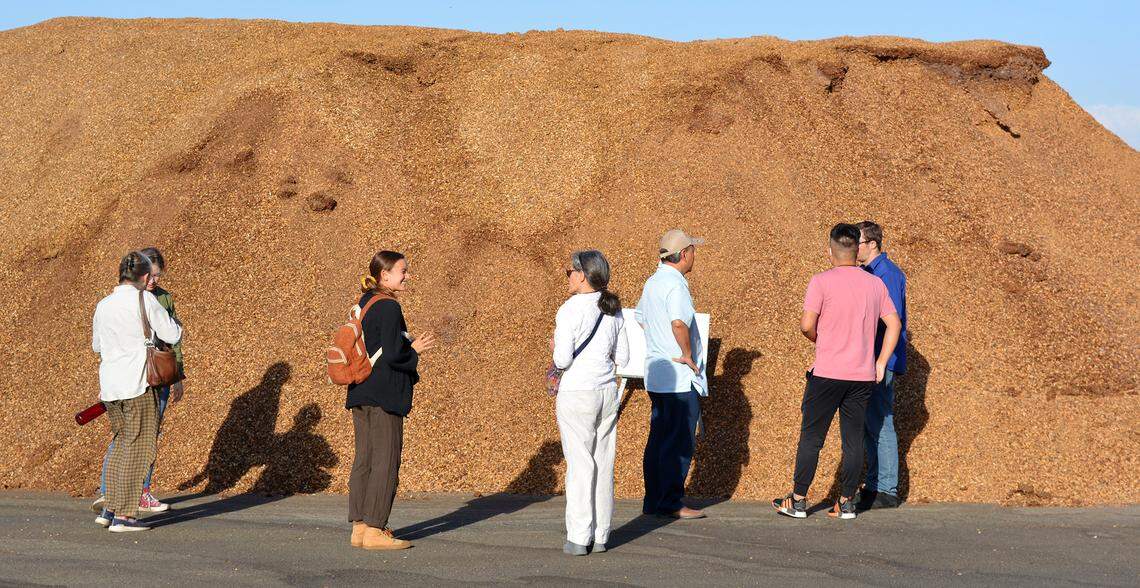
A new report urges investors to consider the woody waste from nut orchards in the Northern San Joaquin Valley.
It assigned an AA rating to the idea of turning shells, hulls and tree limbs into fuels, plastics and other eco-friendly products. That’s second from the top on a scale from AAA (extremely low risk) to C (high risk).
The report, released Feb. 20, grew out of the Stanislaus 2030 initiative. It seeks to create 40,000 well-paying jobs in the county by that year.
The analysis also takes in San Joaquin, Merced and Madera counties. They have nut orchards that could supply the new bioindustry.
The 79-page report was funded in part by the Almond Board of California, representing the state’s top-grossing nut. Walnuts and pistachios grow in smaller but still sizable volumes.
Funding also came from BEAM Circular, a Modesto-based nonprofit group. The acronym stands for BioEconomy, Agriculture and Manufacturing.
“This region is ready to support and scale the future of sustainable bioproduction,” BEAM Circular CEO Karen Warner said in a news release.
Letter grades guide all kinds of investors
The report was compiled by Ecostrat, a consulting firm with offices in Anaheim and three other cities in the United States and Canada. Its letter grades are similar to those given by Wall Street ratings firms to all kinds of business stocks and municipal bonds.
Highlights of the report:
- About 1.2 million tons of nut waste are available each year within a 75-mile drive from Modesto. That is assumed to be the maximum trucking distance to make reuse profitable.
- The total includes about 890,000 tons from orchard trees that are discarded because their productivity declined. They had long been burned in the open, but that is being phased out due to air pollution concerns.
- Another 183,000 tons are the shells removed from almonds, walnuts and pistachios at processing plants. Some have been burned directly to generate electricity, but this has faded as solar and other renewable sources got cheaper. This also emits some climate-changing gases. BEAM Circular prefers converting shells into fuels with zero such emissions.
- Almonds also have hulls around their shells, about 23,000 tons per year. Most of them are now fed to dairy cattle, a small part of their diet. The Almond Board has looked at plastics and other high-tech uses.
- The northern part of the Valley has extensive transportation systems for delivering raw materials and shipping out finished products. They include railroads, highways and the Port of Stockton.
- The region has plenty of vacant sites for the factories of the future. The report highlights the Beard Industrial District near Modesto, home already to dozens of food and beverage processors.
A few drawbacks for nut waste
The report notes a few disadvantages that keep the effort just shy of the top investment rating. Drought can reduce nut crops in some years. California has a “challenging permitting process.” The cost is high for electricity and natural gas to run the new plants.
The north Valley is now part of the national Bioeconomy Development Opportunity Zone Initiative. It promotes reuse of waste from farms, sawmills, backyards and other sources.
“The zone offers very low-risk supply chains and is positioned as a prime target for top-tier and innovative bio-based projects,” Chairman Jordan Solomon says in the news release.
The bioindustry push also involves making fuel from dairy manure, another abundant source in the north Valley. This has evolved from pilot projects to full-scale production, including a Keyes plant that supplies PG&E.
