
Dodging Deportation: 2 women – one fearful, the other fierce – wait for the knock from ICE
Gloria Sanchez keeps a close eye on the large living room window with a wide view of the front yard of her Modesto home. Fear is what motivates her constant vigilance.
She says she's afraid officials from U.S. Immigration and Customs Enforcement will show up one day, detain her and start deportation proceedings to eventually return her to Mexico, tearing her apart from her six children, her husband and the life she's had in Modesto the past 26 years.
But it's the kind of fear she won't allow to debilitate her. She says it keeps her sharp; it empowers her to learn about her rights as an undocumented immigrant and to fight to protect her family.
"I'm already so used to it," Sanchez says about the fear she experiences every day. "I have to, because you never know when immigration is going to come."
Alma experiences the same fear, so much so that she asked The Bee not to include her last name or the names of her children in this story. She fears federal immigration officials, also known as ICE, will find her and complete the deportation process they started several years ago.
(Click here: When ICE comes calling ... )
Both women's children were born in the United States. Alma's children struggle with serious medical conditions that require constant care, numerous doctor visits and costly medications. Alma is a single mother. Without her, she says, her two children would be lost.
"Yes, I get scared," Alma said. "You never know what can happen ... It's not fear; it's uncertainty. It's not knowing what can happen today or tomorrow."
The Modesto mothers can't imagine a return to Mexico, bringing along their children to live in a country they don't know. Sanchez would be forced to leave behind a life in Modesto in which her family has thrived. Alma would leave behind programs from government agencies and nonprofits that have helped her children survive despite huge medical costs.
What they brought to this community also could disappear. Sanchez is a vocal advocate for immigrant families in Stanislaus County, willing to speak publicly about misconceptions and helping empower others. Alma is a member of a catechist group at Saint Jude's Catholic Church in Ceres, and she has been working with others to create a community garden to educate families about nutrition and healthy lifestyles.
In 2014, undocumented immigrants living in California contributed $1.6 billion in state and local taxes, according to New American Economy, a bipartisan pro-immigration advocacy group of more than 500 mayors and business leaders. Undocumented immigrants living in the United States in 2014 contributed $13.2 billion in federal taxes and $7.8 billion in state and local taxes.
Aside from their tax contributions, the two Modesto mothers choose to help others, even though an intense fear seems to have gripped other undocumented immigrants worried authorities will find and deport them.
EVERYDAY LIFE IN FEAR
Estimates of undocumented immigrants living in Stanislaus County range from 17,000 to 36,000 among a population of about 530,000 residents.
Some undocumented immigrants are afraid to walk to a nearby grocery store. Others are reluctant to provide their phone numbers or home addresses, even on a sign-up sheet for an immigrant advocacy group.
Sanchez drives carefully to pick up her kids from school, worried a minor traffic violation could lead to her expulsion. At one point, Alma would leave her house only to pick up her kids from school, and she reduced her visits to the grocery store to once a week.
The mothers say political rhetoric since the election of President Donald Trump has increased their fears of deportation exponentially. It's not just the talk. It's also reported ICE sweeps throughout the Central Valley, the state and the rest of the United States. The federal agency argues that ICE focuses its enforcement on those individuals who pose a threat to national security, public safety and border security.
But sanctuary laws, like those in California to protect undocumented immigrants, force ICE to conduct broader enforcement operations beyond prisons and jails, according to the agency.
"Sanctuary policies, which have pushed ICE out of jails, force our officers to conduct more enforcement in the community — which poses increased risks for law enforcement and the public," said Richard Rocha, an ICE spokesman for its San Francisco field office. "It also increases the likelihood that ICE will encounter other illegal aliens who previously were not on our radar."
The San Francisco Chronicle last week reported that in the past five months, there was a significant increase of immigration arrests of people without criminal convictions in California. More than 3,400 "non-criminals" were arrested by ICE from October through March, compared to about 1,000 "non-criminals" who were arrested by ICE's California field offices in the same time period last year, the federal agency said.
It's this type of broad immigration enforcement that has many undocumented immigrants in the Northern San Joaquin Valley worried they might be ensnared, even though they have no serious criminal history.
ALMA'S STORY
Alma was born and raised in Mexico City, where she was a social worker. She later married a man from the Mexican state of Michoacan. He wanted to find work in the United States, so she joined him.
"I thought it was going to be easier to find work here," Alma said in Spanish.
The couple entered the United States illegally, Alma said. They took a bus to Tijuana, Mexico, where they used the help of a "coyote," a Mexican colloquialism for someone who smuggles immigrants across the border.
Alma said she and her husband were part of a group of immigrants who entered the United States through the barren desert along the Mexican border, each person carrying food and two gallons of water. It was enough to last them three days and three nights, as the group of immigrants avoided border patrol.
Alma and her husband made it to the San Diego area, where they were picked up by her husband's relatives. The couple found a home in the Bay Area. She worked at a bakery making croissants. He worked as a cook at a taco eatery.
In 2004, the couple moved to Modesto. They had two kids, a boy who is now 14 years old and a girl who is 9. They operated a Mexican food truck, a fledgling business that became too difficult to keep afloat.
Alma says her husband became abusive over the years. The couple first separated and later divorced. She says local law enforcement began investigating him for alleged criminal behavior. He soon left the United States and never returned.
Before he left, Alma said, immigration officials contacted her ex-husband about his trouble with law enforcement. When they came looking for him, he told them Alma also was an undocumented immigrant.
Immigration officials knocked on her door one morning, and she answered their questions. Suddenly, she was pleading with the federal government not to deport her. The single mother had two children she could not leave behind.
Simply, returning to Mexico was not an option.
Her son suffers from several medical conditions, including fibromyalgia, and is mainly home-schooled, participating in an independent-studies program out of a Modesto high school. Her daughter, a student at a south Modesto elementary school, has juvenile rheumatoid arthritis and needs help bathing and preparing for school. The cost for her medication is in the thousands each month.
"I couldn't afford that working in Mexico," Alma says. "I wouldn't have that type of medical insurance in Mexico."
For the past several years, Alma has been working odd jobs to supplement her housing costs and utility bills. She mainly works on the weekends as a waitress for large family parties, such as quinceañeras, earning just enough to make ends meet.
"If I had to clean someone's yard, I would do it," Alma said. "I just wanted to support my kids."
She said she applied for an immigrant visa in Fresno, but immigration officials told her she didn't qualify. She was told if she returned to the Fresno office, she could be taken into custody. She never went back.
So now, she keeps her front gate locked to try to keep ICE officials from reaching her door. If a stranger knocks, she doesn't answer.
"And my kids have already been instructed to do the same; they can’t open up for anyone they don’t know," Alma said.
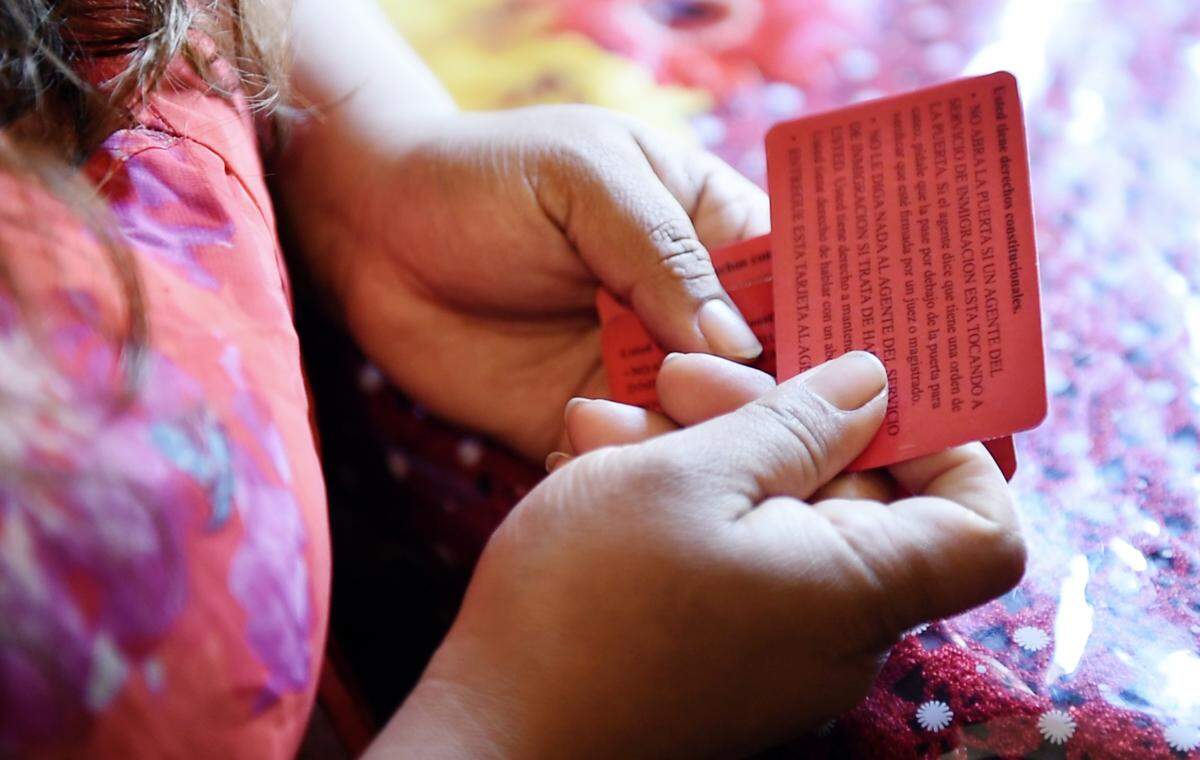
Immigrant advocates have advised her not to speak to ICE officials under any circumstance. They gave her a red card listing her rights to slide under the door to any ICE agents.
The local advocates say ICE officials routinely show up without warrants, convincing undocumented immigrants to sign deportation orders. Officials insist they do not need a court order to make administrative arrests of those suspected of violating immigration laws.
"ICE encourages all of those we encounter to comply with officers’ commands in order to ensure our ability to carry out our mission as safely as possible," Rocha said.
GLORIA'S STORY
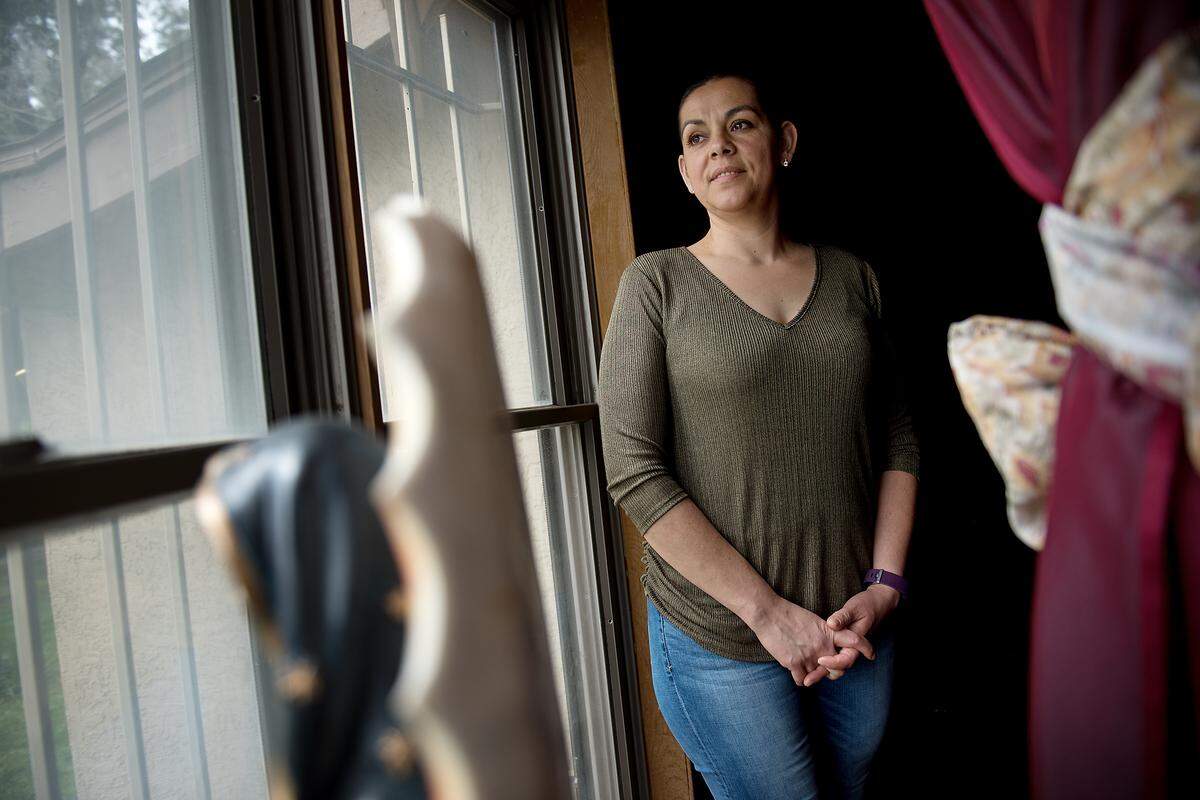
Gloria Sanchez drives to pick up her children at school each day, and her family already has devised a plan for her children if ICE officials show up at their door looking for her or her husband, who also is an undocumented immigrant.
The children know to go to a friend's home if Sanchez doesn't arrive at school to pick them up.
"They depend on me for everything," Sanchez said. "It's really sad that the government doesn't understand how the children will feel if their parents are taken away."
Sanchez and her husband try to keep a brave face and maintain a sense of optimism for their children's sake. "We try to act like nothing is happening, but we know that's not true," she said.
Sanchez applied for legal resident status in 2004, but it's been a few years since she's heard from immigration officials. The last she heard was that her application was transferred to an office in Philadelphia.
Sanchez works part time from home as a secretary for her sister's landscaping company. She'd like to find other part-time work, such as driving for a ride-sharing service like Uber, but she can't do that without a Social Security card.
Now, she prepares herself for an unexpected visit from ICE. Sanchez has a photo on her phone of the red card advising her of her civil rights. She also never opens her front door to a stranger. But she doesn't let that fear of deportation cripple her.
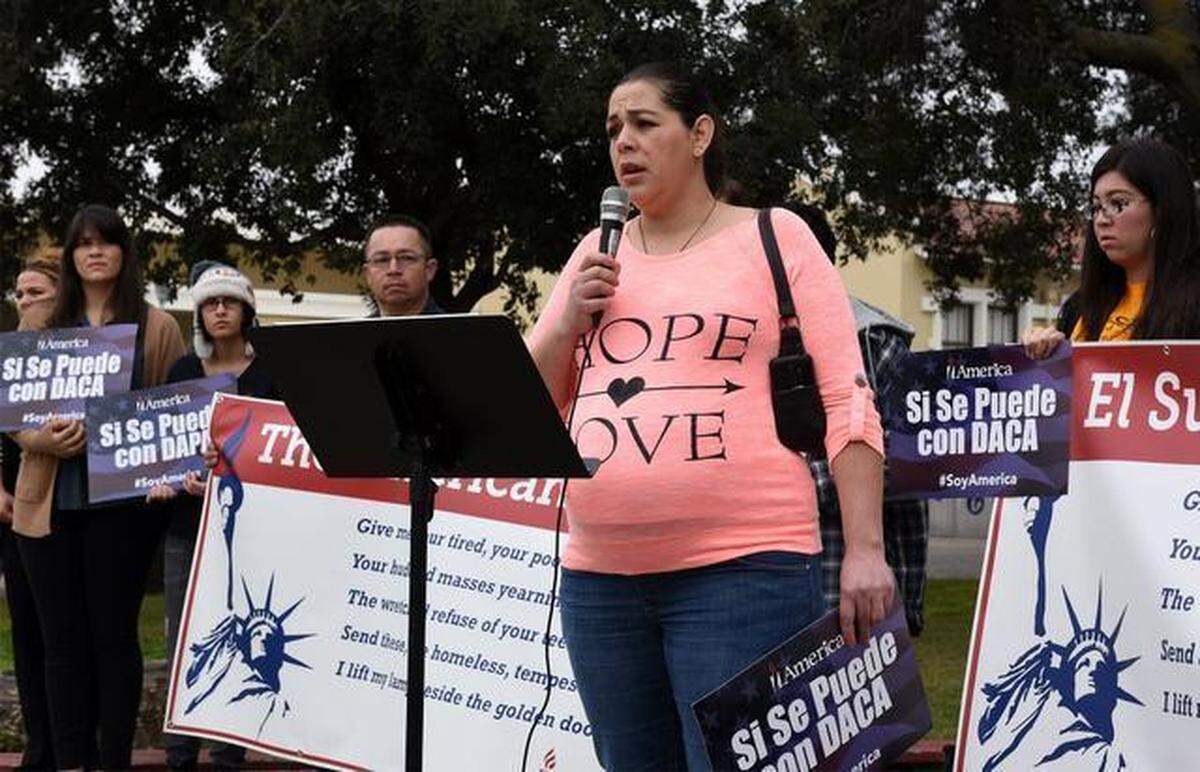
She has participated in local immigrant rallies and has been a vocal proponent for immigration reform that leads to legal U.S. resident status or citizenship.
"We're not supposed to live in fear. We have to have our heads held up high," Sanchez said. "If we all stay home afraid, then who's going to do something about it. ... I feel like I'm prepared. I know what to say, and I know how to defend myself. I know my rights."
Kim Martinez of Faith in the Valley, a local advocacy group, said they've heard stories about immigrants too afraid to drive. California Assembly Bill 60 has allowed more than 1 million undocumented immigrants, including Sanchez and Alma, to obtain driver's licenses.
Yet even these licensed drivers are afraid immigration agents will try to pull them over.
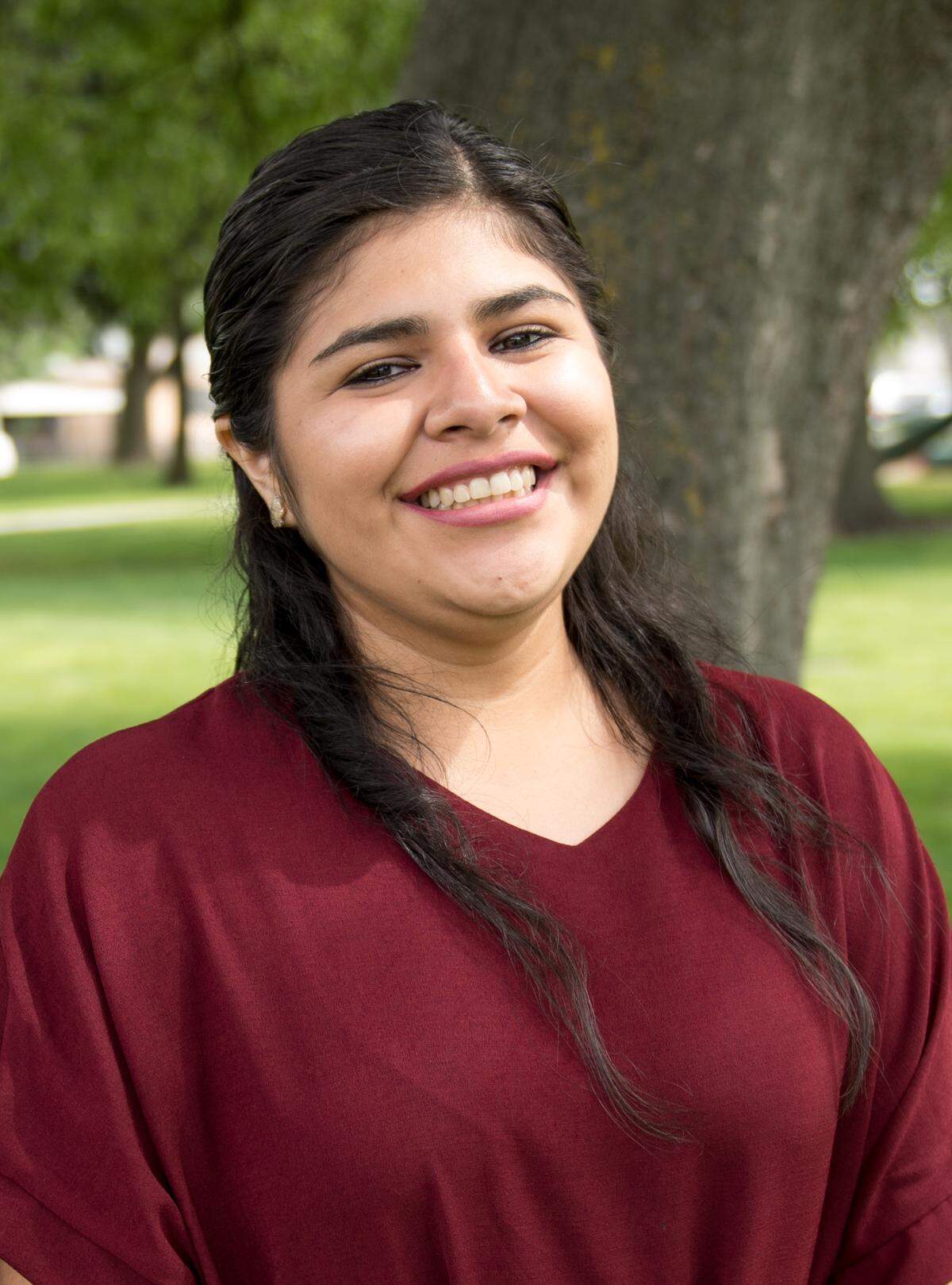
"Please live your life normally," Martinez urges undocumented immigrants.
But some of their worst fears already have been realized, such as the Delano couple who died in a crash last month after they tried to evade immigration agents. The couple initially stopped when the vehicle following them flashed its emergency lights. When the ICE officials emerged, the couple drove off again.
Their speeding vehicle drifted onto a dirt shoulder, overturned and struck a power pole, according to Delano police. The couple were pronounced dead at the scene and left behind six children.
Sanchez was 14 years old when her family left its home in Michoacan, Mexico. The family, with eight children at the time, was poor and lived in a small ranch house. Her father believed life in the United States would provide his children more opportunities.
The family took a bus to Tijuana, where they stayed overnight at a hotel. The following day, Sanchez remembers walking through the desert to cross the border with about 20 to 30 immigrants. They were ushered into the United States by three hired "coyotes." The group hid in empty canals from U.S. border patrol. They made it to the San Diego area. Sanchez's family was later picked up by relatives and driven to Modesto.
Sanchez graduated from Modesto High School. She and her husband have purchased a home, and their children have excelled in academics and athletics; their eldest is enrolled in college.
Returning to Mexico with or without her children is a scenario Sanchez doesn't want to consider. Mexico is a foreign land to Sanchez, a country where she says her family couldn't thrive.
"I feel like this is my home," Sanchez said. "The only place that I know is Modesto."
This story was originally published May 25, 2018 at 10:48 AM with the headline "Dodging Deportation: 2 women – one fearful, the other fierce – wait for the knock from ICE."