High-tech cars monitor Modesto and Stanislaus County air quality 24/7
AI-generated summary reviewed by our newsroom.
- State-funded hybrid cars collect localized air quality data in Stanislaus County daily.
- Aclima's nine-month project maps 10 pollutants to identify pollution sources.
- Community groups use data to push for enforcement and air quality improvements.
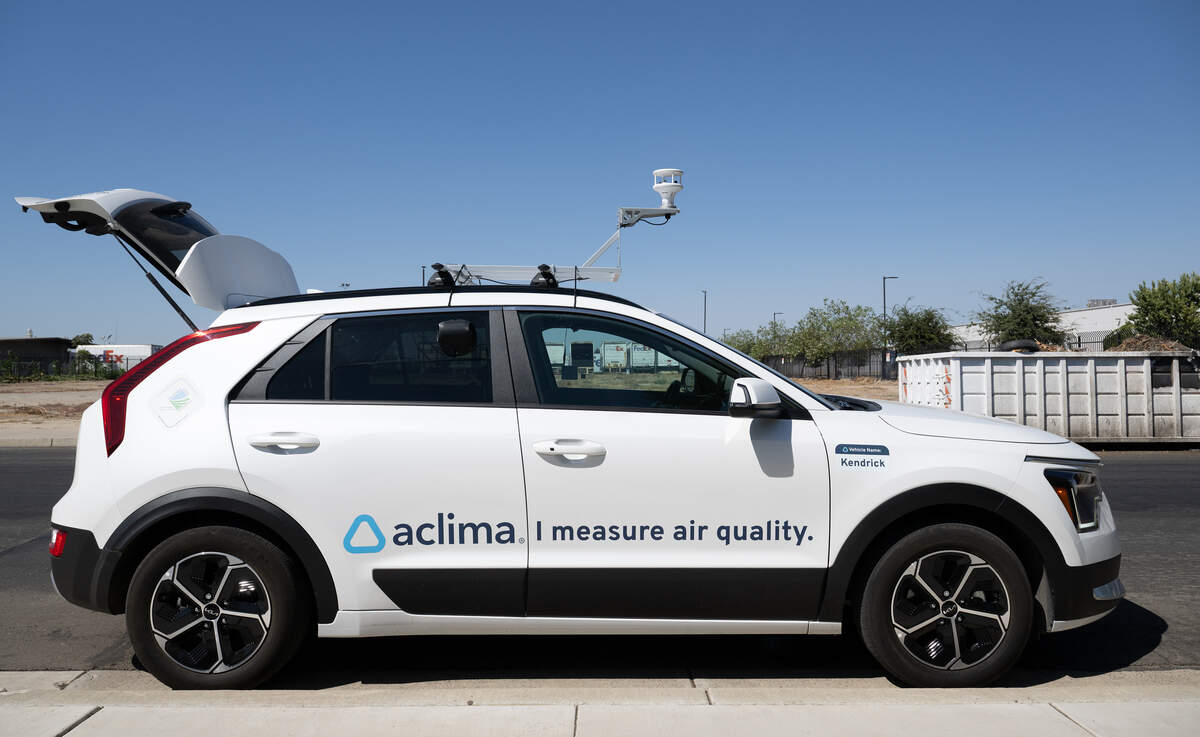
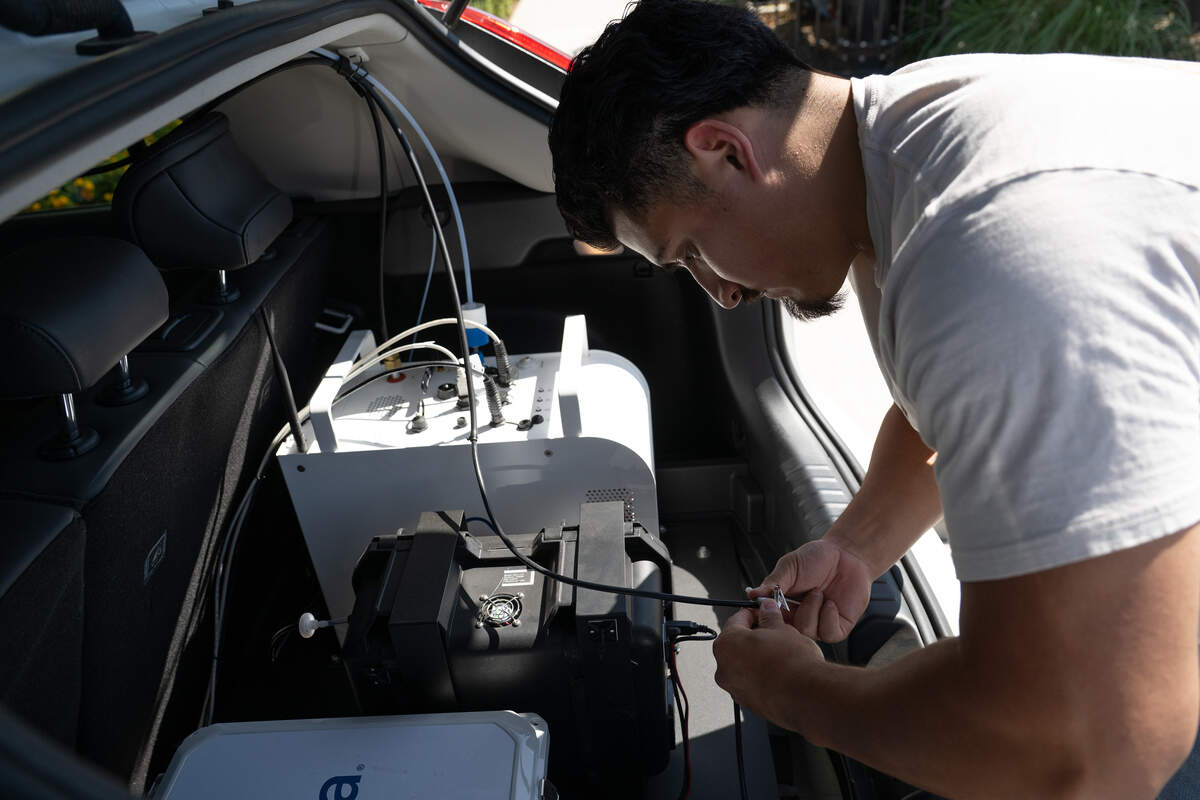
Before Jesus Cruz starts his shift, he has monitors and equipment he must ensure are in working order. Each trip begins with him checking a wind monitor on the roof and filters on the side of the hybrid car he drives, named “Kendrick.”
“Everything started up and I see all these green checkmarks, perfect,” Cruz said at the start of a workday one recent Friday.
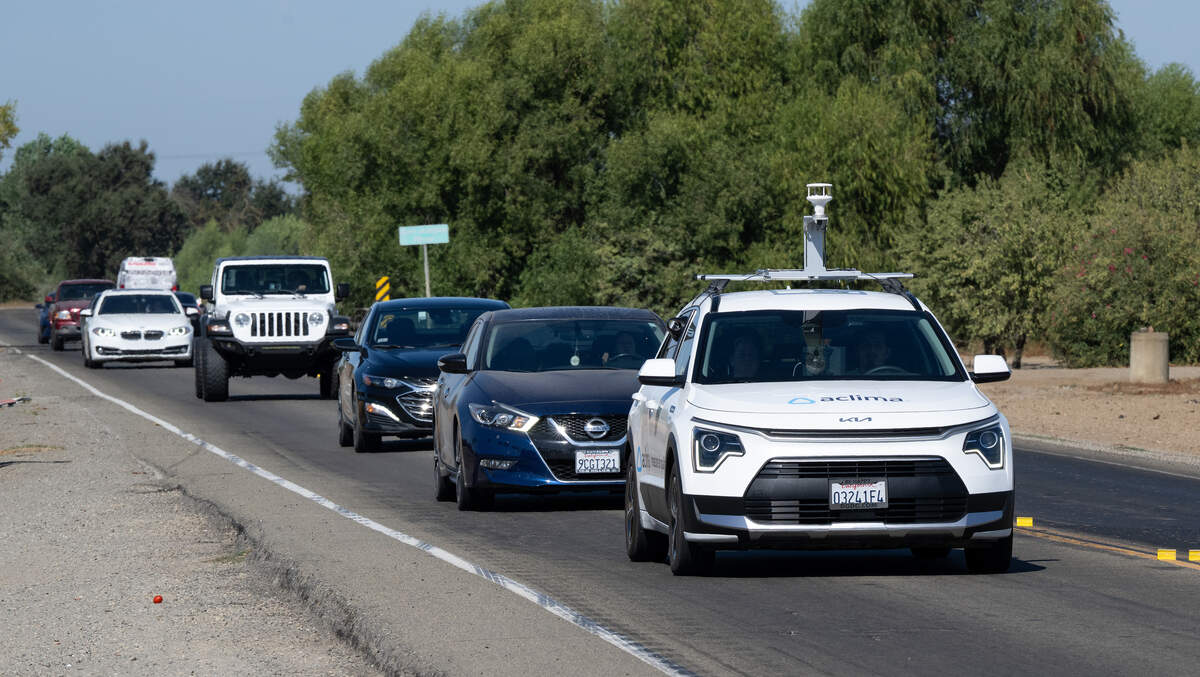
Cruz drives one of two California Air Resources Board cars in the area for Aclima, a company that runs an air quality analysis platform. The vehicles make their way through south Modesto and Stanislaus County’s West Side, monitoring the air quality for 10 pollutants every second, 24 hours a day, seven days a week.
The routes typically include small side-roads and service roads. Cruz said he often makes U-turns based on his prescribed route to capture as much data in as many areas as possible. Cruz said sometimes when he’s driving past warehouses or trees, his allergies are triggered. “Maybe the air quality is worse there because of the things they’re doing, but this thing helps to track stuff like that.”
The project is part of a nine-month, 64-region push funded by CARB to get much-needed data for regions with poor air quality and limited monitoring. That inadequate monitoring leaves residents with the understanding that their air quality is bad, but not indicating the specific sources and when.
The vehicles gather important data to help inform community, local and state leaders who advocate for mitigation efforts and potential enforcement for polluters.
The project is state-funded for regions that routinely get left out of larger pockets of money, even though they are continually nominated for funding as pollution-overburdened communities.
Lived experience is as valid as data
Ana Miscolta, a senior environmental project manager at Aclima, coordinates with community organizations and partners to help bridge the funding and data gap.
“We live in a world where we rely completely on hard data, on math and science, rather than the lived experience of community members, which are just as valid,” Miscolta said. “So when we provide this data, what we’re hoping is that we provide these community organizations, and in some cases, local elected champions who are doing the same work, a tool to continue the work they’re already doing.”
The data is used to map when and where pollutants are detected in the region.
Stanislaus County has two stationary EPA-certified air-quality monitors, one in downtown Modesto and the other in downtown Turlock, but they aren’t able to pick up granular data that would help identify sources of pollution in specific areas.
The preliminary data collected by Aclima in the Modesto area show pollutants from mobile sources like cars and trucks. In the winter, wood burning and wildfire smoke are major contributors to the county’s poor air quality. All of these pollutants can cause coughing, wheezing, lung issues and heart problems in the long term.
Gustavo Aguirre Jr., director of climate equity and environmental justice with the Central California Asthma Collaborative, said some areas in the Central Valley routinely get ranked as having the worst air quality in the state and the mobile air quality monitoring is meant to address this.
“We wanted to make sure that communities that were most affected by air quality, and oftentimes the most divested in, at least participate in capturing this hyper-local data,” Aguirre said.
Edgar Garibay, project manager for Valley Improvement Projects, said his group held workshops not just in west and south Modesto but also on the West Side of the county, in Patterson. “There’s different sources of pollution, so each community shares some of the different sources of pollution and bad air quality in the community,” Garibay said.
Through these workshops, community members drew up areas that they wanted monitored. Aclima now uses these community-driven maps to determine where to send their drivers.
Cruz, who lives in Modesto, doesn’t know what route Aclima has laid out for him until 5 p.m. the day before. Sometimes he doesn’t check until he’s in the car at the beginning of his shift.
On Aug. 29, he started his journey in south Modesto, but his route took him all the way to Grayson. On the way, tractors and other farm equipment passed by and dust blanketed the road.
“There’s sometimes when my whole week I’ll just be in Modesto and then there’s times when my whole week I’m out by Patterson or by Crows Landing or Grayson,” Cruz said. “I get a lot of people thinking that it’s a camera, waving at me, striking poses.”
Data tells a story for community to share
The vehicle is outfitted with sensors that monitor for fine particulate matter, ozone, nitrogen dioxide, methane, carbon monoxide, carbon dioxide, black carbon, total volatile organic compounds, benzene, toluene, ethylbenzene and xylenes.
Miscolta said the data collected by these cars will provide a nine-month average of pollutants. Once their data visualization tool is up and running , it will also show what times of day the pollution is better or worse in specific regions.
“The data we provide is extremely accurate, is extremely reliable,” she said. “And this on its own is enough to tell a story, for community members to tell their elected officials, to tell their local air districts that they want a particular change, that they want better enforcement, that they want better programs to protect public health.”
The funding for this project is in a precarious position long term. It’s part of California’s Cap and Trade budget, now rebranded as “Cap and Invest” and negotiations are ongoing at the State Capitol to extend that funding past 2030.
Cruz won’t see the readings he’s been taking every second of his shift until the project is over, but he said whether the information that gets released shows good or bad air quality, he thinks it’s good that they’re checking.
“Because if it’s good then it’s confirming things are working the way they are supposed to work — the air quality is not that bad, or maybe we can try to make it better,” Cruz said. “If it’s bad, then it’s like ‘Oh man, you got to do something about this — figure out what it is.’”
This story was originally published September 4, 2025 at 1:41 PM.