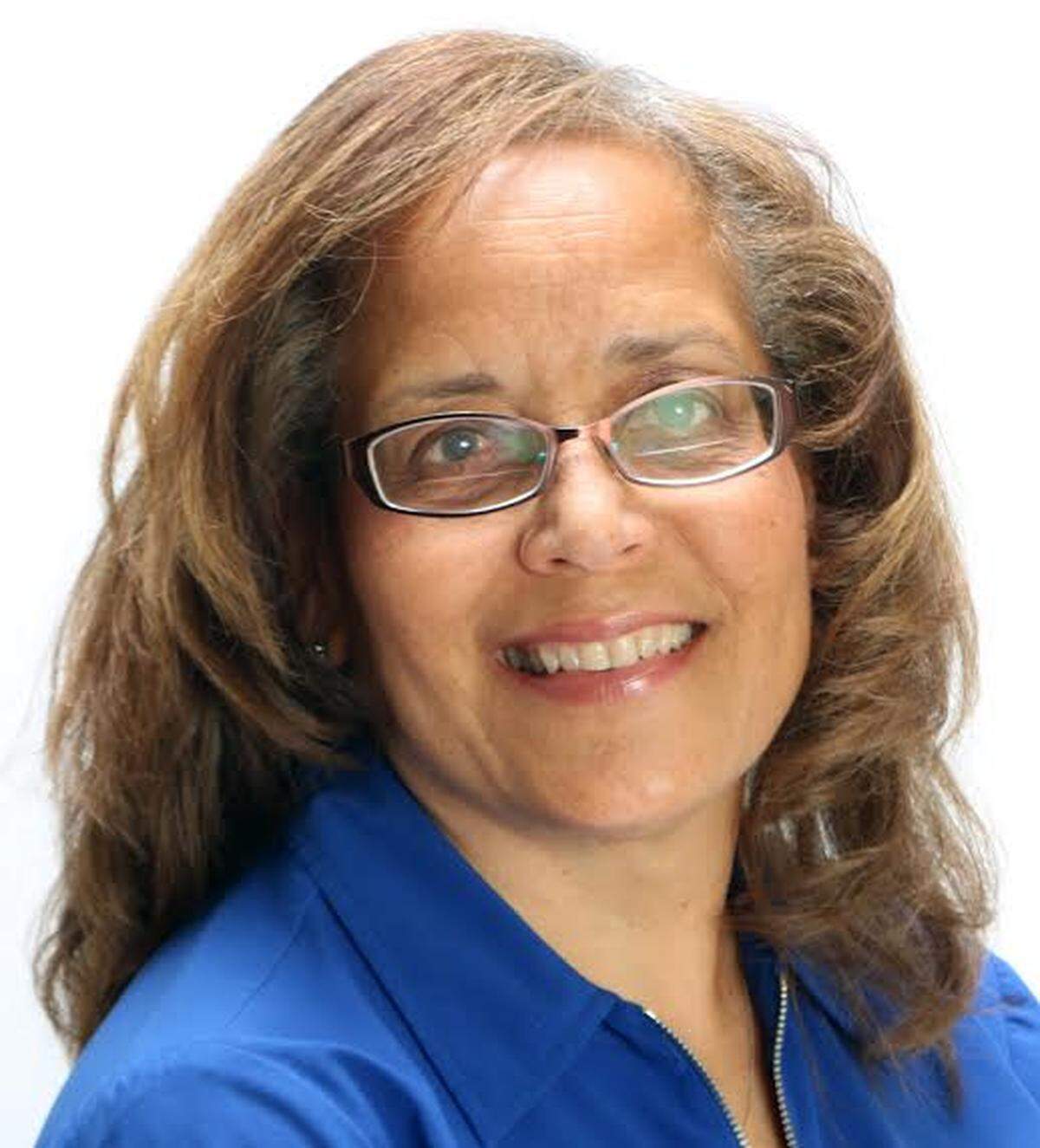
How Stanislaus County’s top health officer maintains calm in unprecedented storm
After 16 years of medical training and more than two decades on the job, Dr. Julie Vaishampayan, public health officer for Stanislaus County, was prepared for the science of the coronavirus pandemic.
But she wasn’t prepared for the lack of civility from some of the public she was working to protect.
After a contentious Board of Supervisors meeting about re-opening schools last Tuesday, Vaishampayan maintained the calm demeanor desirable in a leader during chaos. She sat down with The Bee to discuss some of her personal and professional challenges during the COVID-19 crisis.
“People are surprisingly uncivil quite frankly in emails and phone calls in what they say,” said Dr. V., her adopted moniker.
She said she receives about 200 to 300 emails and phone calls every day, and less than 10% of them are hostile but, “some are incredibly rude. They’re ugly.”
People accuse her of not knowing how to interpret data or how to do her job or even caring about the county.
Stanislaus County CEO Jody Hayes said that was not the case, calling Vaishampayan “one of the most misunderstood leaders in our community.”
“A lot of people question that she cares about the community,” Hayes said. “But she cares just as deeply as everyone on the team and has as much heart as anyone that I’ve ever worked with. She cares about all the members of this community, whether they’re a senior, a child or any of us in between.”
Vaishampayan said she and other health officers in the San Joaquin Valley have had threats to themselves or their families, even some following their kids to school.
“I don’t think there’s a health officer that hasn’t been (threatened),” she said.
Dr. Anthony Fauci, the nation’s top infectious disease expert, has had security assigned to him and his family because of death threats from those who disagree with him about the risks of COVID-19.
From April through mid-June, 27 public health officials have resigned, retired or were pushed out of their jobs due to the pressure, constant scrutiny or harassment, according to a report from Kaiser Health News and the Associated Press.
Vaishampayan said the support of her fellow health officers, as well as her county team, has been amazing and helped her contend with the difficulties.
“She’s a public health nerd, like most doctors,” said Kamlesh Kaur, a health educator and interim information officer for public health. “I’ve seen her passion shining through when working to control infectious diseases.”
She said Vaishampayan started monitoring COVID-19 in January even before it was a pandemic and feels fortunate the community has someone with that level of foresight and commitment.
The San Joaquin Valley Public Health Consortium of 11 county health officers in the region have a video-conference call every week and they stay in frequent contact with each other for support, as well as to exchange best practices for navigating through the crisis.
“We sort of have our own support group,” Vaishampayan said, “We talk nearly every day.”
She said all of the health officers are under different pressures and everyone is handling their own challenges, but it’s very helpful to talk with her colleagues.
”Some days are better than others,” said Vaishampayan. “I’m still here.”
She said her family helps to keep her going by engaging her in outside activities. Her husband is a cardiologist and two of their four adult children are living at home. The youngest is finishing her senior year in college and the other is working on his graduate degree with distance learning.
Vaishampayan said for keeping her sanity, “Baking is my current favorite.”
She also enjoys working in her vegetable and rose gardens and said, “I go out and deadhead roses when I just need to think.”
She described the intricate details, including the geometry of the correct angles, for properly removing the dead rose blossoms in the same manner as she would report the techniques of coronavirus testing.
Previous experience
Before joining Stanislaus County public health in 2017, Vaishampayan was the Chief of Communicable Diseases Emergency Response Branch, which is the group that plans for infectious pandemics and bioterrorism. She also served as the assistant public health officer for San Joaquin County.
“We’ve done a lot of planning over the years, we went through the pandemic in 2009 and we learned a lot of lessons from them and implemented them,” said Vaishampayan.
Although she felt somewhat prepared for a viral outbreak, she emphasized that the novel coronavirus is not the flu.
She described the coronavirus’ behavior as “the worst-case scenario,” because people spread it before they have symptoms, can spread it for a long time, and it’s carried in respiratory droplets.
“...Trying to figure out how to stop it has taken us a while. It’s just a different virus,” said Vaishampayan, “Everything that makes it harder (to control) has happened.”
Vaishampayan said one of the biggest lessons learned is, “do twice as much as you think you should, then maybe you won’t be behind.”
She said it’s easy to look back and see things that could’ve been done differently, but no one knew in the beginning how the virus was going to act.
“Everything changed really fast, (we needed to) go big really fast,” said Vaishampayan, “I thought we did, but it wasn’t enough.”
Dealing with naysayers
Vaishampayan said generally the community doesn’t know about the activities of public health until there’s a problem, and the critical role of preventing those problems is why she chose public health.
“I wanted to work to prevent the spread of diseases and improve health overall,” she said.
Generally, the community embraces advice from public health experts, but that hasn’t always been the case with the coronavirus.
“I respect different opinions, but I don’t respect the lack of civility,” said Vaishampayan, who grew up in Washington state, about 2 1/2 hours southeast of Seattle.
She said many people in the county are working tirelessly to fight the pandemic, but she is often seen as the public face, which means she also gets more of the hate mail.
“You just have to stay true to what you believe,” said Vaishampayan, “You have to read everything you can, evaluate everything you can and feel you’re doing what’s best for the community.”
She acknowledged not everyone will agree with her, as they may weigh the risks and benefits of any action differently than she.
She said individuals may only see the risks and benefits from their own perspective.
“But, I have to look at the whole county and that means all 560-some thousand people, the rich, the poor, the old, the young,” said Vaishampayan. “You have to balance everything.”
Hardest part personally
Vaishampayan said the unrelenting work is one of the hardest aspects of her job.
“It just doesn’t stop. It comes at you 24 hours a day, seven days a week,” she said,” I would love to have just one day when I could turn it off, but that hasn’t happened since January.”
The other major difficulty for her is that life goes on, even during the pandemic.
“In the middle of all of this, I had a nephew die suddenly,” said Vaishampayan. “It’s really hard when you’re away and you can’t support your sister who just lost her child.”
In addition, early in the pandemic, she had to put down her dog. She said, “So, it’s been difficult.”
Famed for maintaining her composure, she respectfully requested not to discuss the COVID-19 deaths in the county, because she didn’t want to cry in public.
But she did say, “Everybody is losing somebody, it’s just so heartbreaking.”
This story was produced with financial support from The Stanislaus County Office of Education and the Stanislaus Community Foundation, along with the GroundTruth Project’s Report for America initiative. The Modesto Bee maintains full editorial control of this work.
This story was originally published August 16, 2020 at 5:00 AM.