
This Sacramento ping-pong consultant worked on Timothée Chalamet’s ‘Marty Supreme’
Scott Gordon admitted his feelings evolved on the much-anticipated movie “Marty Supreme.”
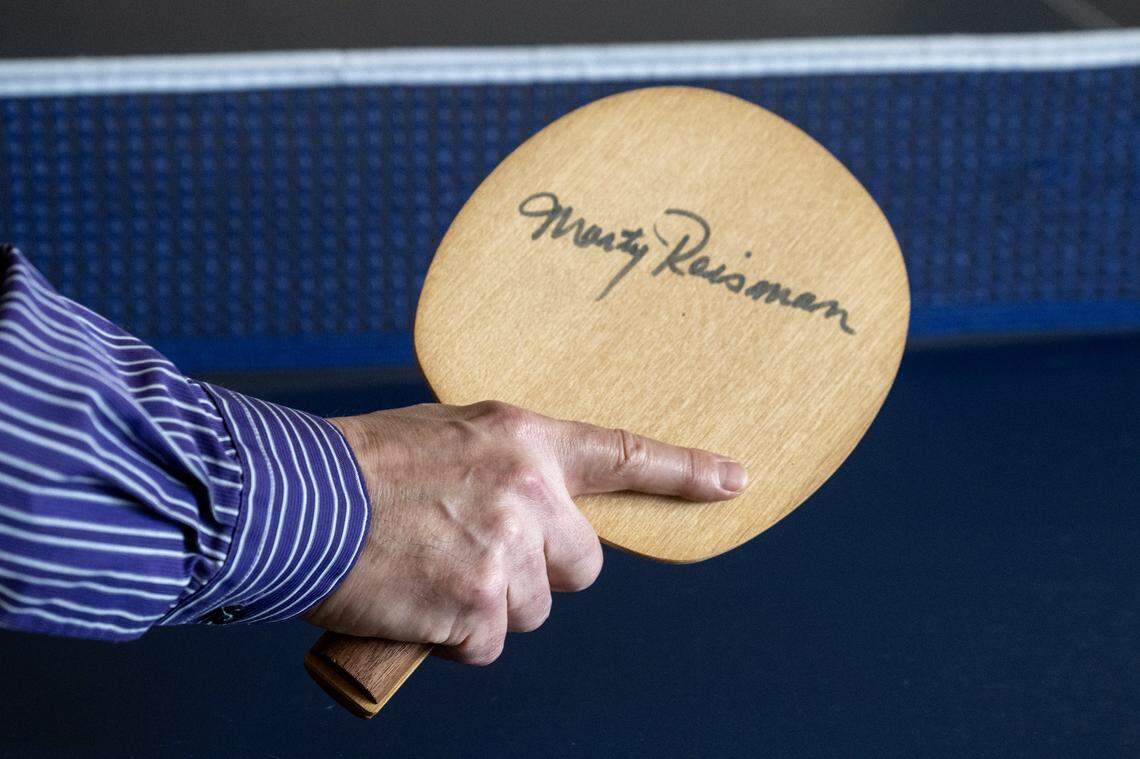
Gordon, 65, a longtime competitive table tennis player who lives in Carmichael, consulted on the Josh Safdie-directed film that opens Thursday and is about Marty Mauser, a fictionalized table tennis player. Mauser is played by Timothée Chalamet and is loosely inspired by Marty Reisman, a table tennis legend and Gordon’s friend.
Reisman, who died in 2012 at 82, wrote “The Money Player,” a 1974 autobiography that helped inspire the film. He was a one-of-a-kind figure, known for his magnetism, willingness to play table tennis exhibitions for money and fanatic support for a classic style of play known as hardbat.
Initially, Gordon was excited about a film being made about his friend. This grew to trepidation as the film entered production.
“As they started working on it and I was hearing things, then I started to get worried, naturally,” Gordon said. “I was thinking, ‘What if they don’t portray him right? Or what if the style of play that they show isn’t the hardbat style?’”
The feeling would linger as Gordon prepared to see the film for the first time at a screening in early December in Southern California.

How Gordon knew Marty Reisman
In 1997, Gordon, who was teaching at Sonoma State University at the time, flew to New York City to play in a hardbat tournament and to meet Reisman. Gordon had read “The Money Player” the year before and found it captivating.
Sean O’Neill, who is board president for the U.S. Table Tennis Hall of Fame and played the sport in two Summer Olympics, gave a book report on “The Money Player” in the fourth grade in the mid-1970s. By then, O’Neill was playing table tennis at a national level, wearing tracksuits every day and getting referred to as “the ping pong kid.”
“Once you get into ping pong, you can’t get out of it,” O’Neill said. “It’s just too much fun.”
Gordon travelled to New York hoping Reisman would sign his copy of the book. They met close to midnight in the lobby of the Gramercy Park Hotel, as Gordon would write years later about their friendship in an unpublished 2011 essay he provided to The Sacramento Bee.

“I had fully expected this story to end with ‘… we shared a cup of coffee, he graciously signed my book, I thanked him, and we shook hands,’” Gordon wrote. “Reisman, however, begins talking. He doesn’t stop. The satchel under his arm bulges with photos, articles, and other memorabilia, and the dapper man in the fedora is intent on sharing each and every story they invoke.”
This contrasted with Gordon, a computer science professor at Sac State. Jeff Mason, who coached Gordon in table tennis and is now based in Portland, Oregon, said he was a methodical and “very detail-oriented” player.
Prior to becoming a competitive table tennis player, Gordon was a tournament-level chess player. Stewart Katz, a retired attorney and a veteran of Sacramento’s chess scene, said Gordon topped out at an expert-level 2,100 rating. Katz remembered Gordon as being soft-spoken and somewhat introverted.
“I don’t know if I’ve ever heard of anyone actually being mad at him,” Katz said. “And I don’t think I’ve ever seen him actually get mad at anybody.”
Still, there were overlaps in Gordon and Reisman’s interests. Both men preferred hardbat table tennis, shunning the sponge bats that overtook the sport in the 1950s. Gordon ran the U.S. Association of Table Tennis’s hardbat subcommittee, which Reisman belonged to and was its most vocal member.
Gordon and Reisman wound up working frequently together. Their work included traveling to Europe. They also became friends, at one point talking on the phone every night. The calls could come at 1 a.m. in California, meaning Reisman was likely calling at 4 a.m. from his home on the east side of Manhattan.
That’s not to say Gordon had illusions about their closeness.
“I would meet people that would say, ‘I’m Marty’s best friend. You have no idea how close we are. We talk on the phone every day,’” Gordon said. “I probably met 20 people that he talked on the phone with every day for some period of time.”
Asked how his wife felt about the late-night phone calls, Gordon said she’d been “resigned to it.” But she might not have minded entirely.
“She was good friends with Marty, too,” Gordon said.
Getting involved with ‘Marty Supreme’
Josh Safdie, who didn’t respond to an interview request, previously collaborated with his brother Benny Safdie to jointly direct the 2019 hit “Uncut Gems.” They are known for their commitment to historical realism, Gordon said.
“One of the things that the Safdie brothers are really cognizant of is, if they’re placing one of their films in a certain period then they want all the details to match that period,” Gordon said.
Benny Safdie wasn’t involved in “Marty Supreme.” When Josh Safdie was preparing to make the film, he reached out to Will Shortz, editor of the New York Times crossword and the operator of a Westchester, N.Y.-based table tennis club. O’Neill said Shortz emailed one of O’Neill’s students, who reached out to him.
Josh Safdie sought a coach and table tennis choreographer and wanted something authentic to the film’s setting in the 1950s. O’Neill suggested Wei Wang, who played table tennis for the U.S. in the 1996 Summer Olympics and her husband Diego Schaaf, a ping pong consultant for “Forrest Gump.” (Wang didn’t reply to a request for comment. Schaaf was unavailable.)
Then Josh Safdie asked O’Neill if he had film footage of Reisman. O’Neill recommended Gordon, who is a board member for the U.S. Table Tennis Hall of Fame and is its “videographer extraordinaire,” O’Neill said.
Gordon had taken video at the 1997 hardbat tournament in New York City where Reisman, then in his late 60s, beat a player 21-0. The video helped bring a new wave of fame to Reisman, though this was far from the only footage Gordon had in his possession.
A 1990s documentary, “Legends of Table Tennis,” drew on American archival footage. Gordon followed up on this by reaching out to international archives to find more obscure clips. He would go on to make trips to Eastern Europe purely to search their archives.
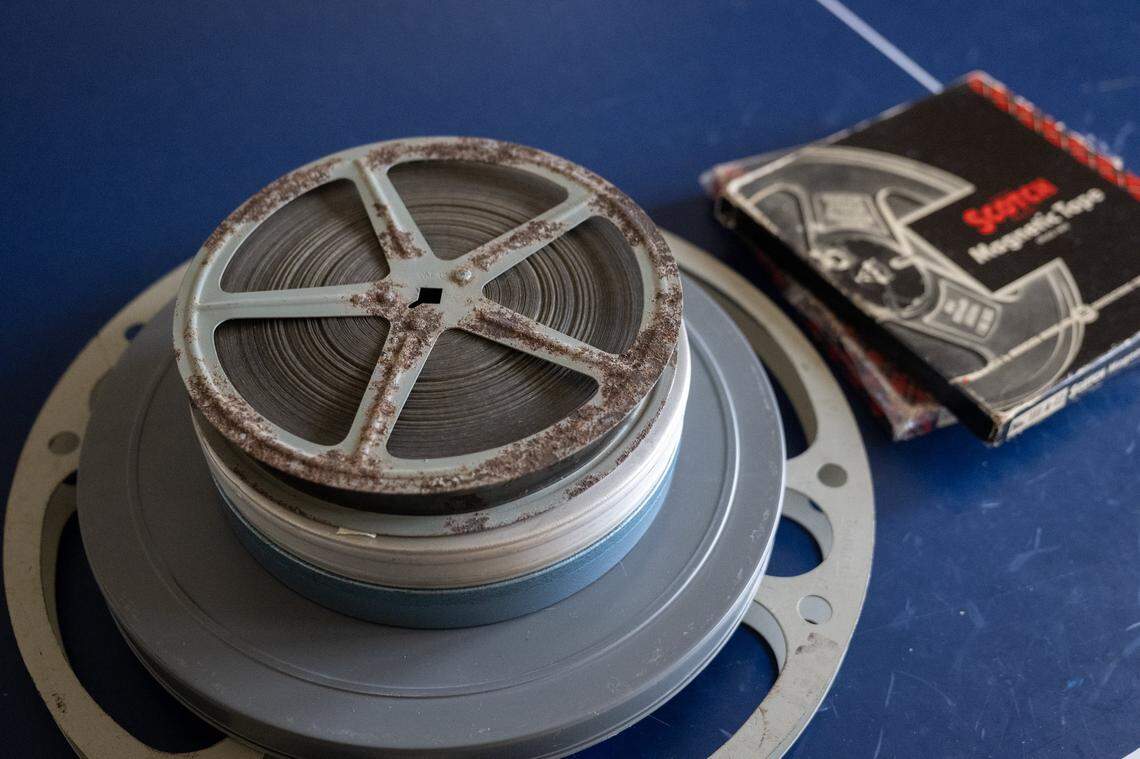
“I ended up amassing a huge library of footage of various kinds,” Gordon said.
This sort of footage can be invaluable for people wanting to make a true-to-life film. In general, authenticity is no easy feat. Gordon noted that during the casting of the 1993 film “Searching for Bobby Fischer,” about a childhood chess prodigy, the filmmakers deemed it easier to teach a young chess player to act than vice versa.
Max Pomeranc, the prodigy in that film, said the filmmakers had found him when he was in second grade and at his chess club at PS 9 in Manhattan. He credited others in the cast, which included Joe Mantegna, Laurence Fishburne and Joan Allen with helping elevate his performance.
“It’s a level of talent and professionalism that I assume as a kid, there’s a degree of osmosis,” said Pomeranc, 41, who lives in Brooklyn and is director of communications for Chess.com.
Gordon agreed to be a consultant for “Marty Supreme,” interacting with Josh Safdie and people from the film’s wardrobe and props department. He sent extensive footage to Schaaf depicting hardbat table tennis.
Seeing the film
Gordon and O’Neill had options when it came time to see the film they helped create.
O’Neill traveled to New York City in mid-December where he saw the film at two different screenings, presenting a table tennis paddle to Chalamet at one of the screenings. As for Gordon, he saw “Marty Supreme” on Dec. 8 at a screening at the Samuel Goldwyn Theater in Beverly Hills.
Gordon’s anxiety about the film gave way to a different feeling.
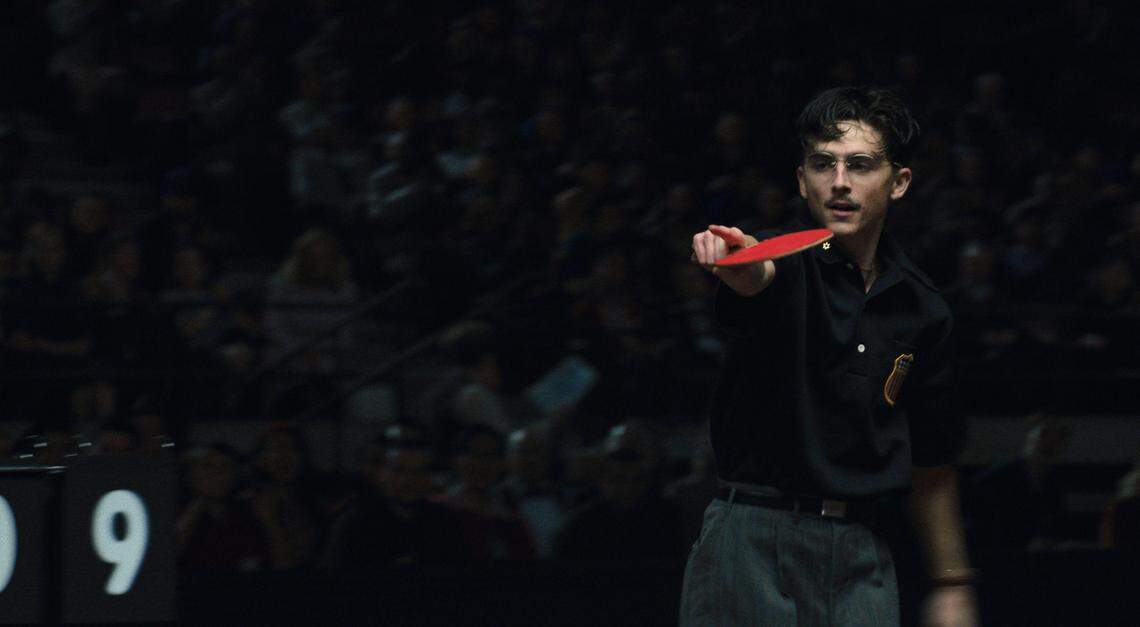
“When I saw the film, I was delighted, actually at the job that they did,” Gordon said. “They did a great job at showing them playing in a classical way that you would have seen in the ‘40s.”
At a reception after the film, Gordon heard about the archival film clips he’d provided. “One of the actresses, she said, ‘Oh yeah, Josh made us watch all that footage,’” Gordon said. “And she said, ‘We were really taken.’”
The movie included some historical liberties, though Gordon was forgiving.
“It’s remarkable in that watching it, it’s a steady stream of things that didn’t happen in reality but that make for a good movie,” Gordon said. “But it’s also remarkable how many times they’re showing something that did happen, sort of incidentally.”
Gordon noted the inclusion of a character clearly based on Polish table tennis player and Holocaust survivor Alojzy “Alex” Ehrlich.
“Marty Supreme” has drawn rave reviews in early going, with a 95% certified fresh rating on Rotten Tomatoes through 147 reviews. The Hollywood Reporter listed Chalamet in late November as a frontrunner for an Academy Award nomination for Best Actor.
Gordon conceded that his expectations for Chalamet’s performance had been tempered.
“Marty had such charisma and panache and elegance, there’s no way you’re going to take somebody who’s not a player and make them be able to play really elegantly like Marty did,” Gordon said. “And so I wasn’t expecting that.”
But he noted that Chalamet’s ping pong strokes were period-correct. And Chalamet captured Reisman’s personality, Gordon said.
“What he did have was Marty’s wit and humor and quickness to him,” Gordon said. “Marty did everything at a fast speed and with this hilarious banter always and he was very endearing. If he wanted to make your friendship, it was going to happen.”
This story was originally published December 24, 2025 at 5:00 AM with the headline "This Sacramento ping-pong consultant worked on Timothée Chalamet’s ‘Marty Supreme’."
CORRECTION: Scott Gordon achieved an expert level ping pong rating. An earlier version of the story incorrectly stated he was just shy of expert level.
