Despite complications due to COVID-19, census outreach in Stanislaus County continues
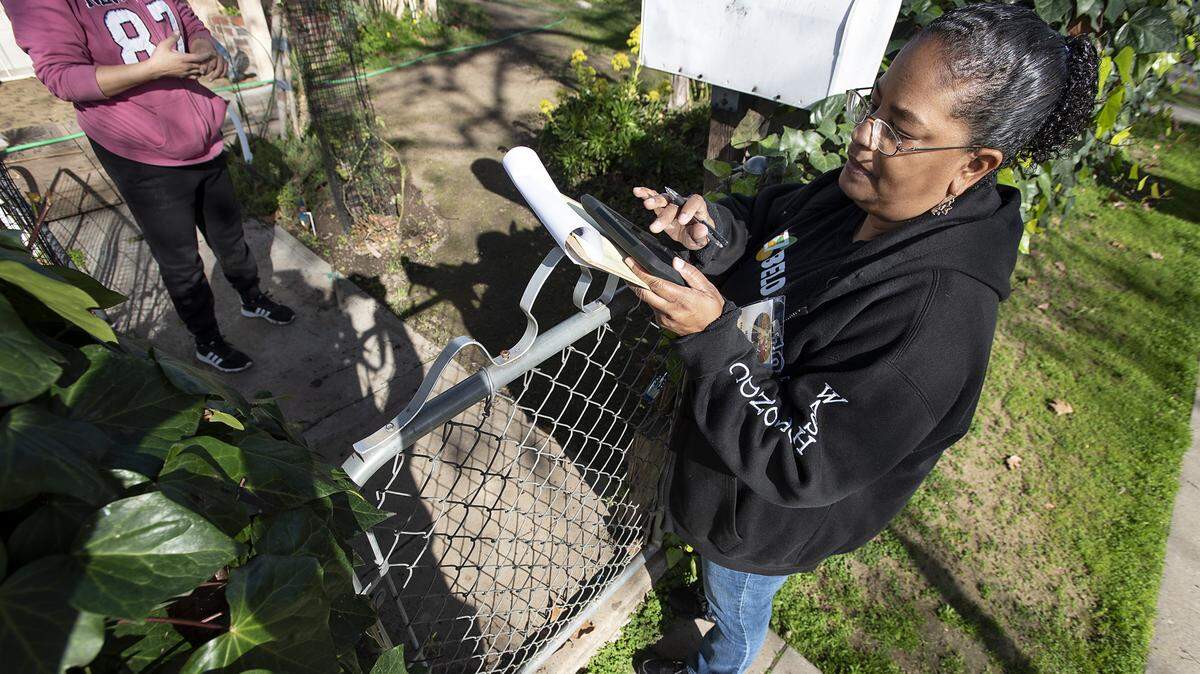
Three months into the 2020 census, Stanislaus County is close to matching its 2010 self-response rate, local officials say, but there’s still work to be done.
As of July 21, the county has a census self-response rate of 64.9%, according to the California Census Office. The 2010 census self-response rate for Stanislaus County was 66.7%.
This year’s count has been further complicated by the COVID-19 pandemic, said Elizabeth Talbott, co-chair of the Stanislaus County Census Complete Count Committee and a councilmember in Waterford. Stanislaus County’s numbers were low in 2010, with about a third of residents not completing the census, Talbott said, and her committee is working actively to ensure the 2020 count is significantly higher.
The decennial census is administered every 10 years as mandated by the Constitution, and counts every person living in the United States. Census data then determines the number of congressional seats awarded to each state, as well as the distribution of federal funding. Demographers expect California — which currently has 53 congressional seats — to lose one seat after this census.
For Talbott, losing that seat in Stanislaus County would be one of the worst outcomes of an undercount.
“Our valley and our region in particular definitely need to have a voice in Washington, so I would hate for us to have that be negatively impacted,” she said.
To ensure an accurate count, Talbott and her committee are partnering with a number of local organizations who have been doing community outreach to inform residents about the census for months. They’re hoping that by engaging with communities through their leaders and gathering spaces, they can build trust and get across just how crucial their participation is.
Outreach has changed since the coronavirus pandemic hit the county, but Talbott and her colleagues are adapting to the changing situation with more targeted efforts and a shift to social media to ensure every Stanislaus County resident is counted.
In addition to congressional representation, data gathered during the census also determines the distribution of federal funding by different programs and departments. In fiscal year 2015 alone, the Census Bureau determined that 132 programs used census data to distribute more than $675 billion in federal money.
These funds are allocated toward more than 100 federal programs, including Medicaid, Head Start and the Supplemental Nutrition Assistance Program (SNAP), as well as communities across the country to help fund infrastructure and services.
California received about $77 billion in census funding in 2015, according to the most recent data available. That number amounted to more than 80% of the total federal funds the state received that year, according to the Public Policy Institute of California (PPIC). Federal funding, including that from the census, accounts for more than one third of all the state’s spending, PPIC found, totaling more than $100 billion in 2018.
Talbott said she expects the official population counts in cities throughout the county to rise — sometimes dramatically — but an undercount could still spell a loss of up to $2 billion dollars in federal and state funding, county officials said.
Transitioning to social media outreach
Stanislaus County’s census committee knew they not only needed to remind residents to fill out the census starting April 1, but also build relationships with communities that traditionally have lower response rates and less trust in the confidentiality and security of the census process.
Much of the county’s community outreach has been coordinated by El Concilio, an agency providing services throughout the San Joaquin and Stanislaus counties, and other organizations it partners with that connect directly with specific groups across the area.
Damian Martinez, the 2020 census contract manager for Stanislaus County, said community outreach, as well as partnering with community leaders who act as “trusted messengers,” has helped get the message across.
“We’ve had a really great plan, and that’s kind of bearing fruit with the high response rate,” he said.
Initially, much of El Concilio’s outreach was focused on in-person interactions, said site supervisor Lynnette Lucaccini.
Community leaders, subcontractors and other representatives would go to community centers and churches to speak with residents about the census. One group had planned a mobile station with information and assistance that could travel around the area.
But the coronavirus pandemic rendered many of their plans impossible.
With a ban on large gatherings and social distancing guidelines in place, El Concilio, the county and their 10 partners — each providing expertise and outreach within a specific community — had to shift gears toward a robust social media outreach strategy, while targeting those areas that have historically low completion rates. Stanislaus County has a number of so called “hard-to-count tracts” — defined by researchers as census tracts with self-response rates lower than 60% — and the county’s task force is especially focused on reaching residents in those areas, where census self-response levels can be as low as 40%.
Parts of south and west Modesto, for example, are considered hard-to-count, and community outreach is especially crucial in those areas. Stanislaus County as a whole has historically had a lower self-response rate than some surrounding counties. Santa Clara County, for example, reached 74% in 2010, and Alameda County’s self-response rate was 70.2%.
With the pandemic, El Concilio has also been communicating relevant health information and updates about changing state and county guidelines. With 73% of new COVID-19 cases in the county affecting the local Latino population, Lucaccini said “COVID has just taken front and center.” Now, residents get information about COVID-19, voter registration and the census all in one place.
“We just feel like whatever we are doing with COVID, we want to make sure that we’re also attaching a census message and reaching out (to residents),” she said.
Building trust in the process
Those conducting outreach are also being mindful of the fear and confusion regarding the census among certain communities, especially those with undocumented immigrants.
A newly released Trump administration memo seeks to exclude undocumented immigrants from the 2020 census, and has already received push-back from state Democrats and Gov. Gavin Newsom. There are an estimated two million undocumented immigrants in California, many of them Latino.
“In California, we will not back down from our historic work to achieve a fair and accurate Census count,” Newsom said in a July 21 statement. “To all Californians, including members of our immigrant communities, know that this is your home, and it is your right to be counted here.”
The memo comes almost a year after the Supreme Court struck down attempts by the Trump administration to include a citizenship question on the 2020 census. Experts and advocates alike had deemed the move dangerous to the count and warned of a drop in response rates among communities with high percentages of immigrants.
After the question was removed, Latino communities specifically became the focus of a $500 million ad campaign by the Census Bureau to assuage fears about the census and its security. (It’s still asked on other Bureau surveys that are administered on a different schedule to smaller groups.) The Bureau, as well as community advocates, have worked to assure communities of the confidentiality of census data, which is only released for demographic purposes and not shared with other government agencies.
“A lot of people have been really fearful of that and (there’s been) a little bit of skepticism of ‘How confidential is my information?’” Talbott said.
Getting the message out
The 2020 census officially kicked off on April 1 and has been extended into October due to the coronavirus pandemic. It’s the first census to be administered online in addition to the traditional mail-in and telephone options. With the digital option came worry from experts about the security of the online census and its susceptibility to hacking, since the technology has been largely under-tested.
Since 2017, the census has been on the Government Accountability Office’s (GAO) list of high-risk government projects due to cybersecurity issues and concerns about a lack of enumerators, or census-takers, who follow up in person with households that don’t complete the census.
In early July, the Bureau announced that 900,000 had accepted offers to work as enumerators — who follow up in person with households who haven’t completed the census — and that it would take steps to ensure their safety during the COVID-19 pandemic. Most enumerators will begin training July 31 and start their actual work Aug. 11, according to a report from GovExec.
In addition to a robust social media campaign, El Concilio is running ads on local Latino radio stations, and inviting notable figures, like former astronaut José Hernández, to encourage people to fill out the census. El Concilio has also been using geofencing, a technique that localizes mobile ads to users in a specific area. In this case, someone in Stanislaus County who clicks on a census-related ad will continue to receive more of them, in hopes that they take the time to fill it out.
Partner organizations are also distributing door hangers with relevant information in hard-to-count areas like west and south Modesto and Crows Landing. Lucaccini said that the online option is making the census more accessible to some, who have the internet access required to take it, but it comes with its own challenges. She recommends not trying to complete it on a smartphone, where the website has trouble loading.
Still, she said that for many, the census was less time-consuming than anticipated.
“People were thinking that it was going to be a really complicated ordeal but really once they get in there and go and use it, we’ve just had feedback that folks were surprised at the ease of completing it,” she said.
Talbott, Lucaccini and Martinez are all hopeful that the county can exceed its 2010 self-response rate in the coming weeks.
“The competitive part of me (wants) to make sure that we come in higher than we did 10 years ago,” Lucaccini said. “(A self-response rate of) 75% would be fantastic and I do hope that we can get that but for me, I’ll be really happy if we get 70%. If we make it over 67.1, then I’ll feel like we’ve had a good effort.”
This story was produced with financial support from the Stanislaus Community Foundation, along with the GroundTruth Project’s Report for America initiative. The Modesto Bee maintains full editorial control of this work.
To help fund The Bee’s economic development and children’s health reporters with Report for America, go to bitly.com/ModbeeRFA
This story was originally published July 28, 2020 at 5:00 AM with the headline "Despite complications due to COVID-19, census outreach in Stanislaus County continues."