
Video details Stanislaus River restoration effort
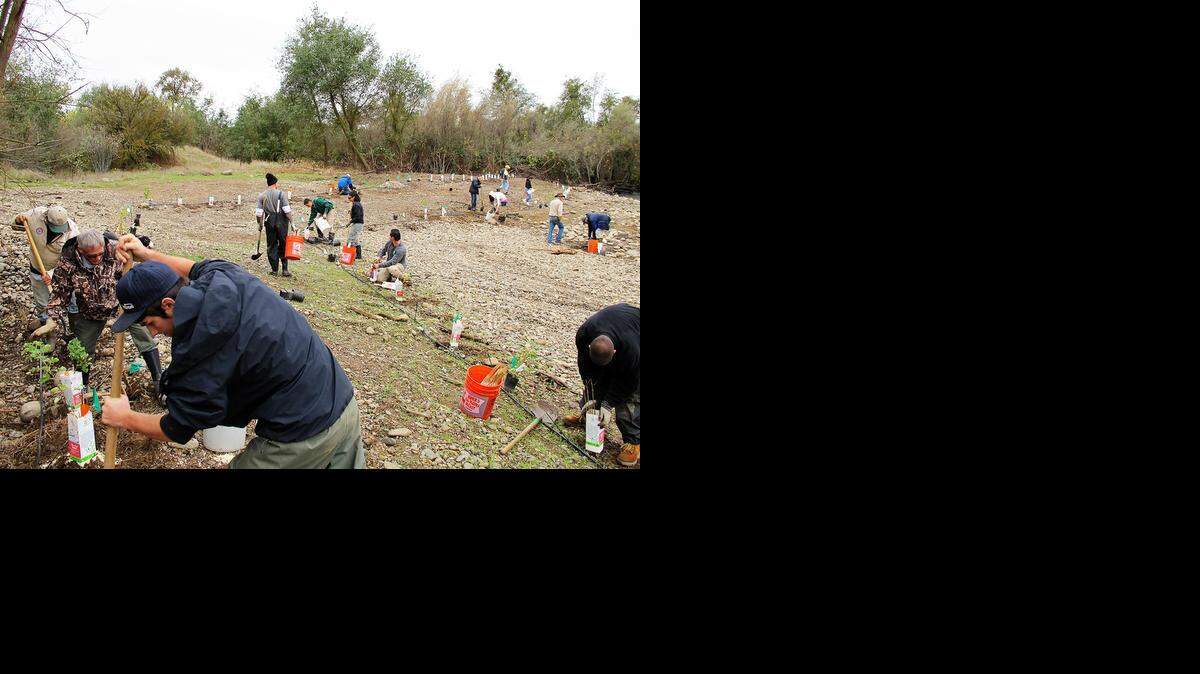
Fishbio, an Oakdale firm that does fisheries research and conservation projects, has created an 11-minute video detailing recent efforts to help salmon and steelhead trout on the Stanislaus River.
“Replenishing a River: Stanislaus River Honolulu Bar Restoration” documents how biologists, engineers, technicians and volunteers spent about two years creating fish habitat along the river between Oakdale and Knights Ferry.
The Honolulu Bar project focused on a 21/2-acre site that was part of a larger gravel dredge bar in the river near Orange Blossom Road.
Its intent was to restore and create vital habitat for adult fish to spawn and juvenile fish to thrive. Those fish then migrate downstream through the Delta and San Francisco Bay to the Pacific Ocean.
The project was completed in 2012, but the video – which includes underwater photography, still images and narration – was completed just recently.
The $1.1 million effort was financed by two government agencies – the Oakdale Irrigation District and U.S. Fish and Wildlife Service. Cbec Eco Engineering from Sacramento and volunteers from the nonprofit River Partners also worked on the restoration effort.
Historically, tens of thousands of salmon returned to the Stanislaus River to spawn each year. But this year, fish counts show only about 6,000 returned.
Benefits from Honolulu Bar restoration efforts are expected to start showing up next year as increased numbers of adult fish return to the habitat where they spent their youth.
Diminished habitat in the river is believed to be a key factor in declining fish populations.
The U.S. Fish and Wildlife Service’s Anadromous Fish Restoration Program has a goal to double the natural production of salmon and trout in Central Valley rivers and streams on a long-term, sustainable basis. The Honolulu Bar project was expected to help in that effort.
The video shows how workers used heavy machinery to lower the level of the island at Honolulu Bar, allowing water to flow over it.
Rock and dirt were screened and separated, and the quality material reused. It was part of more than 3,300 cubic yards of gravel used to create spawning beds and juvenile habitat.
Non-native vegetation was removed, and box elders, willows and cottonwoods were planted to shade the river and support insects that fish eat.
A choked side stream on the north side of the island that often suffered from low flows, stranding salmon nests and young fish, was reconnected to the main river.
Fishbio employees installed and continue to operate the underwater cameras that record and count every salmon that migrates upstream each year to spawn.
“Balancing fishery and water resources is complicated,” said Doug Demko, Fishbio’s president, in a news release. “It’s important that we continue to improve our understanding of fish populations so we can effectively improve their habitat. Doing so will ensure that both fish and agriculture survive.”
Two Oakdale residents who work for Fishbio played key roles: Jason Guignard was the project leader and Andrea Fuller handled the permitting process.
Demko praised OID for helping manage Stanislaus River fishery resources. He said the irrigation district “contributes more to our scientific understanding of our local fishery than all the government regulatory agencies combined.”
Fish, farming and water resources “have to live together in a healthy manner,” said Steve Knell, OID’s general manager, in the news release.
“You cannot use river assets and then not work to protect those river assets,” said Knell, noting how the river adds value to agriculture and the community as a whole.
This story was originally published December 15, 2014 at 3:29 PM with the headline "Video details Stanislaus River restoration effort."