
Merced ag industry scrambles to survive drought
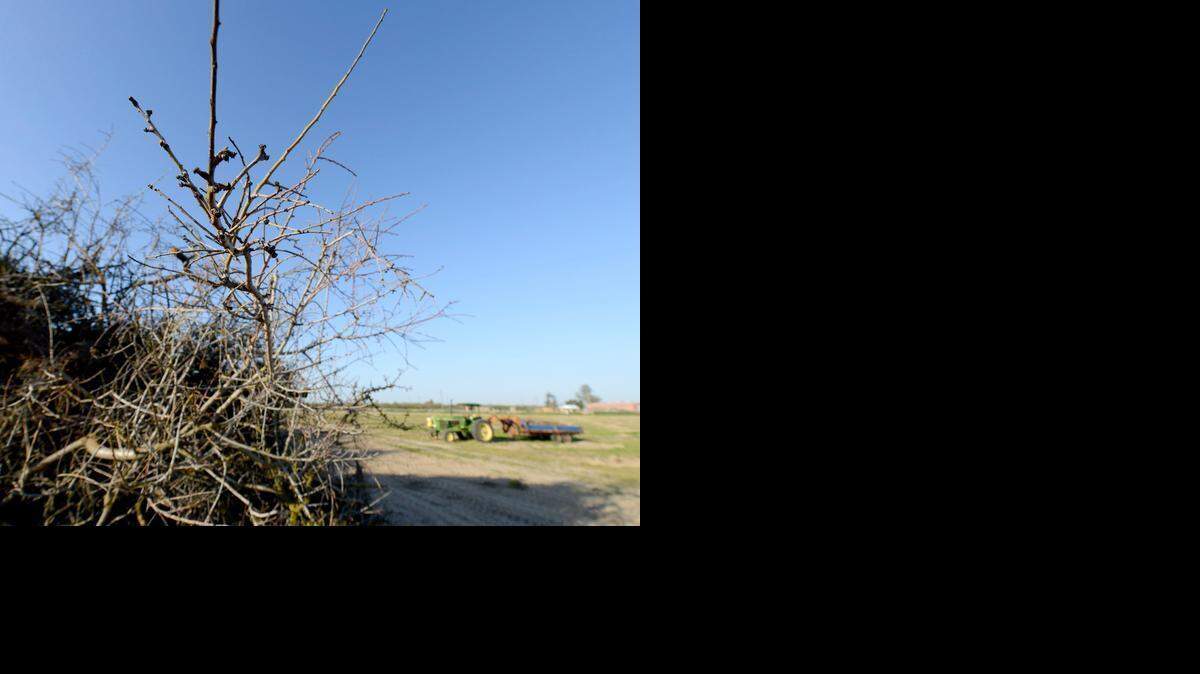
Winton dairy farmer Ray Veldhuis won’t be hiring any extra workers this year as he prepares to survive a fourth consecutive drought year in Merced County.
Typically, in a non-drought year, he hires about 10 seasonal workers. Veldhuis said, like many farmers in Merced County, he’s going to have to fight this year just to maintain the 50 employees he staffs full time.
“A lot of (farmers) will be changing how they do things: buying fewer supplies in town, buying less fertilizer, hiring fewer people or laying people off,” Veldhuis said. “People who can’t get work here will move their families to other places where they can get work, and they’ll be taking their kids out of our schools. It’s just a snowball effect.”
News earlier this week that Merced Irrigation District farmers will not receive any water from Lake McClure this year didn’t surprise anybody involved in agriculture in Merced County, Farm Bureau President Amanda Priest said.
“But actually hearing the news was still a punch in the gut,” Priest said. “It really cemented the reality of the situation we’re in now.”
That reality, MID confirmed, is that Lake McClure stands at just 8 percent of its capacity and regulations prevent any water diversions for farmers once the lake falls below 11.5 percent of capacity.
The only water available through the district this year will come from groundwater pumping and the district will have a miniscule amount – less than 60,000 acre-feet – to distribute to its 2,200 growers.
Typically, the district supplies as much as 400,000 acre-feet per year, according to General Manager John Sweigard. Irrigation water is measured per acre-foot, which is the amount of water it takes to cover an acre of land a foot deep, about 325,900 gallons.
The limited water that is available can be distributed only to farmers fortunate to work near an MID well, district spokesman Mike Jensen confirmed. The exact number of farmers in danger of receiving zero MID water this year remains uncertain.
Uncertainty has become a familiar theme for farmers during the nearly half-decade drought in Merced County.
Zachery Lewis, whose family grows almonds and raises cattle in Winton and Atwater, said he would “come up with something.”
“We’ll buy different types of feed for the cattle that are cheaper than alfalfa,” he said. “Alfalfa and everything else is going to get more expensive. That’s how it’s going to affect everyone. The prices on everything – hay, chicken, beef, groceries – it’s all going to go up. It’s a total domino effect.”
In 2011, the UC Merced Cooperative Extension reported agriculture as the county’s top industry – about $3 billion in raw-product value annually – and its largest employer, with about 20 percent of county residents working in agriculture-related jobs. The report rated Merced County as the nation’s “fifth most important (agriculture) county.”
The Cooperative Extension also noted numerous regional businesses, services and processors depend on agriculture, ranging from construction and engineering to banking and insurance, among a host of other fields.
A report published last year by the University of California, Davis, estimated the total statewide cost of the drought in 2014 at about $2.2 billion, with more than 17,000 seasonal and part-time jobs lost throughout California. The report said the Central Valley would be the region hit hardest, losing about $800 million in crop revenue and spending nearly $450 million on pumping wells.
The UC Davis Agricultural Issues Center is expected to publish an updated report on the total 2014 impact later this year, a department official confirmed Friday.
David Doll, a farm adviser at the Cooperative Extension in Merced, said total impact this year of the drought remains uncertain in terms of lost revenue and jobs, but he believes “it will be worse than it was last year.”
“It really is important that people start understanding that this really is a natural disaster,” Doll said. “People are going to have to realize that we have a finite resource and people are going to start jockeying for position over this resource.”
One of those looming water fights is likely to come from the state’s still developing Bay Delta Water Plan and a proposal seeking to increase the flows of water on the Merced River for salmon and wildlife habitat to the San Francisco Bay Delta. Sweigard said that proposal, if enacted, would further reduce irrigation resources for farmers.
Sweigard said he hopes Merced residents would join farmers in the coming weeks and months to help develop a plan that better suits agricultural needs and protects wildlife habitat. More information about MID’s position on the Bay Delta Plan can be found on its website, mercedid.org.
In the meantime, farmers continue scrambling for short-term solutions to make it through the coming year.
“It’s just survival mode,” Veldhuis said, “hanging on to what you have.”
Sun-Star staff writer Rob Parsons can be reached at (209) 385-2482 or rparsons@mercedsunstar.com.
This story was originally published March 6, 2015 at 9:18 PM with the headline "Merced ag industry scrambles to survive drought."