Here’s how classroom experience beats distance learning, retiring Modesto teacher says
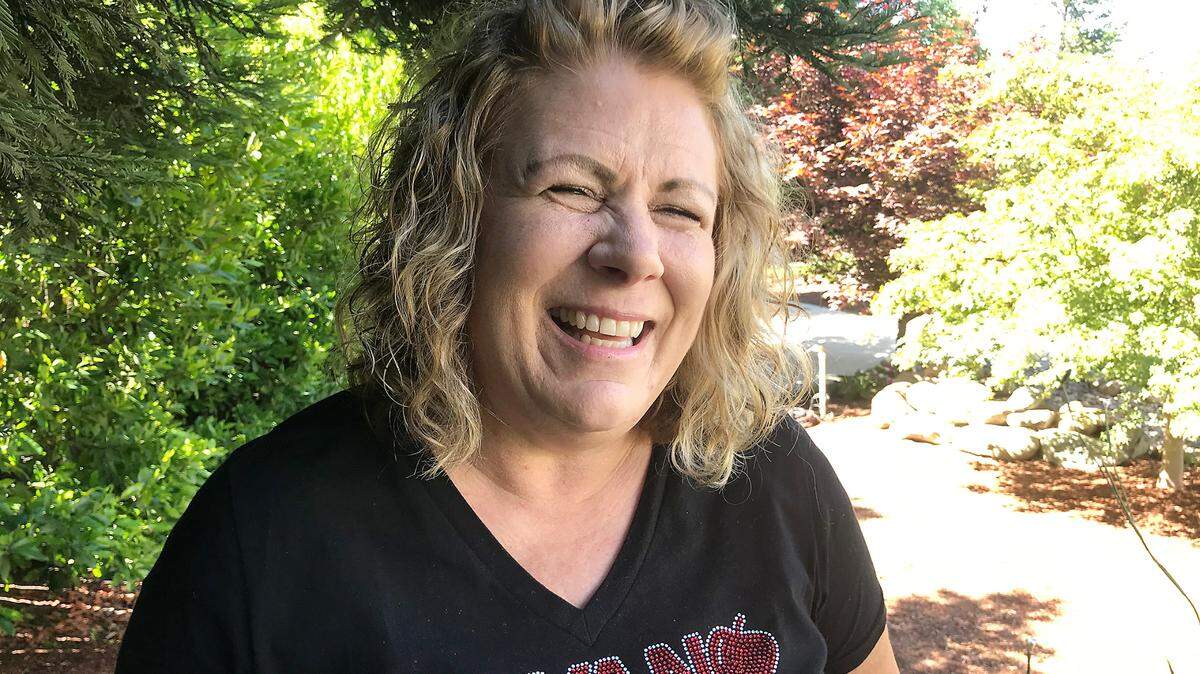
Alison Hamilton — “Miss Hami” to students and parents, and my former sister-in-law — just retired after 20 years in a classroom, the last 15 as a fourth-grade teacher in Room 61 at Freedom Elementary in Modesto’s Sylvan Union School District.
Little did she know, when she wished students a nice weekend on Friday the 13th in March, that she would not see most of them again. Two days later, on a Sunday, most districts in Stanislaus County announced they would close because of the coronavirus pandemic.
Alison missed out on a retirement party and the usual goodbye hugs and wishes. On what would have been the last day of school, she dropped a memento on every student’s doorstep. Tipped off that she was coming, many reciprocated with loving thanks, leaving out flowers, cards, posters, homemade sourdough bread, and sidewalk chalk art wishing her a wonderful retirement.
Having taught exclusively on computers the last six weeks of her career, she shares here some thoughts on distance learning.
Question: What was your reaction when school was canceled for the rest of the year?
Answer: Honestly, my heart just sank. It’s a very disconcerting feeling to think you can’t wrap up and bring a close to something you started. Any good teacher has a plan for how that year is going to unfold, and anticipates the relationships between you and students collectively, as a unit. So it felt unsettling.
Q: Was it a challenge to learn a new way of teaching?
A: It was an uncomfortable position, having to quickly learn new technology. Some veteran teachers didn’t feel as comfortable. I was a little freaked out at first, for sure.
Q: How did families respond to computer learning?
A: Not all students chose to or were able to participate. Some families are just trying to keep food on the table. There was a lot of stress in homes. People were not used to quarantining. I felt nothing negative toward any student who just couldn’t quite jump on the distance-learning bandwagon.
Q: What is your opinion of distance instruction, having tried it for six weeks?
A: If the choice is between being in a classroom with students face to face versus distance learning, nothing can beat the in-class experience. And there are lots of reasons why.
People don’t realize how much of the learning process lies outside of academic rigor. So much of the maturing process and growth comes from being in a group setting where you learn a whole array of skills, and I’m not talking about academic skills. It’s very difficult to duplicate this at home, staring at a screen, isolated from your peers.
The professional term is “executive function skills”: organizing, planning, prioritizing, paying attention, starting a task and completing it, self-regulation of emotions. These are just as important, and I feel even more important, than the academic skills a child may acquire. The classroom setting is a prime place to acquire these.
Q: How important is trust?
A: The relationship between a teacher and a child can be very powerful. It’s not just, “Complete this assignment on your screen, then go to the couch and play video games.” To me, it’s everything.
I believe there is an innate desire in children to please the adults around them, including teachers. They feel a sense of confidence to push forward. They start to believe in themselves. And you build a culture in the classroom where everyone says, “Hey, you got it!” That’s when it gets real powerful.
Q: Any other advantages to in-class teaching?
A: I had experiences where children come from difficult or less fortunate situations in their personal life. When you’re troubled or stressed, you’re not able to learn; your brain doesn’t learn in a state of trauma. I realized I could not expect a high-level performance if they’re not feeling safe emotionally.
I always told my students on the first day of school, “If you and I are going to be here six hours every day, it’s going to be a place we enjoy being, where we feel safe and have fun.” I didn’t want to be bored there and they didn’t either.
Excited students would run up and greet me and tell me something they were very happy or upset about. That’s not going to happen in a computer setting. I could share joy with them, give an encouraging hug or say, “I’m here if you want to talk; I got you.” That can’t happen with long-distance learning.
I can’t tell you the number of times a student (in person) said, “Miss Hami, can I talk to you privately?” And they would share with me something they were troubled about, maybe something going on at home. They knew they would get a safe, validating, encouraging response.
Q: There must be some advantages to distance learning.
A: Getting up at 9 a.m. is at the top of my happy list. And there are positives about distance learning. But my feeling, particularly for elementary age children, is that’s not going to cut the cake. These children are in the infancy of their education. Hoping it will all happen in front of a computer screen, for these little ones, is not very realistic.
Q: What’s the key going forward?
A: It’s going to take tremendous fortitude to navigate this new landscape. It will require a tremendous amount of patience, a positive attitude and a willingness to try new things and let go of some precedents of the past. As humans, we seem resistant to change by nature. We’re going to need to learn to embrace change and go with it.
This story was originally published June 21, 2020 at 5:00 AM.