Stanislaus County Fair features Portuguese-style bullfight. Check out some of the action
The bullfights at the Stanislaus County Fair on Sunday night were bloodless, but they weren’t painless, and they were far from effortless.
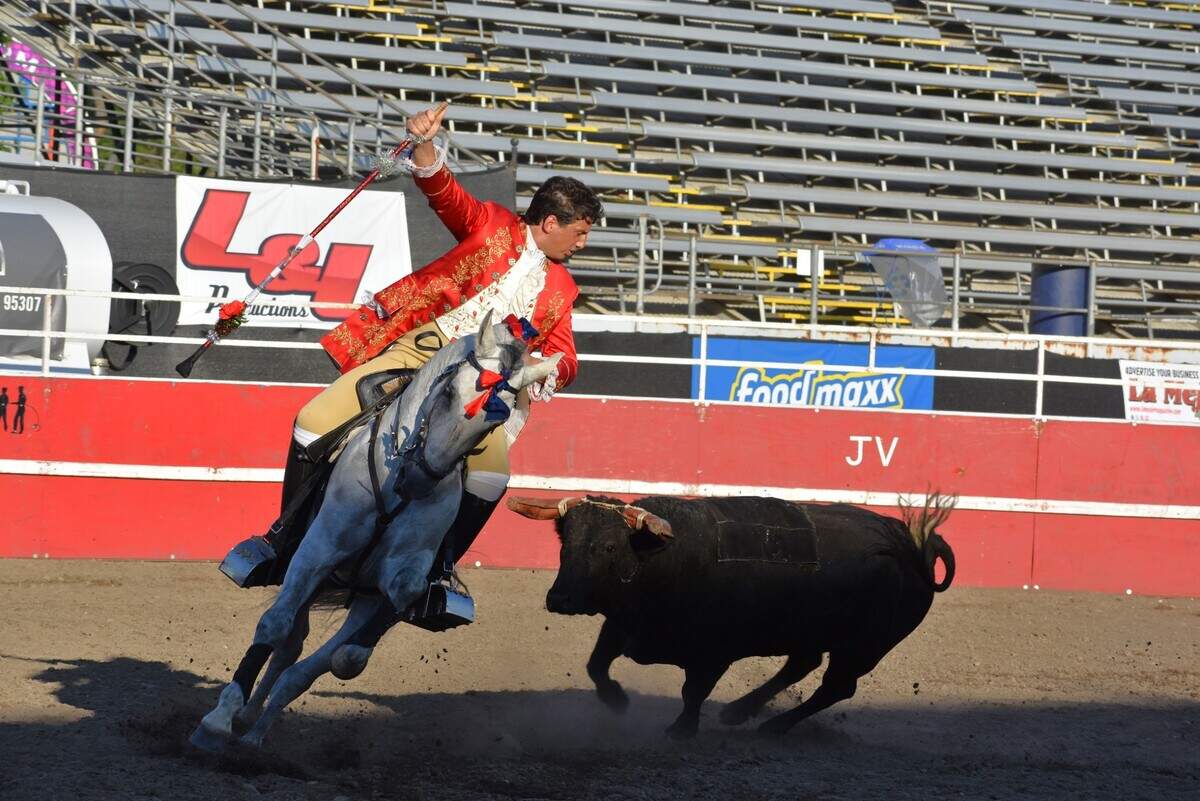
In temperatures still near triple digits, and wearing traditional attire of jacket, shirt, breeches and boots, the first cavaleiro galloped his horse around a bull, tiring it and looking for opportunities to stick it with a Velcro-tipped spear.
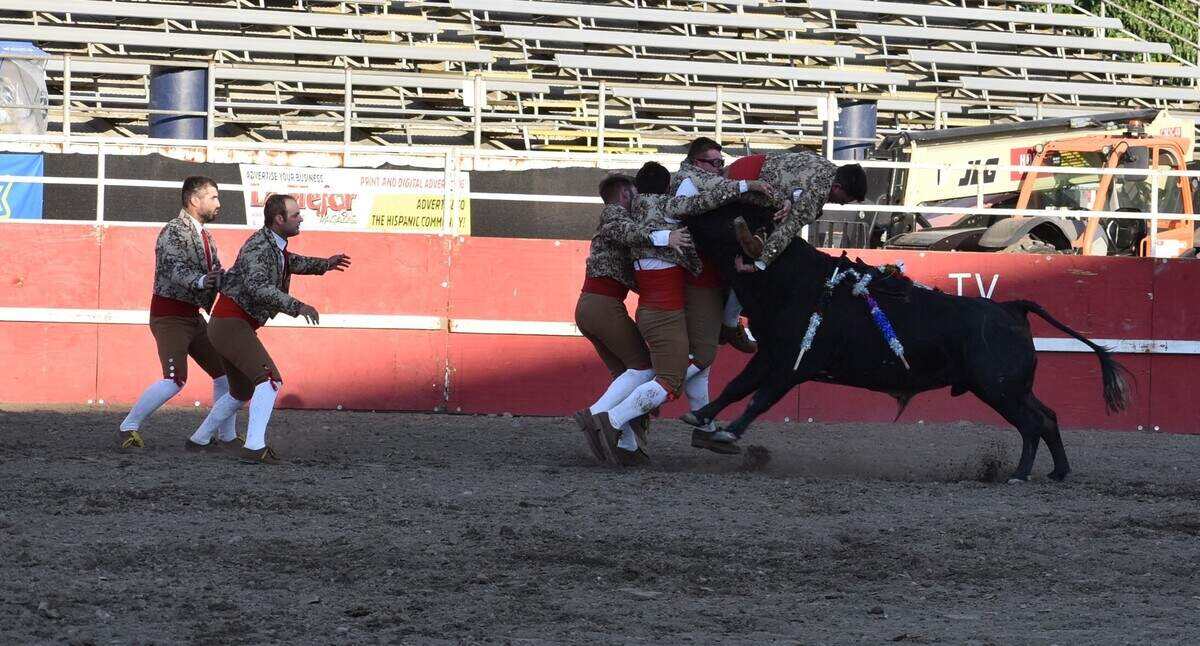
Cape-waving matadores, also in ornate costumes, did their part to distract and tire the animal. Finally, a line of forcados repeatedly taunted the tuckered beast into charging them so they could subdue it.
Even panting in exhaustion, though, the powerful animal had the strength to toss its antagonists several times. One apparently unexpected charge had the forcados scrambling up an arena wall.
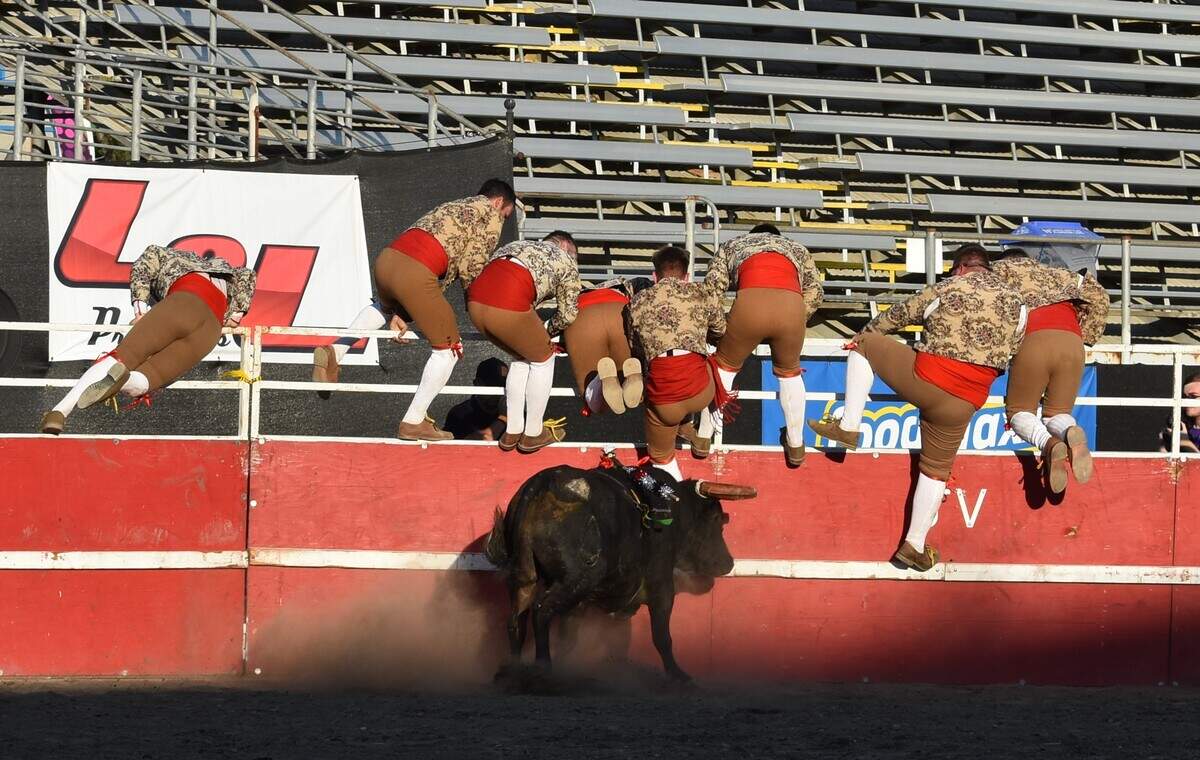
Later in the evening, two injured bullfighters were taken to a medical facility for care. Two other performers were injured but declined care, according to the Turlock Fire Department.
All this heat and risk of harm was endured in the name of entertainment, pride and tradition. The spectacle, including a grand entrance and a full band in the bleachers, was presented by the Turlock Pentecost Association.
Joao Soller Garcia, a cavaleiro from Lisbon, journeyed to participate. Back home, he trains approximately 80 horses and has been making trips to the U.S. for 14 years.
Asked what his job is, he said it’s to fill the crowd with emotion and allow it to feel the danger the bull’s post.
“You have to use your mind and your horse to fight the bull and do a good show,” Garcia said.
Ancient tradition kept alive by Valley’s Portuguese community
The origins of bullfighting can be traced back to ancient times, and by the 18th century, the Portuguese nobility had adopted and embraced this tradition. In the Central Valley, the Portuguese community has maintained a strong connection to this cultural practice.
Unlike the Spanish style that many are familiar with, the Portuguese bullfight is a bloodless sport. It is revered as an art form by aficionados and supporters worldwide. The Portuguese style of bullfighting unfolds in two distinct phases: initially, the horsemen engage with the bull, followed by the entrance of the forcado “suicide squads” into the ring for the second phase.
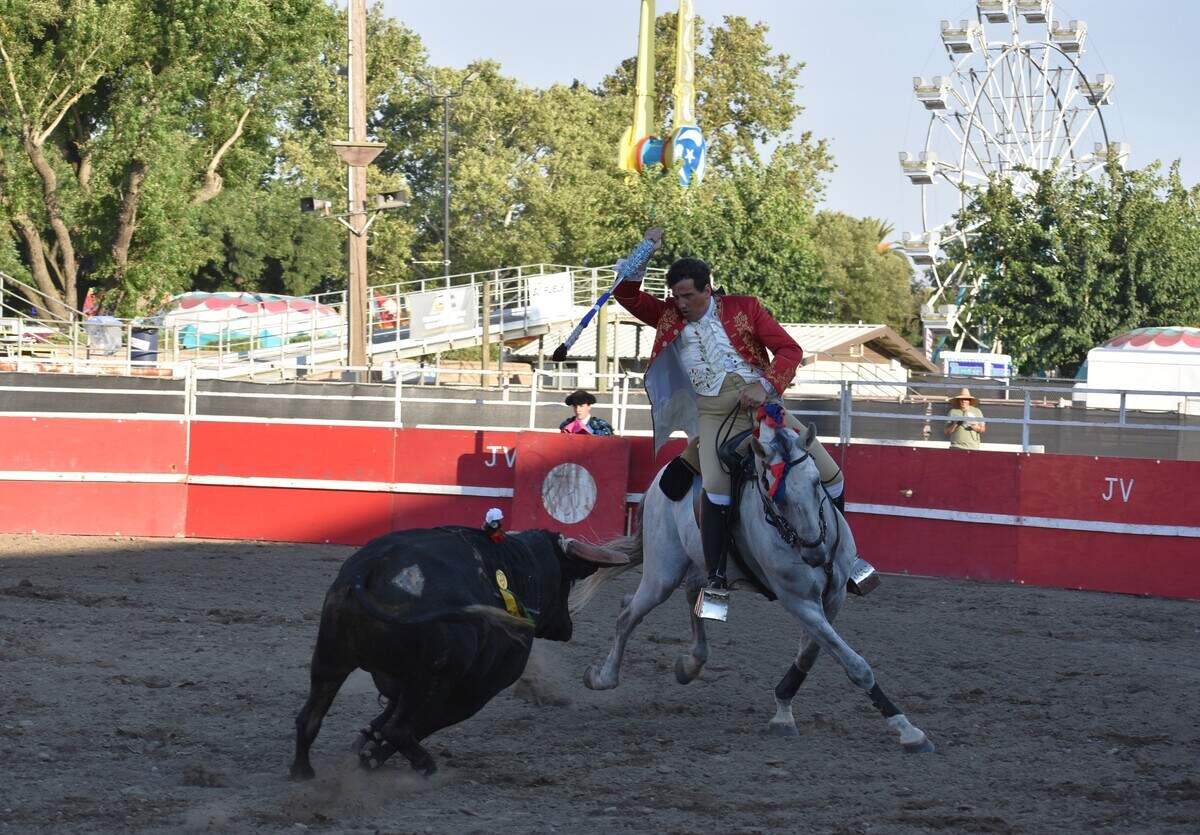
The horsemen, adorned in period costumes, ride specially trained horses and aim to affix small javelins to the back of the bull. Maneuvering around the ring, the rider would taunt the bull into pursuit, attaching javelins one by one.
Traditionally, mounted bullfighters often hailed from aristocratic families.
The forcado group is made up of eight men who ready themselves in single file to confront the bull without any weapons or protective gear. The frontman must execute a face catch as the bull charges, while his teammates encircle and restrain the animal.
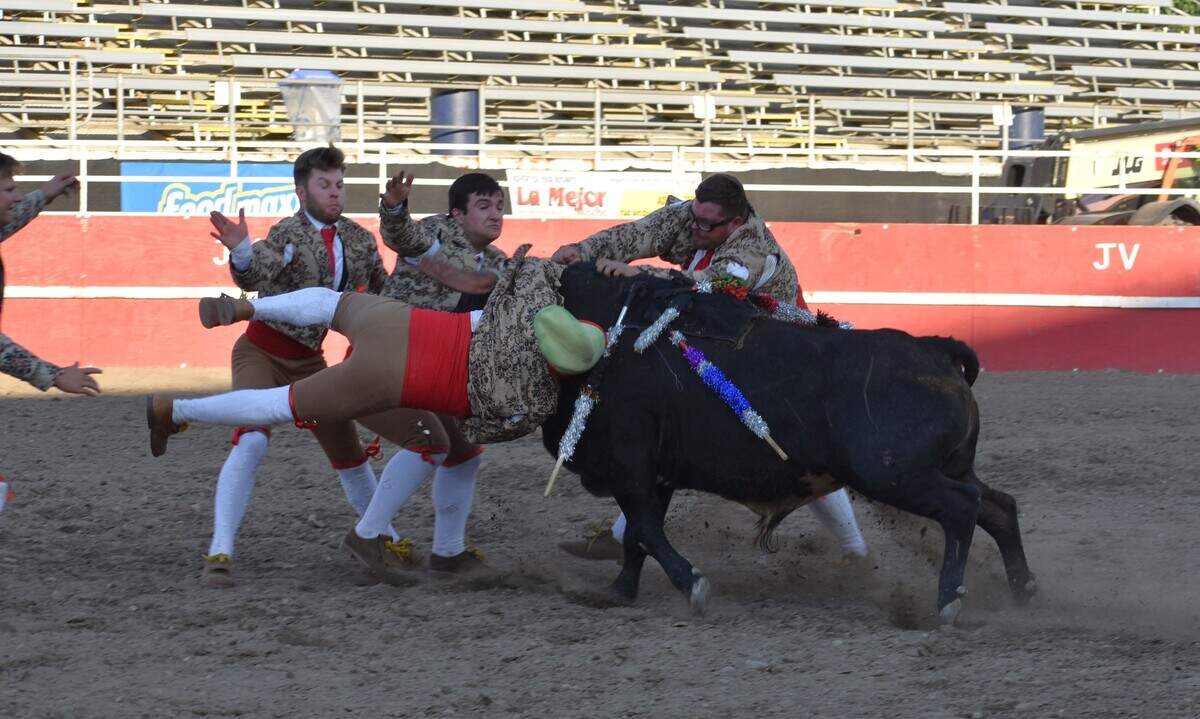
The origins of the forcado can be traced to the early days of bullfighting, when men from lower social classes were assigned the duty of shielding the nobility from the bull.
In the Portuguese tradition, the objective is simply to grab the bull by the horns, unlike in Spain, where the bull is killed. The cavaleiros use Velcro-tipped banderillas and a short spear-shaped tool that attaches to a velcro pad on the bull’s back.
The events trace their roots back to the early days of ranching, influenced by Spanish traditions carried over by Mexican settlers.
The changing shape of Portuguese bullfighting
In 1957, California prohibited traditional gory bullfights. But supporters — primarily Portuguese dairy farmers from the Azores, where bloodless bullfighting is popular — were allowed to continue the sport so long as no harm came to the bulls and the contests were integrated with religious festivities.
The Velcro adaptation, introduced in 1980 by Dennis Borba, an American-born matador, was pivotal. His innovation blended the horseback fighting inherent in Portuguese tradition with the on-foot matador style typical of Spanish bullfighting.
Garcia said that since they are using Velcro, it’s more work to get the bull engaged because no blood is being drawn.
Before the bullfight began, the Merced County Sheriff’s Posse served as color guards. The Portuguese and United States national anthems were then performed.
Music played by the marching band Lira Açoriana de Livingston accompanied the fight.
Dr. Jorge Huerta, a tenor saxophone player in the band, said what happens in the arena really is a game rather than a bullfight. “If you fight a bull, you don’t win,” Huerta said. “It’s the wisdom of the man against the strength of the bull.”
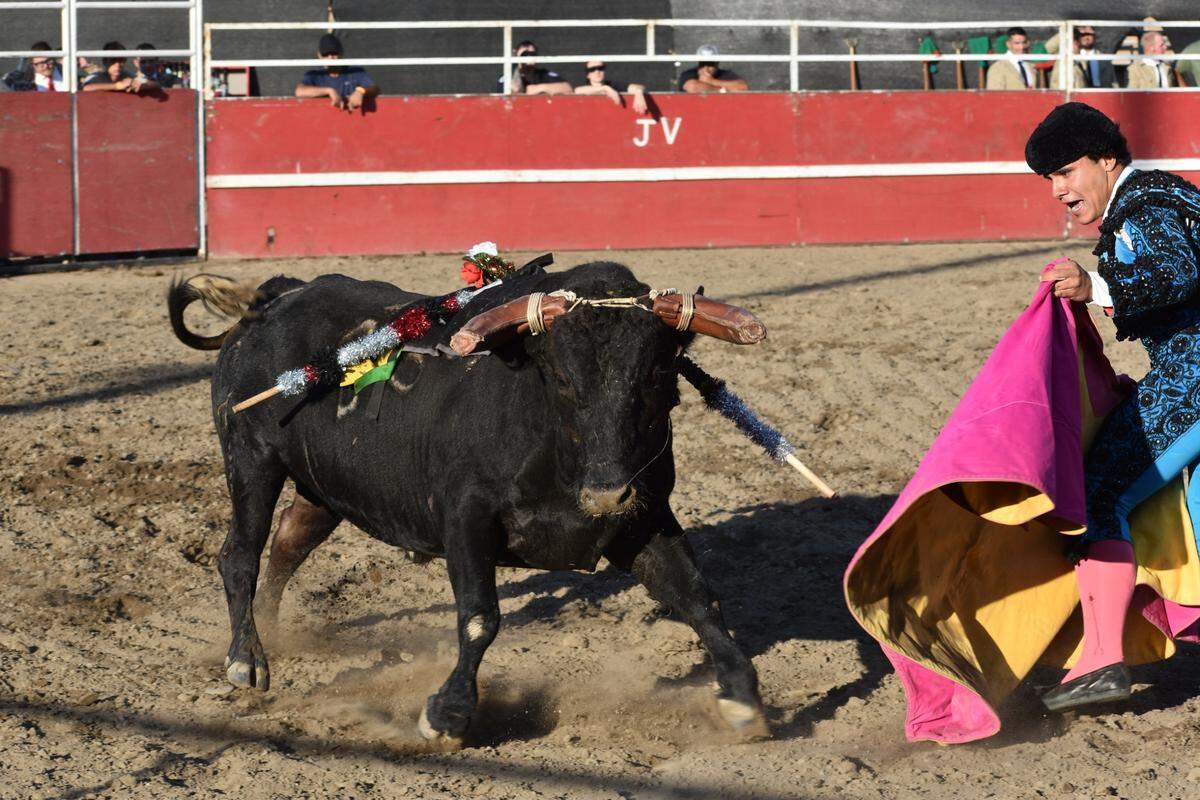
The bullfights were not the only man-and-beast events in the FoodMaxx Arena at this year’s county fair.
The Humpz & Hornz: Bulls, Broncs and Barrels rodeo will be held July 13 at 6:30 p.m.. The ticket sales page calls it “an exhilarating showcase of working cowboy skills. This rodeo format highlights the partnership between rider and horse in taking on bulls and broncos.”
And the next night, at the same time, a Hispanic Rodeo will be held. It’s billed as “a dynamic show that blends traditional rodeo competitions with vibrant cultural celebrations, including dancing horses and live banda.”